[Hidden Industry Story] Aircraft Manufacturer 'Saab' Develops Vehicle with First Turbo Engine
Saab's Prime Era in the 1970s with 'Saab 99' and 'Saab 900'
Poor Sales in the 1990s Due to Focus on Performance Over Design... Decline Amid GM and Spyker Experiences
Chinese Real Estate Firm 'Hengda' Acquires Saab's New Brand 'NEVS' for 1 Trillion Won
Electric Vehicle Production Announced for 2020
[Asia Economy Reporter Shinwon Yoon] Alongside Volvo, Saab is a prestigious car brand representing Sweden. Originally an aircraft manufacturer, Saab ventured into the automobile business in 1947, integrating aviation technology into cars and releasing models like the Saab 99 and Saab 900, which are still regarded as masterpieces today, enjoying their heyday until the 1980s. However, in the 1990s, the company faced financial difficulties, filed for bankruptcy protection in 2011, and was eventually sold to NEVS (National Electric Vehicle Sweden), a consortium of Swedish, Chinese, and Japanese companies, marking the end of Saab as a brand.
Although Saab is better known as a car brand, automobiles were not its primary business. Saab was born from the merger of the Swedish aviation company Svenska Aero and the railway company AB Svenska Jarnvagsverkstaderna’s aircraft manufacturing division. The name means "Swedish Aeroplane Limited Company." During World War II, Saab supplied fighter planes to the Allied forces and the Swedish Air Force. As the war neared its end and the defense industry faced a crisis, Saab shifted focus and established a subsidiary, Saab Automobile AB, in 1947 to enter the automobile market.
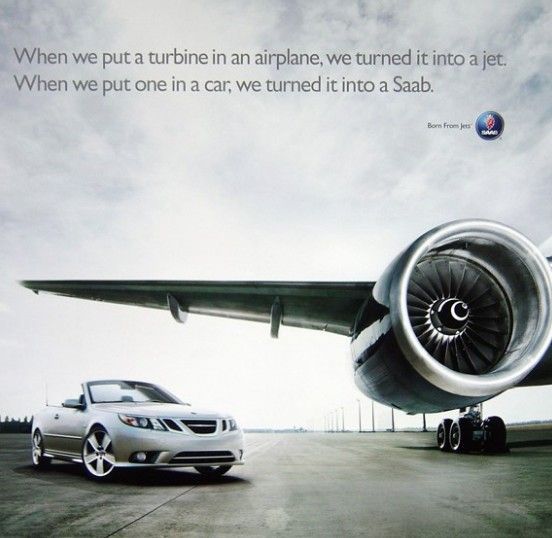
The heyday of Saab: Cars based on aircraft technology
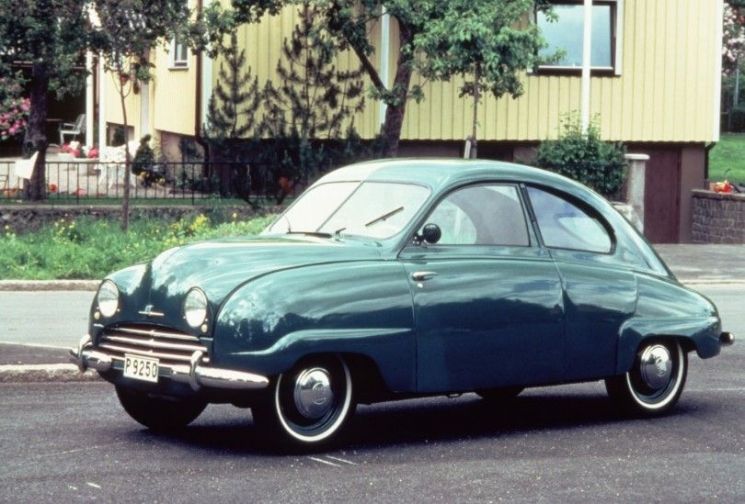
After entering the automobile market, Saab continuously promoted itself as a "car company that makes aircraft." In fact, the first vehicle released by Saab, the Saab 92001, was the work of aircraft engineers. It was the world’s first mass-produced car to apply a turbo engine. The Saab 92, introduced in 1949, was designed inspired by the shape of an aircraft wing, and subsequent models also incorporated aviation technology. An interesting anecdote is that most Saab 92 cars were painted in military green because there was a surplus of military paint left over after World War II.
Thanks to its aircraft manufacturing technology, Saab’s automobile manufacturing skills were outstanding. This strength was especially evident in the 1960s car competitions. Saab recruited rally driver Erik Carlsson, a legend in the rally world, who won the 1000 Lakes Rally in Finland, followed by victories in the British RAC Rally, Monte Carlo Rally, and rallies in the United States, raising the global profile of the Saab brand. One famous story often cited to illustrate Saab’s technical prowess is when Erik Carlsson got stuck in the mud but managed to escape by rolling the car with his co-driver and still finished in second place.
Besides the turbo engine, Saab was the first to introduce a sunroof inspired by fighter jet ejection seats and was also the first to apply spoilers?used in aircraft for landing and altitude control?to cars. To enhance safety and convenience, Saab equipped its vehicles with windshield wipers on headlights for snowy nights, bumpers that absorb impact during collisions, heated seats, and various other features. These efforts earned Saab the UK’s "Dun Safety Trophy," awarded to the world’s safest cars. Consequently, Saab became known among consumers as a "high-performance car brand with added safety."
In 1976, Saab launched the Saab 99 Turbo, which applied a turbo system previously only used in large transport vehicles or high-end sports cars like Porsche, to a regular car. Building on the success of the Saab 99 series, Saab strengthened its luxurious image with the subsequent Saab 900, which became the best-selling model among Saab vehicles. Throughout the 1980s, Saab continued its heyday by releasing models based on the Saab 900, such as the Saab 9000 and Saab 9000 CD.
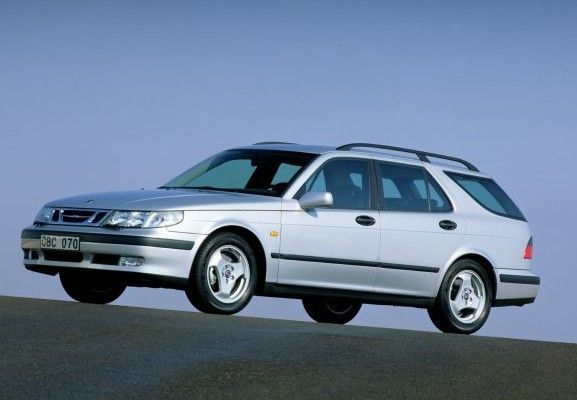
Saab’s downfall due to failure to read the times
However, from the late 1980s, Saab began to decline. Models equipped with large engines were criticized for poor energy efficiency, and as design became more important, Saab’s cars, which overly emphasized performance, started to be neglected. At the time, Saab’s management claimed, "Consumers’ preference for design is only a temporary trend. They will return to valuing tradition." Ultimately, Saab’s annual sales, which were 47,000 units in 1986, plummeted to 20,000 units by 1996, half of what they had been ten years earlier.
Saab’s parent company, Saab Group, eventually sold the automobile division to the American company General Motors (GM) in 1989. Although GM knew Saab had design issues, it released cars with traditional designs to maintain the existing customer base. When these models failed to gain a good market response, GM introduced American-style designs from the mid-1990s, but these models were criticized for lacking clear differentiation compared to competitors at similar price points.
Saab deteriorated under GM and Spyker, then acquired by Chinese company to develop electric cars
In 2008, GM finally put Saab back on the market for mergers and acquisitions. Under GM, Saab had deteriorated significantly. The brand had long lost its tradition and identity, and without finding a new breakthrough, Saab was sold to the Dutch sports car manufacturer Spyker in 2010. However, Spyker, being a small manufacturer, could not handle Saab’s massive debt ($1.5 billion), leading to a management crisis and production stoppage due to unpaid bills to parts suppliers. Saab faced severe financial difficulties, unable to pay employee salaries, and ultimately filed for bankruptcy in December 2011, with the court accepting the petition, ending 74 years of history.
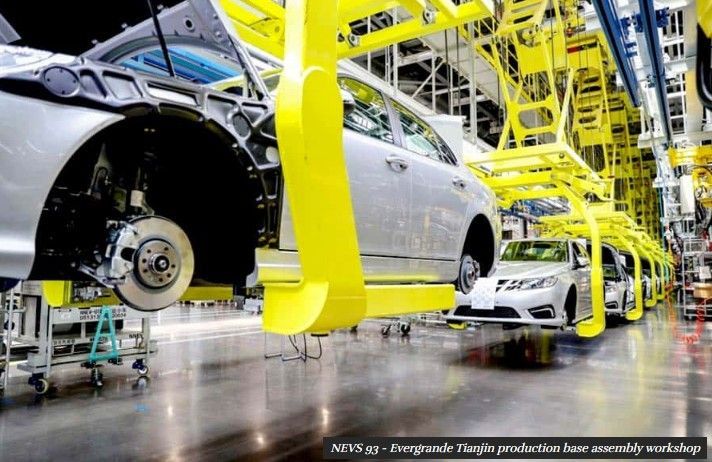
In 2012, NEVS, a Sino-Japanese consortium composed of Japanese investment firm Sun Investment and Hong Kong-based renewable energy company National Modern Energy Holdings, acquired Saab. NEVS announced plans to develop electric vehicles based on the Saab 9-3. However, NEVS failed to secure the rights to the Saab trademark, making it impossible to use the Saab name or its iconic emblem. Instead, NEVS announced a fresh start under its own name. In 2019, Chinese real estate giant Evergrande, which had long coveted Saab since its GM days, purchased NEVS for $930 million (approximately 1.11 trillion KRW) and is reportedly accelerating electric vehicle development aiming for a release this year. The industry is watching closely to see what transformation Saab will undergo.
© The Asia Business Daily(www.asiae.co.kr). All rights reserved.