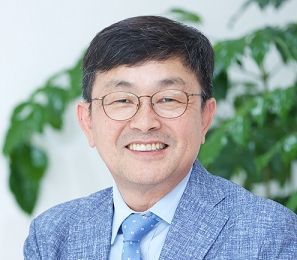
[Asia Economy Reporter Hwang Yoon-joo] On the 19th, the POSCO Cheongam Foundation held a board meeting and selected this year's POSCO Cheongam Award recipients: Dr. Hong Sung-yu (Head of the Korea Integrated Atmospheric Prediction System Development Project) for the Science Award, Don Bosco Vocational School for the Education Award, Lee Ran-ju, representative of the Asia Human Rights and Culture Solidarity, for the Service Award, and Heo Yeom, CEO of Silicon Mites, for the Technology Award.
Dr. Hong Sung-yu, selected for the Science Award, is a world-class expert in atmospheric numerical modeling. Since 2014, he has served as the second head of the Korea Integrated Atmospheric Prediction System Development Project (KIAPS), leading the independent development of a 'numerical weather prediction model' optimized for Korea's meteorological environment, significantly contributing to Korea's rise as a top-five global leader in weather forecasting.
A numerical weather prediction model is important software that predicts future weather conditions by processing vast meteorological data using computer science. The 'cubed-sphere global operational numerical weather prediction model,' independently developed by the Korea Integrated Atmospheric Prediction System Development Project led by Dr. Hong after over five years of research, is scheduled to be officially used in the Korea Meteorological Administration's weather forecasts starting this first half of the year.
Meanwhile, the meteorological numerical algorithms independently developed by Dr. Hong during his time as a researcher at the U.S. National Oceanic and Atmospheric Administration and as a university professor are actively used worldwide in meteorological and climate research and operations. His more than 150 published related papers have been cited over 16,600 times, reflecting high recognition.
Don Bosco Vocational School, selected for the Education Award, was established in 1965 by the Salesian Catholic Order of Korea. Over the past 55 years, it has trained over 3,000 out-of-school youth and those who discontinued their studies due to financial hardship into skilled technicians through specialized education in mechanical processing and assembly, recognized as the best nationwide.
In particular, based on the educational philosophy and character education that "youth deserve love simply because they are young," the school supports young people who complete the 10-month curriculum to not only acquire technical skills but also establish sound life values and vocational perspectives, enabling them to grow into honest citizens who are economically independent.
As a result of these efforts, 95% of Don Bosco Vocational School graduates over the past decade have successfully found employment and are actively working as competitive professionals.
Lee Ran-ju, representative of the Asia Human Rights and Culture Solidarity and recipient of the Service Award, began with the 'Bucheon Migrant Workers' House' in 1995 and established the 'Asia Human Rights and Culture Solidarity' in 2004. She has continuously worked to raise social awareness of the inhumane treatment faced by foreign migrants in Korea and improve their quality of life.
She especially focuses on multicultural education and Korean language education support to promote harmony between foreign migrants and local residents, and leads efforts to enact and revise anti-discrimination laws and related human rights ordinances to make Korean society more inclusive of migrants.
Additionally, she operates various programs that aid social development in the home countries of migrant workers who have returned to Nepal, Myanmar, and other countries, through human rights protection, poverty alleviation, disease control, and educational environment improvement activities. Through books and films representing their lives, she plays a significant role in enhancing public understanding and changing perceptions of foreign migrants.
Heo Yeom, CEO of Silicon Mites and recipient of the Technology Award, is Korea's top semiconductor expert who secured world-class system semiconductor technology by developing the country's first power management integrated circuit (PMIC), an essential semiconductor for power supply in smart devices, in 2007.
The PMIC, developed for the first time domestically by CEO Heo, is a non-memory semiconductor chip that controls power supply in electronic devices such as smartphones and displays. It is an absolutely necessary component to enhance the performance and efficiency of increasingly miniaturized smart devices.
Investing more than 20% of annual sales in R&D to strengthen technological capabilities, CEO Heo has succeeded in developing new technologies related to the 4th Industrial Revolution, such as audio chips, raising expectations for a second leap forward.
The POSCO Cheongam Foundation was established in 2006 to promote public interest and participation in POSCO's founding philosophy of creativity, talent development, sacrifice, and service, contributing to national development by leading the realization of a 'corporate citizen growing together.'
The POSCO Cheongam Award is divided into four categories: Science, Education, Service, and Technology. The Science Award is given to Korean scientists based in Korea who have achieved creative accomplishments in natural sciences and engineering, elevating the nation's status and contributing to the advancement of science and technology.
The Education Award is given to individuals or organizations that have systematically implemented creative educational programs and spread them throughout the education sector. The Service Award is given to individuals or organizations dedicated to improving the quality of life in human society through love and sharing. The eligibility for the Service Award has been expanded to the Asian region in connection with the foundation's core project, the Asia Fellowship.
The Technology Award is given to individuals who have developed and commercialized world-class technologies in various fields of industry, academia, and research, contributing to national industrial development.
The selection committee is entrusted with independent authority to select recipients, discovering candidates through fair and transparent procedures regarding recommendation criteria and evaluation methods. They enhance the credibility of the Cheongam Award through objective and rigorous verification, including on-site visits and expert evaluations in relevant fields.
Last June, the award announcement was made nationwide to institutions, academic societies, organizations, and individuals. There were 38 candidates for the Science Award, 46 for the Education Award, 47 for the Service Award, and 41 for the Technology Award. After achievement evaluations, on-site investigations, and expert assessments by the selection committee, four final recipients were selected at the board meeting on the 19th.
The 2020 POSCO Cheongam Award ceremony will be held on April 8 at the POSCO Center in Seoul, with each category awarding a prize of 200 million KRW.
© The Asia Business Daily(www.asiae.co.kr). All rights reserved.