Reemphasis on 'Intelligence Police Activity Rules' to Nationwide Intelligence Police
First Election Since January Last Year Enactment... Police Reform on Trial
Determination to Prevent Unnecessary Misunderstandings in Advance
Burden from Many Former Police Running for Office
Seeming to Hold Back Amid Concerns Over Political Involvement
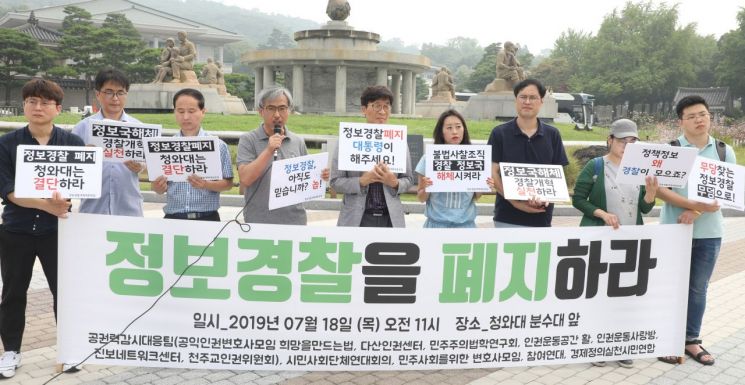
[Asia Economy Reporter Lee Gwan-ju] With the 21st National Assembly election just two months away, the police have reportedly instructed intelligence police nationwide to prohibit the collection of 'election information.' This reflects a determination to preempt unnecessary misunderstandings amid ongoing controversies over intelligence police's political involvement and election interference. In particular, with a large number of current and former police officers, including Hwang Unha, Director of the Police Human Resources Development Institute, declaring their candidacy, there is an interpretation that the police are 'being cautious' to avoid a recurrence of intelligence police controversies.
According to the police on the 18th, the National Police Agency recently held a video conference with intelligence departments of local police agencies nationwide and conveyed instructions to prohibit the collection of election-related information. A senior official from a local police agency said, "The content to comply with the 'Intelligence Police Activity Regulations' enacted last year was disseminated."
Intelligence police have collected related information during every election. Typically, field officers belonging to the intelligence division of local police stations visit campaign sites of candidates in their jurisdiction to monitor trends, organize statements, and prepare reports. Intelligence police also directly accessed city/provincial party offices or candidate camps of each political party to secure information or created and managed candidate lists.
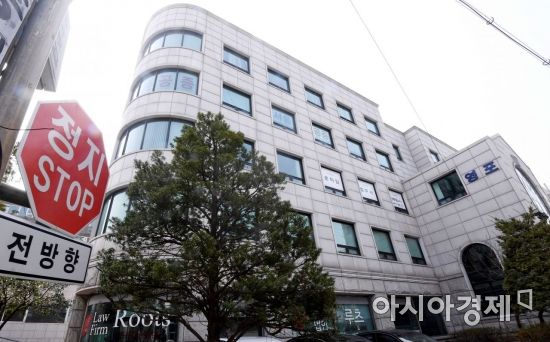 Yeongpo Building in Seocho-dong, Seoul, where a large number of report documents produced by the intelligence police during the Lee Myung-bak administration were discovered.
Moreover, beyond routine trend reporting for on-site management, reports suggesting election strategies were also made. These reports were compiled at each local police agency, passed through the National Police Agency, and some were even reported to the Blue House. During the Lee Myung-bak administration, intelligence police prepared reports with titles suspected of election interference, such as 'Left-wing local election coalition movements and countermeasures' and 'Instructions for measures to ensure ruling party victory in the 2011 Seoul mayoral by-election,' some of which were confirmed to have reached the Blue House through investigations by the National Police Agency.
Such controversies over intelligence police election interference led to calls for the 'abolition of intelligence police.' The Police Reform Committee issued recommendations to restrict constant access to political parties and prohibit intelligence activities aimed at political involvement. The National Police Agency accepted these recommendations, and in January last year, the 'Intelligence Police Activity Regulations' containing these provisions were enacted. This general election is the first to be held since these regulations were established. To prove that police reform is being properly implemented, it is expected that the police will find it difficult to excessively collect election-related information.
The fact that many former police officers are running in this general election may also be a burden from the police perspective. Even if it is crime intelligence, if related suspicions arise, they could face severe criticism. Although the Intelligence Police Activity Regulations allow intelligence activities only for the prevention and response to election-related risks, the internal atmosphere within the police is that intelligence gathering will practically not occur as they will be as cautious as possible. An intelligence police officer at a local police station said, "We have not even created a list of candidates registered as preliminary candidates and publicly disclosed," adding, "If we were to prepare such (election-related) information at a time like this, it would be a big problem."
© The Asia Business Daily(www.asiae.co.kr). All rights reserved.

















