Major Trends in the Food and Restaurant Industry Are a 'Green Ocean'
Labels of Bottled Water and Soju Shift to Eco-Friendly Designs
Whiskey Industry Also Strives to Realize Environmental Values
[Asia Economy Reporter Choi Saeng-hye] As the 'Green Ocean,' based on eco-friendly values, has been identified as a major trend in the food and dining industry this year, the beverage and liquor industries are also introducing changes for the environment one after another. Some liquor companies have removed labels from PET bottle bodies or made them easy to separate, and some companies are leading in eco-friendliness through waste recycling and the use of renewable energy.
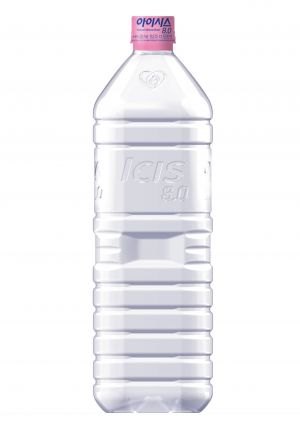
According to the related industry on the 15th, Lotte Chilsung recently launched ‘Isis 8.0 ECO’ 1.5ℓ, the first domestic bottled water brand to remove labels from the PET bottle body to enhance eco-friendliness.
Isis 8.0 ECO is an eco-friendly product that allows immediate separation and disposal after opening and drinking, reducing the hassle of peeling off labels from PET bottles and the amount of label usage, while improving the convenience of separation and the efficiency of PET bottle recycling. Instead of using labels, the product name is embossed on the PET bottle body, and the symbolic pink color is applied only to the bottle cap, creating a simple and sophisticated design. A groove in the middle of the square body enhances grip, which is a distinctive feature.
Information such as the product name, water source, and mineral content, which were previously included on the label, is printed on the bottle cap packaging film, and all labeling information is indicated on the bundle packaging box. Lotte Chilsung expects that the label-free bottled water will reduce packaging waste by about 5.4 million sheets (approximately 4.3 tons by weight) this year.
The Isis 8.0 ECO bottled water product is sold in bundles of two boxes (6 bottles per box) through Lotte Chilsung’s official online mall ‘Chilsung Mall’ and other online channels. Lotte Chilsung has so far introduced lightweight PET bottles and eco-tabs that facilitate label separation and disposal, and is actively engaged in packaging improvements for eco-friendliness, including considering lightweight PET bottles through nitrogen gas charging.
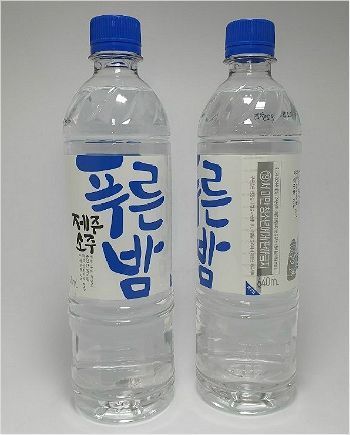
Jeju Soju’s Pureunbam recently introduced the first PET product in Korea to meet the ‘Excellent Grade’ for easy packaging materials. Through collaboration with Namyang Magic, which holds a patent for excellent-grade packaging labeling, the ‘Pureunbam 640ml PET container’ was improved to meet the excellent-grade standards.
Jeju Soju’s PET product applies label adhesive area at 0.3%, which is lower than the Ministry of Environment’s standard of 0.5%, allowing it to easily detach under wind separators and at 50°C heat. Also, the label was changed from a density above 1, which caused problems in the PET bottle recycling process, to a label with a density below 1. This means it floats well in caustic soda during recycling, making recycling easier. Additionally, an eco-tab was created on the attachment surface so customers can easily separate the label.
This is expected to increase wind sorting volume during recycling, reduce the use of hot alkaline water, and save more than 50% of water heating energy, thereby increasing resource circulation rates.
Besides this 640ml PET product, Jeju Soju plans to improve containers for five other PET products (200ml, 400ml, 1800ml, 4.5ℓ, 10.5ℓ) to also achieve the excellent grade. The miniature glass bottle product (80ml) will also be launched after material and structural improvements to meet the Ministry of Environment’s standards and receive a good grade certification.
The Pernod Ricard Group is leading eco-friendly on-site management to create a sustainable future by practicing energy saving and resource circulation activities from the product production stage. In particular, through distilleries, the production facilities, they are making every effort to become an eco-friendly company in various ways such as waste recycling, reducing electricity use, and using renewable energy.
Whiskey manufacturer ‘Chivas Brothers,’ which produces ‘Ballantine’s,’ ‘Royal Salute,’ and ‘Chivas Regal,’ has continuously engaged in valuable corporate activities that convert waste into energy through active energy-saving practices at all distilleries. As of 2016, about 42.8 tons of waste were converted into gas and energy, and all 32 distilleries in the UK achieved a 100% food waste recycling rate.
They are also leading in establishing energy-saving systems. By installing heat compression devices inside the stills, steam demand has been reduced by up to 40%, and LED lighting and motion sensors have been installed to save an impressive 1000 kWh of electricity annually. This represents more than 26% energy efficiency compared to the industry average.
The vodka brand ‘Absolut Vodka’ produces its iconic clear bottles using over 40% recycled glass. Additionally, 85% of the energy used in distillation and bottling comes from renewable energy, reducing electricity consumption and practicing sustainable eco-friendly management.
Furthermore, carbon dioxide generated during fermentation is collected and provided for growing vegetables and seaweed, and the high-protein byproducts remaining after wheat fermentation are recycled as feed for pigs and cattle. Through this, less than 1% of waste is landfilled, and trees are planted to absorb the generated carbon dioxide, achieving carbon neutrality.
‘Jameson,’ Ireland’s representative whiskey brand, has succeeded in reducing energy and water consumption per production unit at the Midleton Distillery by up to 28% since 2012 through bold investment and innovation. They distill using only 100% certified local grains, recycle byproducts from whiskey production as animal feed, and 80% of Jameson whiskey glass bottles are made from recycled glass.
© The Asia Business Daily(www.asiae.co.kr). All rights reserved.



















