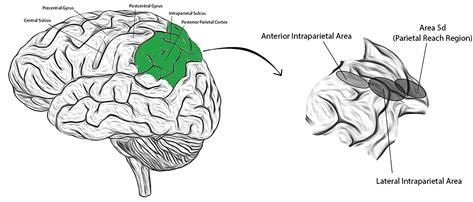
[Asia Economy Reporter Junho Hwang] Domestic researchers have discovered that the occipital-parietal cortex of the brain is essential in causing post-traumatic stress disorder (PTSD). It is expected that controlling the activity of the occipital-parietal cortex could open a way to suppress the manifestation of PTSD.
The Korea Brain Research Institute announced on the 10th that the research team led by Dr. Ja-wook Koo and Dr. Seok-won Lee revealed that the occipital-parietal cortex of the brain is involved in the recurrence of fear memories in new environments. The occipital-parietal cortex is part of the parietal lobe located at the rear vertex of the brain and is involved in higher cognitive functions such as spatial reasoning and decision-making.
Occipital-Parietal Cortex Plays a Central Role in PTSD Manifestation
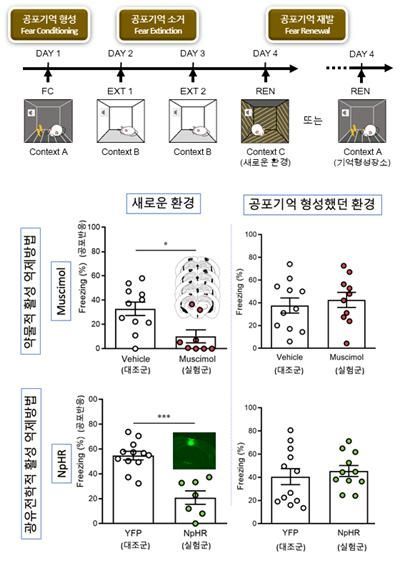 Results of Environment-Specific Fear Memory Renewal Suppression Effect by Inhibition of the Laryngeal Cortex
The research team investigated the role of the occipital-parietal cortex through experiments using laboratory mice.
The team created an 'auditory fear memory' by exposing mice to a specific sound followed by an electric shock. Later, the same sound was played in a new environment. The mice exhibited fear responses according to the auditory fear memory. Subsequently, the researchers suppressed the activity of the occipital-parietal cortex in some of these mice by administering drugs or shining light. The mice with suppressed occipital-parietal cortex activity did not show fear responses in the new environment.
This means that, similar to Pavlov's dogs conditioned to associate a bell with food, when the activity of the occipital-parietal cortex was suppressed, PTSD did not occur in the new environment.
PTSD is a condition where individuals experience repeated distress even after severe accidents or violence. Patients suffer chronic pain because trauma recurs even when they visit places similar to where the initial incident occurred. Examples include survivors of national disasters such as the Sewol ferry disaster and the Daegu subway fire, who avoid riding boats or subways due to memories of the accidents.
Notably, the research team reported that suppressing the activity of the occipital-parietal cortex did not impair brain activity related to the recurrence of fear memories at the original location where the fear memory was formed or the expression of general memories.
Controlling the Occipital-Parietal Cortex Enables PTSD Regulation

Dr. Ja-wook Koo stated, "We have newly identified the role of the occipital-parietal cortex, which had not been sufficiently clarified until now," and added, "We hope this will help develop therapeutic strategies to prevent the recurrence of fear memories in patients with PTSD or phobias."
Meanwhile, the Cortical Fusion Research Group at the Korea Brain Research Institute plans to build a 'behavior-activated brain map' centered on the occipital-parietal cortex by 2026.
© The Asia Business Daily(www.asiae.co.kr). All rights reserved.
![Clutching a Stolen Dior Bag, Saying "I Hate Being Poor but Real"... The Grotesque Con of a "Human Knockoff" [Slate]](https://cwcontent.asiae.co.kr/asiaresize/183/2026021902243444107_1771435474.jpg)

















