A Brand Unrelated to Japan... Severely Impacted by Boycott Movement
Changing Business Names with Japanese Colors like Nagasaki and Tokyo
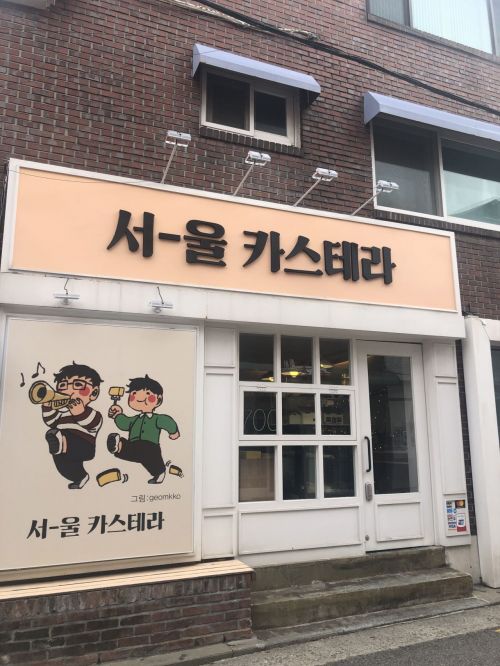
[Asia Economy Reporter Choi Saeng-hye] Park Seong-jin, CEO of Kiseki Company, who operated restaurants under the name 'Nagasaki Castella' in about eight locations nationwide, changed the store names of four branches, including Hongdae and Seoul Station, to 'Seoul Castella' in mid-December last year. Although it is neither a Japanese brand nor related to Japan in any way, the name became a target of the boycott against Japanese products. During the height of the boycott, monthly sales dropped by about 80-90%. CEO Park said, "Although we manufacture and sell the products domestically, many consumers felt a sense of rejection toward the name Nagasaki itself," adding, "After launching Seoul Castella, consumer responses have become much more positive."
On the 6th, amid the ongoing boycott movement triggered by Japan's trade retaliation, domestic restaurants began removing Japanese elements from their signboards. Despite having no substantial connection to Japan, they suffered significant sales losses due to decreased customer visits. Besides Nagasaki Castella, other establishments such as the Gwanghwamun-based Korean beef omakase specialty restaurant Tokyo Deungsim and the Yeouido coffee specialty shop Okashiya recently changed their store names for similar reasons.
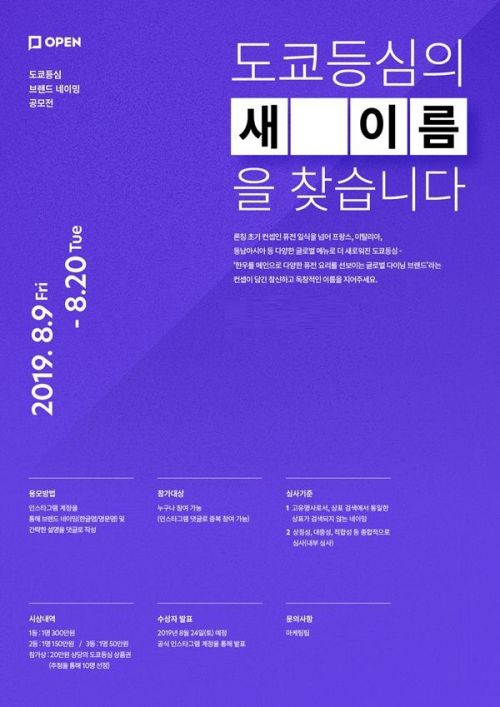 The dining company Open renewed and reopened 'Tokyo Deungsim Gwanghwamun Branch' as 'Modou Gwanghwamun' through a naming contest held in the second half of last year.
Food service company Open renewed and reopened 'Tokyo Deungsim Gwanghwamun Branch' as 'Modou Gwanghwamun' in October last year. Modou is a name decided through a branding contest in August last year, combining the pure Korean word 'Modori,' meaning 'a person who is meticulous and thorough,' and the Chinese character for 'cow (牛),' symbolizing 'a table fully prepared with Korean beef.' An Open representative said, "The initial concept at launch was fusion Japanese cuisine, hence the name 'Tokyo Deungsim,' but now various global menus including French, Italian, and Southeast Asian dishes have been added," adding, "We decided to change the brand name as it no longer focuses solely on Japanese cuisine."
The Yeouido coffee specialty shop 'Okashiya' changed its name to 'White Confectionery' in September last year. 'Okashiya' means 'confectionery shop' in Japanese. Owner Kim Do-yeon explained the background of the name change through social media, saying, "Given the current situation, we decided to drop the name Okashiya," and added, "It's not that we had no choice, but it is a really complex and delicate feeling; still, I am a citizen of the Republic of Korea."
The actual sales impact on the domestic food service industry due to the boycott against Japanese products is considerable. According to the '2019 Food Consumption Behavior Survey Results Presentation: Analysis of Household Food Consumption and Dietary Behavior,' conducted by the Korea Rural Economic Institute on 3,337 households and 6,176 individuals, 33% of consumers responded that they reduced dining at Japanese companies and Japanese restaurants operating in Korea. Additionally, 29.6% said they reduced visits to restaurants serving Japanese food, and 28.2% said they reduced purchases at restaurants with Japanese names, even if they were unsure why. The reduction in consumption reached as high as 77.01%.
The removal of Japanese elements in the domestic food service industry is expected to continue for the time being. Nearly half of respondents, 49.2%, said they would continue participating in the boycott until the export regulation issue is resolved. Furthermore, 26.6% said they would maintain the boycott even after the export regulation issue is resolved. Regarding the expected duration of the boycott, 34.4% anticipated it to last 1 to 3 years, and 25.9% expected it to continue for more than 3 years.
© The Asia Business Daily(www.asiae.co.kr). All rights reserved.
![Clutching a Stolen Dior Bag, Saying "I Hate Being Poor but Real"... The Grotesque Con of a "Human Knockoff" [Slate]](https://cwcontent.asiae.co.kr/asiaresize/183/2026021902243444107_1771435474.jpg)












