[Hidden Business Story] 'Job Search SNS Platform' Created by PayPal Alum Reid Hoffman
Combining 'Job Search' and 'Social' to Secure 675 Million Users Across 200+ Countries
Fortune Magazine Alum Editor Hired to Provide 'Personalized News'
Sold to MS for 30 Trillion KRW... MS Technology Integrated into Job Search Platform
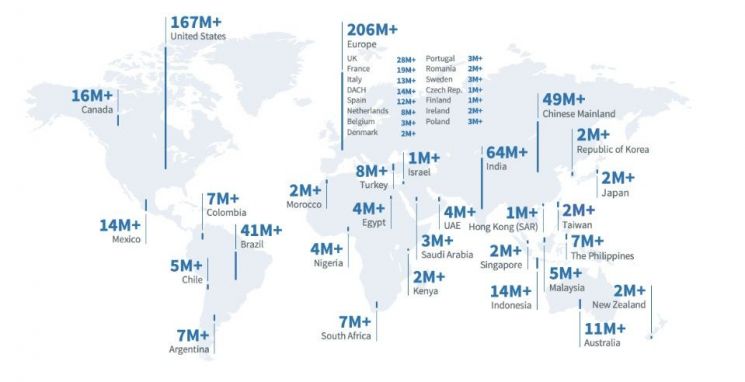
[Asia Economy Reporter Shinwon Yoon] Now that the idea of a "lifetime job" is a thing of the past, there is a social networking service (SNS) for job seekers and recruiters that is attracting global attention. That service is LinkedIn. Unlike Facebook or Instagram, which are aimed at socializing, LinkedIn is an online platform connecting job seekers and recruiters, and it has grown into the world's largest business SNS with over 675 million members across more than 200 countries.
LinkedIn was founded in 2002 by Reid Hoffman, former Chief Operating Officer (COO) of PayPal, with the ambition to connect professionals through a network. At the time, Reid Hoffman created LinkedIn by investing his own money based on the hypothesis that if you gather six people you know, you can indirectly connect with everyone in the world.
After officially launching its service in May 2003, LinkedIn gained over 10,000 members within a week, and by the fourth month, it had secured 50,000 users. In 2011, when it surpassed 100 million members, it was listed on the New York Stock Exchange. The initial public offering (IPO), priced at $45 per share, was the largest in the internet sector since Google's market debut in 2004. This was in stark contrast to most SNS platforms like Facebook, Instagram, and Twitter, which faced decline. How was LinkedIn able to succeed?
What Facebook Lacks but LinkedIn Has
LinkedIn draws attention because it has clear differentiators from other SNS platforms. The purpose of its members in joining and using LinkedIn is also distinct. The biggest feature of LinkedIn is the combination of job recruitment services with SNS functions. Unlike other SNS platforms where profile fields are flexible, LinkedIn allows users to register their current workplace, alma mater and grades, extracurricular activities, and awards in separate designated sections. In other words, a LinkedIn profile is like a resume listing one's qualifications.
These publicly available profiles can be reviewed by headhunters or company HR managers to make job offers or suggest career moves. Therefore, more than 675 million individual members as well as over 30 million companies have joined LinkedIn to scout talent.
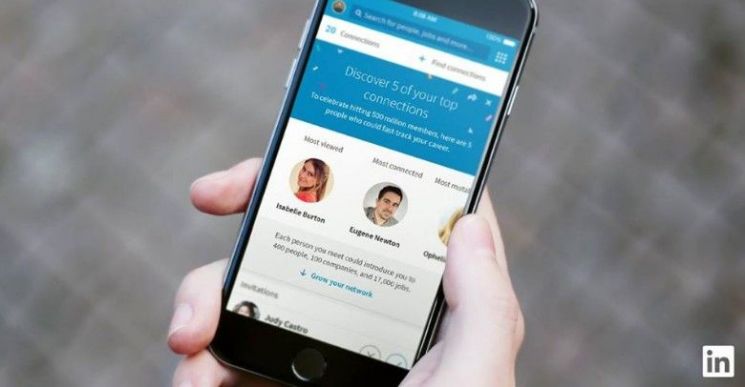
Additionally, LinkedIn has enhanced "social" features. Members can connect with acquaintances as "1st-degree connections," see the connections of their 1st-degree contacts as "2nd-degree," and their contacts as "3rd-degree," allowing users to understand how they are connected to others. Supervisors, colleagues, and professors can leave recommendations for members, and users can share news or materials and exchange opinions through comments.
LinkedIn's revenue model is also clear. Its representative revenue source is the "Premium" paid service that connects job seekers and recruiters. Job seekers using the Premium plan can send messages to hiring managers and access company information such as salaries. Moreover, they can see who has viewed their profiles.
Is SNS the Source of Fake News? LinkedIn Is Different
Besides the job recruitment platform, LinkedIn's core service is "news." Since 2015, it has been providing business news tailored to subscribers. These are not entertainment articles or conspiracy-like news but industry and finance news that can help job seekers. Customized news is delivered based on members' workplaces and career backgrounds.
The editor-in-chief overseeing LinkedIn's news is Dan Roth, formerly of the American economic magazine Fortune. Along with him, over 60 journalists select and process articles from media outlets. LinkedIn also produces original content, improving the quality of its articles. Thanks to this approach, "fake news" and unrefined news are filtered out. Therefore, unlike Facebook, which has been stigmatized as a "source of fake news," LinkedIn has established an image as a highly trustworthy SNS.
In 2016, LinkedIn gained a strong ally in Microsoft (MS). Microsoft acquired LinkedIn, which had been growing rapidly but had recently slowed, for $26.2 billion (approximately 31 trillion KRW). This was the largest acquisition in Microsoft's history. The number of LinkedIn members, which was 470 million at the time, surpassed 500 million just four months after the acquisition, showing renewed growth.
Experts evaluate that the combination of LinkedIn's unique platform and Microsoft's technological capabilities has increased its influence not only in the SNS market but also in the job recruitment sector.
© The Asia Business Daily(www.asiae.co.kr). All rights reserved.



















