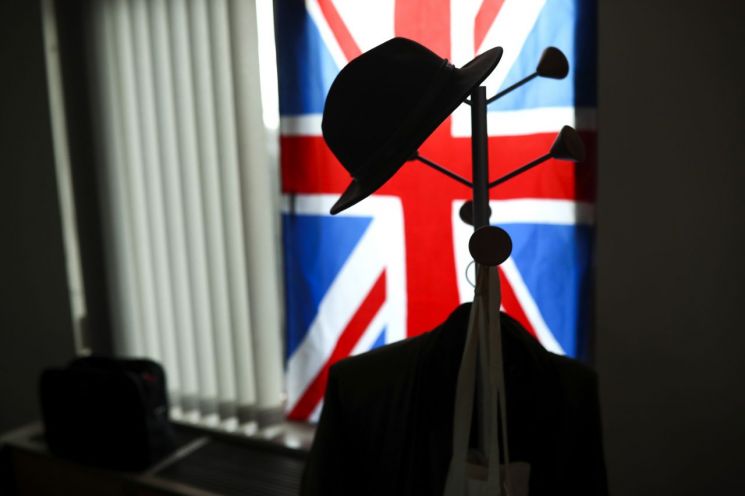
[Asia Economy Reporter Jeong Hyunjin] The United Kingdom's "going solo" is just two days away. On the 29th (local time), if the European Parliament ratifies the Brexit agreement (the UK's withdrawal from the European Union (EU)), the UK will leave the EU's umbrella at 11 p.m. on the 31st, two days later. This marks 3 years and 7 months since the Brexit decision was made by referendum, and 47 years if counted from the UK's accession to the European Economic Community (EEC), the predecessor of the EU.
According to BBC and others on the 29th, the European Parliament will officially ratify the UK's EU withdrawal agreement that afternoon. This is the final procedure for executing Brexit. Once ratification is completed, the Union Jack, the UK flag, will be lowered at 11 p.m. on the 31st at the European Parliament building in Strasbourg, France. There will be no separate lowering ceremony. After Brexit, diplomatic channels between the UK and the EU will be severed, and UK diplomats will need special permits to enter EU buildings. UK Prime Minister Boris Johnson plans to install a clock at Downing Street to countdown on the day.
Even though Brexit is executed, there will be almost no immediate changes felt by individuals or businesses in the UK or Europe. Since both sides agreed on a transition period until December 31 this year, the UK remains in the EU single market and customs union, and free movement of residents continues.
Uncertainty remains high. Especially, the "future relationship negotiations" between the UK and the EU during the transition period are likely to enter a strong confrontation phase, making a complete separation between the UK and the EU difficult.
Prime Minister Johnson raised the Brexit atmosphere by posting a video on his Twitter answering questions related to Brexit. In the video, when asked if Brexit would help exports, he said, "It will be a greater opportunity for the UK because we will make 'fantastic' free trade agreements (FTAs) with countries around the world."
However, the fact that the transition period is only 11 months is a burden for both the UK and the EU. Since the scope of negotiations is broad, covering trade, diplomacy, security, transportation, immigration, etc., the EU believes it will be difficult to complete negotiations within the period. The UK and the EU can extend the transition period once, up to a maximum of two years before June, but Prime Minister Johnson's firm stance of "no extension" could lead to a de facto "No Deal" Brexit. The UK also faces negotiations with major countries such as the US and Japan, so depending on the outcomes, there is a possibility of increased volatility in exchange rates and stock markets.
© The Asia Business Daily(www.asiae.co.kr). All rights reserved.
![Clutching a Stolen Dior Bag, Saying "I Hate Being Poor but Real"... The Grotesque Con of a "Human Knockoff" [Slate]](https://cwcontent.asiae.co.kr/asiaresize/183/2026021902243444107_1771435474.jpg)
















