Mild Symptoms at First Visit... "Not a Reportable Case"
Comprehensive Screening of 3,023 Wuhan Arrivals Begins That Day
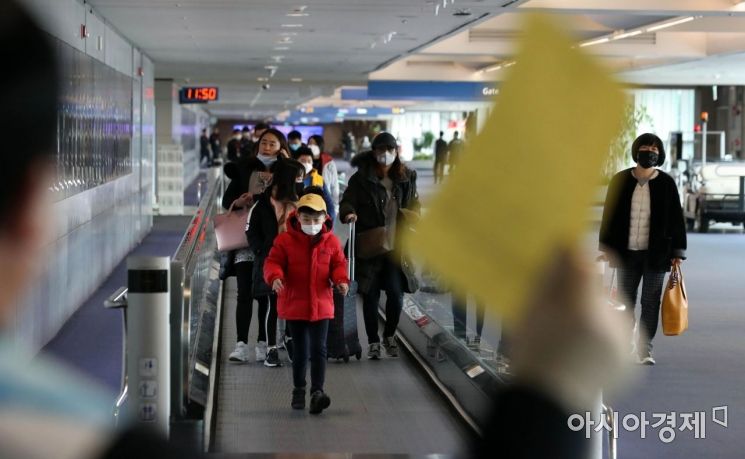 On the morning of the 28th, at Terminal 1 arrival hall of Incheon International Airport, people arriving from Shanghai, China, were guided to submit health status questionnaires at the quarantine station. The Korea Disease Control and Prevention Agency designated the entire region of China as a quarantine target contaminated area in relation to the novel coronavirus and made quarantine and submission of health status questionnaires mandatory for all arrivals. / Yeongjongdo - Photo by Kim Hyunmin kimhyun81@
[Asia Economy Reporter Cho Hyun-ui] It has been confirmed that the total number of contacts of the fourth confirmed case of the novel coronavirus (Wuhan pneumonia) in South Korea reached 172. These mainly include people who were on the same airplane or airport bus as the patient or who received medical treatment at the same medical institution.
Jung Eun-kyung, Director of the Korea Centers for Disease Control and Prevention (KCDC), stated on the 28th, "So far, 172 contacts have been identified," adding, "One family member of the patient was confirmed to have symptoms and was isolated and tested, but the result was negative. There are 95 close contacts."
The fourth patient is a 55-year-old Korean man residing in Pyeongtaek, Gyeonggi Province. He visited Wuhan City, Hubei Province, China, for tourism on the 5th and returned to Incheon Airport on the 20th via a direct flight from Wuhan (KE882). Afterward, he took airport bus number 8834 to Pyeongtaek Songtan Terminal and then took a taxi home.
On the following day, the 21st, the patient visited a medical institution in Pyeongtaek called '365 Union Clinic.' The medical institution confirmed the patient's travel history to Wuhan through the DUR (Drug Utilization Review) system but could not get a precise answer from the patient. The patient returned home by car and stayed at home from the 22nd to the 24th.
On the 25th, the patient revisited the 365 Union Clinic due to fever and muscle pain and disclosed his travel history to Wuhan, becoming subject to active monitoring. On the 26th, due to worsening muscle pain, he was diagnosed with pneumonia at a public health center screening clinic and was transported by a public health center ambulance to Bundang Seoul National University Hospital, a nationally designated inpatient treatment facility. After being classified as a symptomatic person under investigation, he was confirmed positive on the 27th.
◆Massive contacts on bus, airplane, and hospital = The KCDC confirmed the patient's movement route based on the patient's statements and objective data such as card usage history and mobile phone location changes. Most exposures occurred on the airplane, airport bus, and medical institutions. Director Jung explained, "There were many exposures on transportation means such as 27 people on the airport bus and 34 on the airplane," adding, "Also, people who received treatment together with the patient and medical staff during the patient's two visits to medical institutions were included."
The patient reportedly had no symptoms when boarding the airplane. There was no fever upon entry, and the health status questionnaire submitted to health authorities indicated no symptoms. Director Jung said, "The patient said symptoms appeared the day after entry, but epidemiological investigators found it difficult to specify the onset time, so exposure on the airplane was considered possible."
◆Medical institution also visited by MERS patient = Regarding why the patient was not reported as a suspected case during the first visit to the medical institution after returning to Korea, Director Jung said, "At the first visit, the medical institution asked the patient if he had been to Wuhan, and the patient replied that he had been to China." He added, "The patient showed symptoms of a runny nose and body aches, not the novel coronavirus symptoms like high fever and cough, so he was treated for a cold, which is the fact identified so far."
The medical institution was also visited by a confirmed MERS patient during the 2015 MERS outbreak. The clinic is currently closed. Korean health authorities believe it is difficult to hold the medical institution accountable. Director Jung said, "At the first visit, the medical institution confirmed the patient's Wuhan travel history through DUR and asked him about it. Even if the Wuhan travel history was confirmed, the mild symptoms such as runny nose did not meet the reporting criteria at that time, so it is difficult to blame the medical institution."
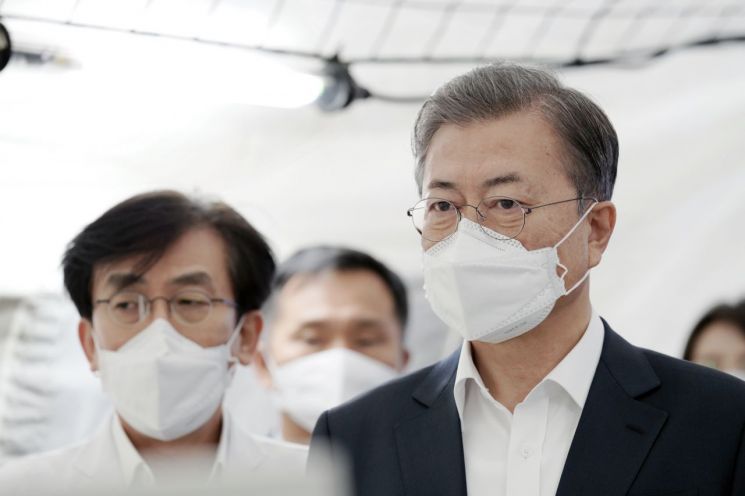
◆Two-thirds of the full survey are foreigners = Meanwhile, the government began a full survey on travelers who entered Korea from Wuhan Airport between the 13th and 26th, totaling 3,023 people. The survey targets include 1,166 Koreans and 1,857 foreigners, most of whom are Chinese. Koreans with fever or respiratory symptoms will undergo isolation testing. For foreigners, after confirming their departure status, if they remain in Korea, the investigation will proceed in cooperation with the National Police Agency and others.
The authorities have secured lists and contact information through passports and immigration records and shared information with local governments and the Health Insurance Review and Assessment Service. Currently, local government officials and the HIRA call center are cross-checking symptom onset through one-on-one calls with the subjects.
As asymptomatic entrants have been confirmed as cases one after another, the number of screening clinics by local governments, currently 288, will be further expanded. The counseling center (1339) staff will also increase from 30 to up to 100. Additionally, nationally designated inpatient treatment beds necessary for suspected patients' hospitalization are being operated. Currently, 161 beds in 29 hospitals are in operation. To prepare for an increase in suspected patient reports, beds at regional base hospitals and infectious disease control institutions can also be mobilized, and additional infectious disease control institutions will be designated if necessary.
As of 10 a.m. today, there are four confirmed cases in Korea. Among symptomatic persons under investigation excluding confirmed cases, there are 112 people, of whom 15 are undergoing testing. The remaining 97 tested negative and have been released from isolation.
© The Asia Business Daily(www.asiae.co.kr). All rights reserved.
![Clutching a Stolen Dior Bag, Saying "I Hate Being Poor but Real"... The Grotesque Con of a "Human Knockoff" [Slate]](https://cwcontent.asiae.co.kr/asiaresize/183/2026021902243444107_1771435474.jpg)
















