Ministry of Culture, Sports and Tourism Announces 5 Target Sites for Tourism Hub City Project
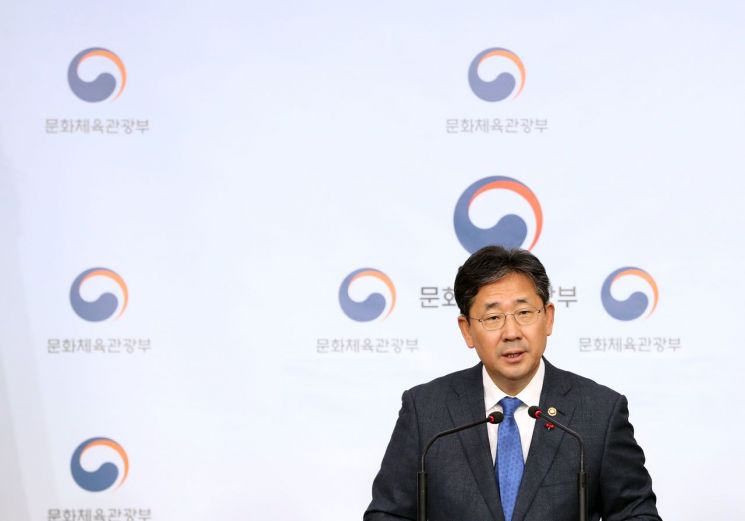 Minister of Culture, Sports and Tourism Park Yang-woo announced the selected sites for the Tourism Hub City Development Project on the morning of the 28th at the annex of the Government Seoul Office Building. [Image source=Yonhap News]
[Asia Economy Reporter Kim Heung-soon] Busan Metropolitan City has been selected as an international tourism city among the government’s tourism hub city projects to revitalize regional tourism. Four other cities?Gangneung in Gangwon, Jeonju in Jeonbuk, Mokpo in Jeonnam, and Andong in Gyeongbuk?will be transformed into regional tourism hub cities.
On the 28th, the Ministry of Culture, Sports and Tourism announced five selected sites for the tourism hub city development project, including one international tourism city and four regional tourism hub cities, at the Government Seoul Office, and stated that the project will officially begin this year.
The tourism hub city development project is a government initiative aimed at fostering new tourism hubs in regions to overcome the limitation of most foreign tourists concentrating in Seoul. The selected sites will receive support to grow as new driving forces in the inbound tourism market by 2024.
For the selection evaluation, the Ministry formed a 'Tourism Hub City Committee' composed of private experts from various fields such as tourism, architectural design, urban planning, transportation, and smart tourism. Based on preliminary evaluation criteria, the committee assessed the global competitiveness and development potential of the applicant cities, the excellence of tourism infrastructure including transportation, finance, and human resources, contribution to tourism industry development, potential for cooperation with cultural cities and related projects, with a particular focus on the city’s competitiveness and development potential to select outstanding regions.
Busan Metropolitan City was selected as an international tourism city due to its excellent project content utilizing various festivals, history, and culture, as well as its high policy understanding. It was especially evaluated as having the best tourism infrastructure and making good use of its geographical advantage by the sea, positioning it to emerge as an international gateway city in the southern region in the future.
Gangneung is expected to grow into a tourism hub on the East Coast by building connections with local airports and establishing linkage systems within the Gangwon region, based on its resources including the legacy of the Pyeongchang Winter Olympics, traditional culture, and natural environment.
Jeonju, with its traditional cultural brand such as Hanok Village, was highly evaluated for its role as a regional tourism hub by planning cooperative tourism products through inter-local government agreements within Jeonbuk.
Mokpo enhanced its project feasibility by linking the tourism hub city development project with the regeneration of the old downtown, utilizing regional specialized resources such as modern historical culture, food culture content, and islands.
Andong in Gyeongbuk, which presented a project vision utilizing Confucian cultural resources, was recognized for its development potential as an inland tourism hub by establishing a cooperative system with nearby local governments in the Gyeongbuk area.
The Ministry of Culture, Sports and Tourism will invest 4.3 billion KRW in the international tourism city, 2.15 billion KRW each (totaling 8.6 billion KRW) in the regional tourism hub cities, and 3 billion KRW for promotion and consulting, totaling 15.9 billion KRW in national funds. The specific budget scale and detailed project contents to be supported over the next five years will be finalized based on each city’s plan.
In the first year of the project, reflecting foreign tourist demand, basic plans for overall city tourism will be established, and essential projects such as improving the city’s tourism environment and guidance systems will be implemented. To enhance accessibility, measures such as improving transfer convenience at tourist entry and exit points, establishing smart guidance systems, and creating a circular transportation system for tourist sites will be introduced, along with expanding accommodation facilities and providing shopping conveniences like immediate tax refunds at duty-free shops.
The Ministry plans to conduct joint training next month for public officials in charge from the five selected local governments and discuss new tourism content development and cooperation methods between local and central governments.
Minister of Culture, Sports and Tourism Park Yang-woo said, "We will spare no support, including budget, advice, and promotion throughout the project, to help tourism hub cities grow into world-class tourist destinations and become a foundation for the growth of the inbound tourism market."
© The Asia Business Daily(www.asiae.co.kr). All rights reserved.