During the 2003 SARS Outbreak, Air Travel Demand Plummeted... Industry Closely Watching
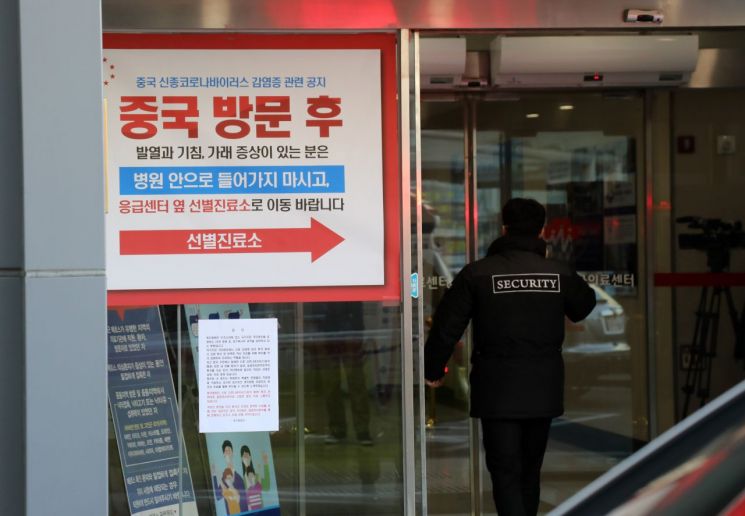
[Asia Economy Reporter Yu Je-hoon] The aviation industry is suffering from the outbreak of the novel coronavirus infection (Wuhan pneumonia) that has intensified since the beginning of the year. While the effects of the boycott of travel to Japan and the demand contraction due to political instability in Hong Kong, which have continued since last year, have not yet subsided, this has become a 'double whammy' situation for domestic airlines.
According to the industry on the 27th, six listed domestic airlines are scheduled to announce their fourth-quarter results from the end of this month to mid-next month. The industry estimates that most domestic airlines have suffered losses amounting to hundreds of billions of won. The fourth quarter is traditionally an off-season, and in addition to the boycott of Japan routes and political instability in Hong Kong, there has been fare competition due to oversupply on Southeast Asian routes.
The problem is that the unexpected Wuhan pneumonia outbreak has been rapidly spreading since the beginning of the year. The number of confirmed cases in Korea alone increased to four over a week since the 20th, and in China, where the Wuhan pneumonia began, confirmed cases have exceeded 2,700. In particular, this pneumonia is showing signs of spreading not only in Asia but also to Europe and the Americas.
For the Incheon-Wuhan route, T'way Air postponed its scheduled new service on the 21st, and Korean Air has suspended operations on this route until the 31st.
The industry is concerned that this situation might develop similarly to the 2003 Severe Acute Respiratory Syndrome (SARS) and the 2015 Middle East Respiratory Syndrome (MERS) outbreaks. Since the Korean aviation industry heavily depends on outbound demand, if demand on routes to China and others shrinks due to this situation, it will inevitably suffer direct damage.
According to the Korea Tourism Organization, during the SARS outbreak from January to July 2003, the cumulative number of domestic outbound travelers decreased by 9.6% compared to the same period the previous year, totaling 2,681,389 people. The main affected areas, China and Hong Kong, saw decreases of 21.0% and 27.2%, respectively.
An industry official said, "If the situation is not contained early, it is difficult to rule out the possibility that not only the China routes but also outbound travel demand itself could be affected," adding, "Especially given the experience with SARS and MERS, the sense of fear could spread more rapidly."
© The Asia Business Daily(www.asiae.co.kr). All rights reserved.
![Clutching a Stolen Dior Bag, Saying "I Hate Being Poor but Real"... The Grotesque Con of a "Human Knockoff" [Slate]](https://cwcontent.asiae.co.kr/asiaresize/183/2026021902243444107_1771435474.jpg)















