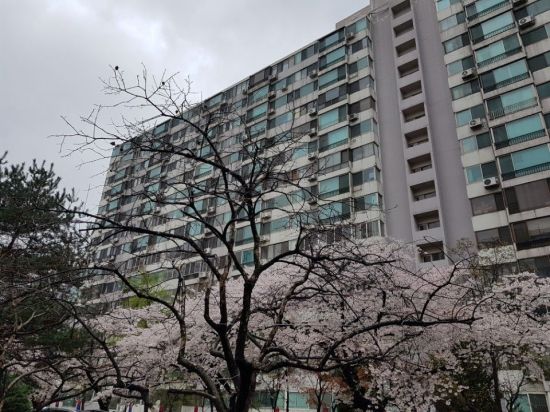
 An apartment complex in Songpa-gu, Seoul
[Asia Economy Reporter Donghyun Choi] Transit-oriented development projects are becoming the center of attention in the real estate market. Not only do transportation conditions improve significantly with the opening of railway stations, but the area around the station is systematically developed with educational, cultural, and commercial facilities, transforming the neighborhood into a new residential area.
That is not all. The areas around transit-oriented development zones see increased residential preference and concentrated housing demand due to improved living conditions, causing apartment prices in the vicinity to soar.
In fact, in the case of Suseo Station area in Gangnam-gu, Seoul, where construction began last October, apartment prices in the area have risen significantly. According to Real Estate 114, the average apartment sale price per 3.3㎡ in Suseo-dong, Gangnam-gu, where the Suseo Station area development is underway, stands at 44.65 million KRW as of this month. This is a 58.1% increase compared to the average sale price of 28.25 million KRW in December 2016, when the Suseo Station SRT opened.
The same trend is observed in provincial areas. The average apartment sale price per 3.3㎡ in Gajwa-dong, Jinju-si, Gyeongsangnam-do, where the Sinjinju Station area development is taking place, rose from 6.24 million KRW in April 2014, when the district construction began, to 6.68 million KRW two years later in April 2016, and currently stands at 7.19 million KRW. This contrasts with the average apartment sale price in Gyeongsangnam-do, which declined from 7.18 million KRW in April 2016 to 7.00 million KRW currently.
Premiums are also added to apartment pre-sale rights. According to the Ministry of Land, Infrastructure and Transport’s actual transaction price data, pre-sale rights for ‘Sinjinju Station City Pradium’ located within the Sinjinju Station area in Jinju-si, Gyeongnam, are traded with premiums of several tens of millions of KRW. An 84.98㎡ unit in this apartment was traded for 329.5 million KRW (23rd floor) last December, which is 32.1 million KRW higher than the pre-sale price of 297.4 million KRW.
As a result, areas undergoing transit-oriented development are also experiencing a boom in the pre-sale market. ‘Gwangju Station Nature & Xi,’ supplied in July last year in the Gwangju Station area in Gyeonggi Province, recorded an average competition rate of 35.4 to 1 in the first priority subscription. Additionally, ‘Daegok Station Doosan We've,’ supplied in November last year in Todang-dong adjacent to the Daegok Station area development zone in Goyang-si, Gyeonggi Province, attracted nearly 10,000 subscription accounts in the first priority subscription, recording an average competition rate of 52.25 to 1. This complex received much attention from many buyers as it is expected to benefit from development prospects such as the Daegok Station area and the GTX-A line construction, and it was free from subscription regulations.
This year as well, pre-sale complexes supplied in areas undergoing transit-oriented development are expected to capture the hearts of prospective subscribers.
HDC Hyundai Development Company plans to supply ‘Sokcho 2nd I-Park’ in the area of 415, Joyang-dong, Sokcho-si, Gangwon-do in February. This complex will consist of 6 buildings, ranging from 2 basement floors to 29 above-ground floors, with a total of 578 households and exclusive areas of 79 to 156㎡.
Bando Construction plans to supply ‘Seodaegu Station Bando Yubora Centum’ in the area of 1094-18, Pyeongni-dong, Seo-gu, Daegu Metropolitan City in the first half of this year. This complex will consist of a total of 1,678 households with exclusive areas ranging from 46 to 84㎡, of which 1,226 households will be offered to the general public.
GS Construction plans to supply 1,895 ‘Xi’ apartments through the Susaek 6 and 7 district housing redevelopment projects in Eunpyeong-gu, Seoul, in April. The Susaek 6 district will have 672 households with exclusive areas of 59 to 84㎡, and the Susaek 7 district will have 1,223 households with exclusive areas of 59 to 84㎡.
© The Asia Business Daily(www.asiae.co.kr). All rights reserved.
![Clutching a Stolen Dior Bag, Saying "I Hate Being Poor but Real"... The Grotesque Con of a "Human Knockoff" [Slate]](https://cwcontent.asiae.co.kr/asiaresize/183/2026021902243444107_1771435474.jpg)














