Cases of Serving Less Food to Women Reported via Twitter
Some Netizens Share 'Food Gender Discrimination' Restaurants
Place Names Mentioned, Restaurant Names in Initial Consonants
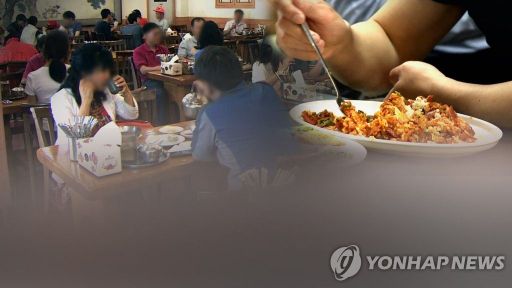
[Asia Economy Reporter Han Seung-gon] "I don't even know how many places there are in Seoul. I should make a list."
Stories of victims experiencing so-called 'food gender discrimination,' where some restaurants serve smaller portions only to female customers, are spreading mainly on social networks such as Twitter and Facebook.
'Food gender discrimination' refers to the practice where, when women and men order the same food, the restaurant owner serves a smaller portion to the female customer without her consent. The restaurant side claims, "Because women eat less, and it’s a waste to throw away leftover food."
Netizens are outraged, saying that giving smaller portions only to women is clear discrimination, and if they intend to serve less food, they should ask for prior consent and charge less.
On the afternoon of the 18th, right after the article addressing 'food gender discrimination' (▶Related article | "Men get more, women get less" Are you aware of food gender discrimination in restaurants?) was published, Twitter users and other netizens began creating and sharing a so-called 'list of restaurants that serve smaller portions only to women' mainly on SNS.
One Twitter user shared the article expressing dissatisfaction, which, as of 3 PM on the 21st, had been retweeted 17,246 times and received 3,176 likes.
Netizens mainly mentioned place names and restaurant initials while venting about 'food gender discrimination.'
Twitter user A shared on their SNS, "At a restaurant in Gongdeok, Seoul, the rice bowl sizes differ for women and men. At Jongno OO place, even when ordering the same kalguksu, they openly take orders as one for a woman and one for a man."

Another netizen pointed out, "The restaurant I experienced this at is near Sinchon Station, Seoul, OOOOO. They say to the kitchen, 'One son, one daughter,' when placing orders," and criticized, "At Yaksu Market OOO, they say, 'We thought this menu was ordered by a man, so we gave a larger portion.'"
They continued, "Female customers dining alone are seated at shared tables, while male customers dining alone get four-person tables. I have no intention of going back. I will spread the word whenever I get the chance."
Another netizen mentioned the same restaurant near Sinchon Station, saying, "Now they discriminate even based on male students' bodies. Due to the nature of the department, they manage their weight, but the son, like a daughter, is treated this way when ordering. I will never go back," expressing frustration.
Another netizen said, "Students are really upset about this reality," and added, "A friend once got angry and confronted the issue at a workplace cafeteria because of this problem."
Meanwhile, another netizen mentioned another form of gender discrimination occurring in restaurants.
One Twitter user expressed frustration in August last year, saying, "I will never go back to a place that practices gender discrimination in food by serving smaller portions, giving better cuts to men, or handing tongs to men to grill meat while giving nothing to women."
On the other hand, it is not easy to take administrative action against food discrimination by some restaurant owners. A representative from the Korea Consumer Agency explained, "It is difficult to take uniform measures regarding discrimination in food portions based on gender," and added, "It is appropriate for restaurant owners to actively listen to and reflect customers' opinions."
© The Asia Business Daily(www.asiae.co.kr). All rights reserved.
![Clutching a Stolen Dior Bag, Saying "I Hate Being Poor but Real"... The Grotesque Con of a "Human Knockoff" [Slate]](https://cwcontent.asiae.co.kr/asiaresize/183/2026021902243444107_1771435474.jpg)
















