Ministry of Unification Conducts Comprehensive Survey of Vulnerable North Korean Defectors
Identifying 'At-Risk Individuals' Urgently Needing Living and Medical Expenses
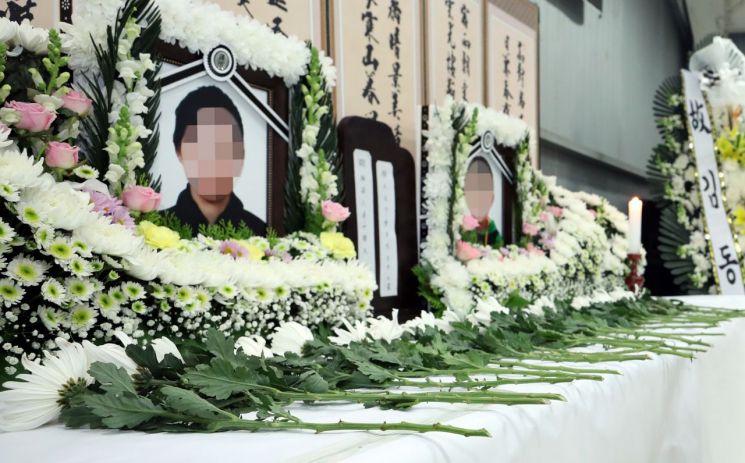 On the 26th, memorial altars were set up at six locations in the Seoul metropolitan area, including Dongbu Hana Center in Gwanak-gu, Seoul, to commemorate Han Seong-ok and her child, North Korean defectors who were found dead in a rental apartment at the end of July last year. The photo shows chrysanthemums placed in front of the portrait of the mother and child at the Dongbu Hana Center memorial altar in Gwanak-gu.
 Following last year's death of a North Korean defector mother and child, the government is conducting a comprehensive survey of vulnerable North Korean defectors in welfare blind spots and has identified 553 individuals for urgent support.
The Ministry of Unification announced on the 21st that, as a result of conducting the 'Comprehensive Survey of Vulnerable North Korean Defectors' twice last year, a total of 553 people were identified as 'suspected crisis cases' urgently needing support for living expenses and medical costs.
The total number of support services required for these individuals amounts to 874 cases.
This is the first time the government has conducted a comprehensive survey targeting vulnerable North Korean defectors.
The survey was carried out as part of measures following the death of a North Korean defector mother and child in Gwanak-gu, Seoul last year, aiming to identify defectors in so-called 'welfare blind spots' and provide necessary support.
In the first survey conducted at the end of September last year, the South-North Hana Foundation selected 3,052 individuals from among approximately 31,000 North Korean defectors residing in South Korea, excluding recipients of livelihood and medical benefits, regular employees enrolled in employment insurance, and duplicates. As a result, 373 were identified as suspected crisis cases.
Then, last month, through the Ministry of Health and Welfare's system, 783 individuals meeting nine crisis criteria such as power outages and arrears were selected for a second survey, which identified an additional 180 cases.
Among the 3,835 individuals surveyed in the first and second rounds, about 14.3% were identified as suspected crisis cases requiring urgent support.
Based on the total number of North Korean defectors residing in the country (approximately 31,000), this accounts for about 1.7%.
The Hana Foundation and local governments are proceeding with urgent support procedures based on the survey results.
There are cases requiring overlapping support depending on the severity of the crisis, and urgent living expenses or medical costs will be provided within the set number of times and limits per person.
The Ministry of Unification emphasized, "We will check whether all suspected crisis cases apply for welfare support in January and ensure thorough follow-up to prevent any omissions."
Additionally, the Ministry plans to regularly conduct biannual surveys on the status of crisis households through 'visiting counseling support.'
Meanwhile, last year, Han Mo (42) and his son Kim Mo (6), North Korean defectors, were found dead in a rental apartment in Gwanak-gu, Seoul at the end of July, heightening social concerns about vulnerable North Korean defector households.
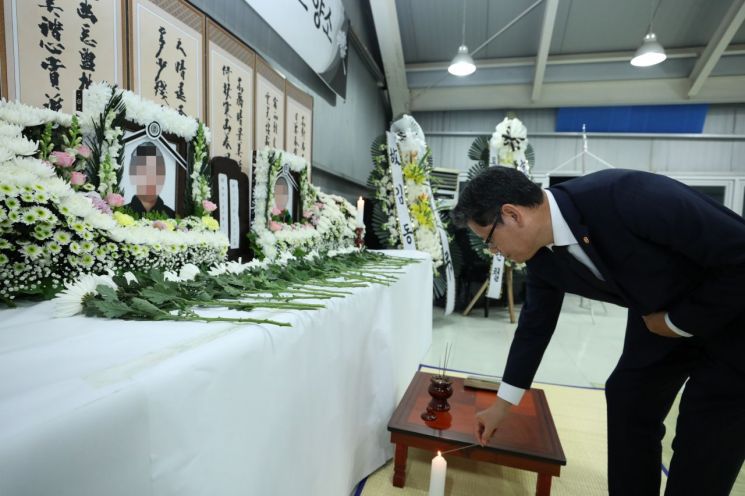 Minister of Unification Kim Yeon-chul is paying his respects at the memorial altar set up for Han Seong-ok, a defector from North Korea, and her child at the Dongbu Hana Center in Gwanak-gu, Seoul, on November 26 last year.
 ◆ Cases of Identifying and Supporting 'Suspected Crisis Cases' Among North Korean Defectors
A counselor at the Hana Center first helped Ms. A apply for emergency living expenses from the South-North Hana Foundation to prevent her from losing hope. Recognizing the urgent need for her to be selected as a basic livelihood security recipient, the counselor visited local government offices more than ten times to support her selection. Additionally, through hospital treatment, legal aid, provision of daily necessities, and linking her child to tutoring services, they actively supported her to maintain at least a minimum healthy life.
Going forward, Ms. A will receive regular psychological counseling services at the Hana Center and, once her health recovers, will participate in vocational training for reemployment.
© The Asia Business Daily(www.asiae.co.kr). All rights reserved.
![Clutching a Stolen Dior Bag, Saying "I Hate Being Poor but Real"... The Grotesque Con of a "Human Knockoff" [Slate]](https://cwcontent.asiae.co.kr/asiaresize/183/2026021902243444107_1771435474.jpg)
















