Controversy Over Marketing Movie 'Little Women' Featuring Male Actor
Female Audiences Protest "Excluding Female Director and Actresses"
Over 70% of Ticket Buyers for Female-Led, Narrative Film Are Women
Experts Say "Universality Emphasized to Avoid Controversy"
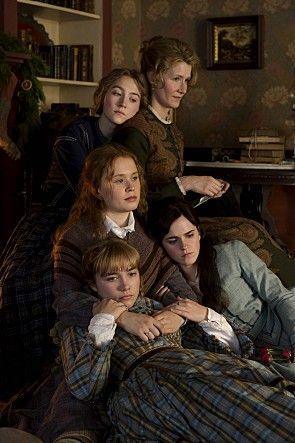 Movie 'Little Women' still cut / Photo by Naver Movie
[Asia Economy Reporter Kim Ga-yeon] "I was waiting for this movie because of the female director and actresses, so I don't understand why they had to highlight a male actor."
The upcoming film 'Little Women,' set to be released next month, has sparked controversy in South Korea for excluding the female director and lead actresses from its marketing and instead emphasizing a male actor.
Female audiences have raised their voices in criticism, saying that this marketing approach diminishes the film's meaning and the director's intent. Despite recent audience demand for diverse female roles and stories, film marketing still struggles to reflect the needs of female viewers.
'Little Women' is a reinterpretation of the novel of the same name from a modern female perspective, depicting the growth of four sisters: Meg, Jo, Beth, and Amy.
The film stars well-known actors including Emma Watson, Meryl Streep, Laura Dern, Saoirse Ronan, and Florence Pugh. Greta Gerwig, who was nominated for Best Picture, Best Director, and Best Screenplay at the 90th Academy Awards for her directorial debut 'Lady Bird,' directed the film.
This year, at the 92nd Academy Awards, the film received six nominations including Best Picture and Best Actress, drawing attention even before its domestic release.
On the 16th, CGV posted the film's trailer on its official Facebook page, introducing it with the phrase, "Timoth?e Chalamet's good looks are a bonus." In the comments, they added, "All four sisters are lovely."
Audiences criticized this, saying, "They highlighted a male actor while excluding the female protagonists who lead the film." The male actor mentioned in the post plays Laurie Lawrence, the boy next door to the four sisters, a relatively minor role. The criticism was that the marketing ignored the female leads and the central narrative of the film.
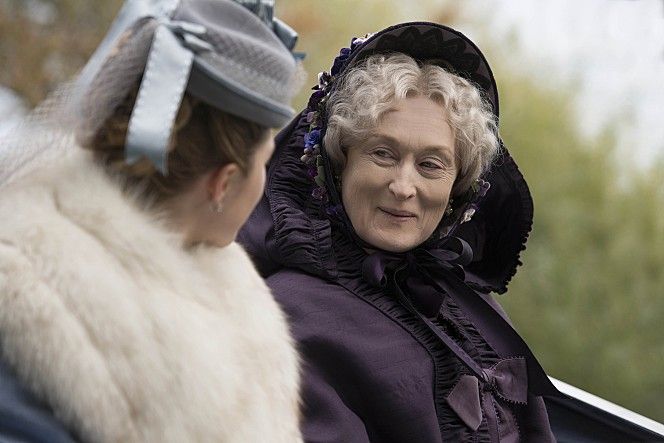
Following the controversy, CGV explained to a media outlet the next day that the promotion was intended to leverage the name recognition of a well-known actor.
However, the controversy only grew. Audiences pointed out that the film features female actors with high recognition in South Korea, such as Emma Watson and Meryl Streep. Emma Watson is well known for her role as Hermione in the 'Harry Potter' series, and Meryl Streep is famous for films like 'The Devil Wears Prada' and 'Mamma Mia.'
A 27-year-old office worker, A, who has been waiting for the film's release since last year, said, "That's an absurd excuse. If we're talking about name recognition, they should have promoted it with Emma Watson from 'Harry Potter.' I don't understand why they don't try to understand what the audience wants when marketing."
A added, "Films like 'Little Women,' which focus on female-centered stories, have a primarily female audience. Marketing that aims to attract female viewers but highlights male actors is really outdated. If they want more female viewers, they should market accordingly."
Since last year, female-centered films have shown notable success in domestic theaters. Research indicates that female audiences have played a significant role in the success of these films.
According to CGV's system on the 21st, 75.8% of ticket buyers for 'Kim Ji-young, Born 1982' were women. Additionally, 77.3% of ticket buyers for the recently released female queer film 'Portrait of a Lady on Fire' were women, and over 70% of the audiences for films like 'House of Hummingbird,' 'The Witch,' and 'Aladdin' were female viewers.
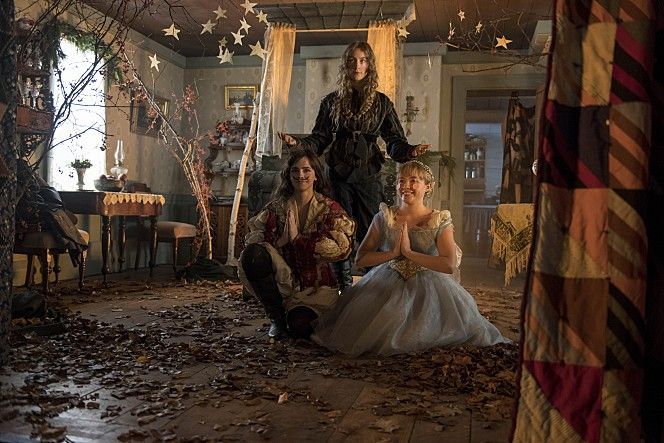
Experts criticized the approach of relying on universality to avoid controversy as complacent.
Popular culture critic Hwang Jin-mi said, "They think emphasizing women and feminism in promotion only causes controversy and doesn't help ticket sales. But among female audiences, those interested in feminism are more likely to seek out such films, and they don't consider that."
Hwang added, "Whether it's gender issues, class, or race, even though there is context, they remove those parts because they are 'uncomfortable' and rely on universality. They think 'this will sell more broadly.' But since the uncomfortable aspects are the essence of the work, if you avoid and ignore them, the meaning of the text itself disappears."
She continued, "Recently, the proportion of male-female couples watching movies together has decreased significantly. While many watch alone, especially female audiences accompanied by same-gender friends are increasing. In this situation, marketing that emphasizes universality is a very complacent approach and is not commercially advantageous."
© The Asia Business Daily(www.asiae.co.kr). All rights reserved.


















