Chinese Woman Residing in Wuhan Arrived the Day Before
KCDC: "Human-to-Human Transmission Is Considered Possible"
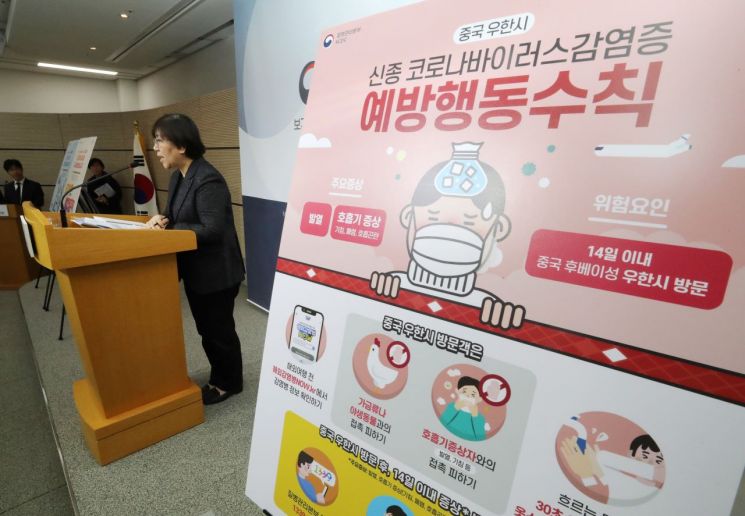
[Asia Economy Reporter Cho Hyun-ui] The Korea Centers for Disease Control and Prevention (KCDC) announced on the 20th that it has confirmed a case of the novel coronavirus, commonly known as 'Wuhan pneumonia.'
According to the KCDC, a 35-year-old Chinese woman who resided in Wuhan, China, and entered the country the previous day was classified as a symptomatic person under investigation at Incheon Airport due to symptoms such as high fever. She was treated at Incheon Medical Center, a nationally designated isolation hospital, and was confirmed as a positive case this morning.
The confirmed patient had symptoms of fever, chills, and muscle pain on the 18th, one day before entering the country, and received treatment at a local hospital where she was prescribed medication for a cold.
Investigations revealed that the patient had no history of visiting the traditional market in Wuhan or the Huanan seafood market, which were identified as sources of pneumonia spread, nor had she come into contact with wild animals.
According to the KCDC, a central epidemiological investigator is conducting an in-depth epidemiological investigation of the confirmed patient. Since she was isolated at the quarantine stage, she was not exposed to the community after entering the country. Currently, contacts such as passengers and crew members who were on the same flight are being investigated, and these contacts have been notified to the relevant public health centers for active monitoring.
With the occurrence of this confirmed case, the KCDC raised the infectious disease crisis alert level from 'Interest' to 'Caution.' This indicates that a novel infectious disease that is spreading overseas has been introduced into the country.
Accordingly, health authorities have activated the Central Disease Control Headquarters and local government task forces and decided to operate a 24-hour emergency quarantine system considering the Lunar New Year holiday.
Below is a Q&A regarding the confirmed case of Wuhan pneumonia in Korea.
- What was the purpose of the confirmed patient's companions' visit to Korea?
▲ They visited Korea to travel to Korea and Japan for the Lunar New Year holiday.
- Are there any companions?
▲ There are five companions. They have not shown related symptoms, so tests have not been conducted yet. Currently, contact investigations are underway. Since the airplane is a confined space, the patient's in-flight movements will be identified first, similar to the MERS or SARS cases. Passengers seated close to the patient, such as those in front and behind, and the flight attendants who took care of the patient will be classified as close contacts and managed accordingly.
- Approximately how many total contacts does the confirmed patient have?
▲ It is currently being confirmed. The China Southern Airlines flight the patient took is known to have about 180 passengers.
- How do you assess the risk of human-to-human transmission?
▲ It is considered possible within a limited scope. Previously, Wuhan health authorities reported transmission among family members. Domestic health authorities believe human-to-human transmission is possible, but further investigation is needed regarding the level of infectivity. Also, research and investigation on who the contacts are must proceed.
- Pneumonia cases have occurred not only in Wuhan but also in other regions in China such as Shenzhen. How will you manage arrivals from these areas?
▲ Currently, there are two patients in Beijing and one in Shenzhen. However, since all of them contracted the disease after visiting Wuhan, the risk of transmission between regions within China must be approached carefully.
- Is it possible to check for fever among passengers on flights transiting through Wuhan?
▲ For direct flights, quarantine is conducted immediately upon disembarkation. For transit flights, it is done at the entry point. However, since there are many arrivals from within China visiting Korea, it is impossible to quarantine everyone. Also, during quarantine, the incubation period may mean symptoms have not appeared yet, or antipyretics may have been taken. Quarantine is just one method, and community surveillance must be strengthened.
- You are developing a test that can provide results quickly. Was the virus detected within a day for this confirmed patient?
▲ Currently, the testing method takes at least 12 hours to 2 days. Therefore, we are working to establish a method for accurate testing in a short time, which is expected to be available by early next month. We have shared testing methods developed by the World Health Organization (WHO), Hong Kong, Germany, and other countries, and have set diagnostic methods in consultation with private experts. We are currently establishing a method to mass-produce and conduct tests.
© The Asia Business Daily(www.asiae.co.kr). All rights reserved.
![Clutching a Stolen Dior Bag, Saying "I Hate Being Poor but Real"... The Grotesque Con of a "Human Knockoff" [Slate]](https://cwcontent.asiae.co.kr/asiaresize/183/2026021902243444107_1771435474.jpg)















