LTV Rules Apply to New Jeonse Loan Limits Even for Single-Homeowners Who Bought with Jeonse Before 12·16 Measures... Loan Limits Reduced
Financial Authorities: "LTV Has Been Applied at Loan Time Since 2017 8·2 Measures... No Retroactive Application Issue"
No Exceptions for Single-Homeowners Who Bought Homes Relying on Previous Policies, Causing Funding Gaps
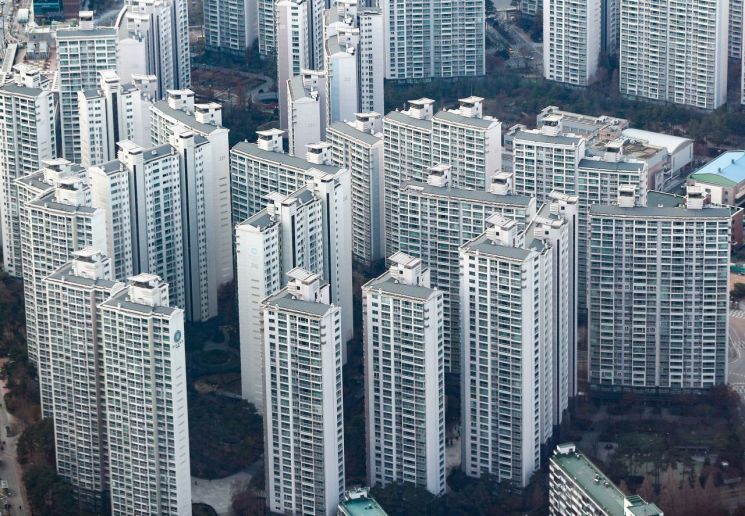
[Asia Economy Reporter Haeyoung Kwon] #Mr. A, who lives in a semi-jeonse (semi-long-term lease) in the outskirts of Seoul, purchased an apartment in Bundang, Gyeonggi Province, for 1.3 billion KRW at the end of November last year. He bought the house with a jeonse contract in advance to move to a school district when his eldest child, currently 6 years old, enters elementary school. Mr. A's financing plan was disrupted starting from the December 16th measures last year. This is because the financial authorities decided to apply the new loan regulations even to homebuyers who purchased before the December 16th measures. Under the previous regulations, at the time of moving in two years later, a loan-to-value ratio (LTV) of 40% would have allowed a loan of 520 million KRW, but under the new measures, an LTV of 20% is applied to the portion exceeding 900 million KRW, reducing the possible loan amount to 440 million KRW, nearly 100 million KRW less. Since Mr. A had already gathered funds through savings, partial withdrawal of retirement funds, and even credit loans?so-called 'Youngkkeun' (borrowing to the extent of one's soul)?he is now in a situation where he has to ask his parents for help.
The financial authorities' decision to retroactively apply the LTV limit of 20% on the portion exceeding 900 million KRW to one-homeowners who purchased homes with jeonse contracts before the December 16th measures has sparked controversy. This is the impact of the December 16th loan regulations, which are fully enforced starting from the 20th, coinciding with the implementation of jeonse loan regulations. The financial authorities maintain that LTV regulations should be applied based on the loan execution date, but those who purchased homes relying on previous policies are now facing financing gaps due to the sudden policy change.
According to the financial sector on the 20th, if a property was purchased with a jeonse contract for actual residence in a regulated area before the December 16th measures, the maximum LTV limit for jeonse deposit return loans will be reduced from the previous '40%' to '40% for up to 900 million KRW, and 20% for amounts exceeding 900 million KRW' going forward.
A jeonse deposit return loan is a loan taken to return the jeonse deposit to tenants when landlords ask them to move out, and it is essentially a mortgage loan. Through the December 16th measures, the financial authorities changed the LTV for homes exceeding 900 million KRW in regulated areas from the previous 40% to 40% for up to 900 million KRW and 20% for the excess amount.
The problem is that this regulation is being retroactively applied even to one-homeowners who signed purchase contracts before the December 16th measures.
For example, in Mr. A's case, who purchased a home with a jeonse contract in advance to move to a school district in Seoul or Gyeonggi Province when his child enters elementary school two years later, the loan limit suddenly decreases. Parents who have taken out mortgage loans (jeonse deposit return loans), credit loans, and even partially withdrawn retirement funds to finance their child's education?engaging in 'Youngkkeun'?are suffering significant damage due to this regulation.
The financial authorities plan to apply the existing LTV 40% if buyers before the December 16th measures use jeonse deposit return loans within 'three months after registration.' However, they do not plan to apply exceptions in other cases. One-homeowners who purchased homes planning to move in for actual residence one to two years later are expected to bear the full brunt of the damage.
Regarding this, a financial authority official explained, "LTV regulations follow the rules at the time of loan execution, so the retroactive application issue is irrelevant," adding, "This principle has been consistently applied since the August 2nd, 2017 measures, and nothing new has changed."
A real buyer affected by the reduced loan limit due to the December 16th measures said, "If the government further lowers the LTV ratio beyond the December 16th measures, won't the loan limit decrease even more at the time of moving in one or two years later?" He criticized, "The government's policy, which does not protect innocent victims and even labels one-homeowners as gap speculators, is rather disturbing the market."
A financial sector official said, "One-homeowners are real buyers, not gap speculators, but the government is trying to solve its real estate policy failures with reckless loan regulations that even apply retroactively," adding, "Government policy is based on trust, but even real buyers are now expressing dissatisfaction that they can no longer trust the government."
© The Asia Business Daily(www.asiae.co.kr). All rights reserved.
![Clutching a Stolen Dior Bag, Saying "I Hate Being Poor but Real"... The Grotesque Con of a "Human Knockoff" [Slate]](https://cwcontent.asiae.co.kr/asiaresize/183/2026021902243444107_1771435474.jpg)















