[Asia Economy Reporter Hyun-ui Cho] The Trump administration in the United States has decided to introduce new measures that reverse the "Healthy, Hunger-Free Kids Act," a key initiative of former President Barack Obama's wife, Michelle Obama.
On the 17th (local time), U.S. Agriculture Secretary Sonny Perdue announced new regulations that relax the rules on optional meals provided to students in school cafeterias and allow a wider variety of vegetables to meet nutritional standards, Bloomberg reported.
Secretary Perdue explained the purpose of revising the current school meal law, saying, "Too much food waste is being generated under the existing meal law, and there is a need for a reasonable level of flexibility to satisfy both students' nutrition and taste preferences, according to school authorities."
Perdue added that this measure would increase the flexibility for school authorities to provide meals that suit students' preferences, reduce leftover food, and also lessen administrative burdens.
The Department of Agriculture also explained that all students, including low-income students attending public schools, will have to pay extra if they choose optional meals instead of the standard meals provided.
Advocates of healthy meals have opposed the new regulations, arguing that they attempt to weaken nutritional standards. Colin Schwartz, Deputy Director of Legal Affairs at the Center for Science in the Public Interest, which researches nutrition and health policies, pointed out, "Children attending school will now be able to eat pizza, hamburgers, French fries, or snacks every day instead of the healthier, balanced lunches provided by schools."
Currently, U.S. school meals must meet weekly nutritional standards, and pizza or hamburgers can only be served once a week if calorie, fat, and saturated fat standards are met.
Deputy Director Schwartz stated that under this measure, many schools will offer potato-based products such as French fries as substitutes for red vegetables like oranges, carrots, tomatoes, or pumpkins. He also expressed concern that breakfasts provided in classrooms will be replaced with less nutritious foods such as granola bars or baked goods instead of sufficient amounts of fruit.
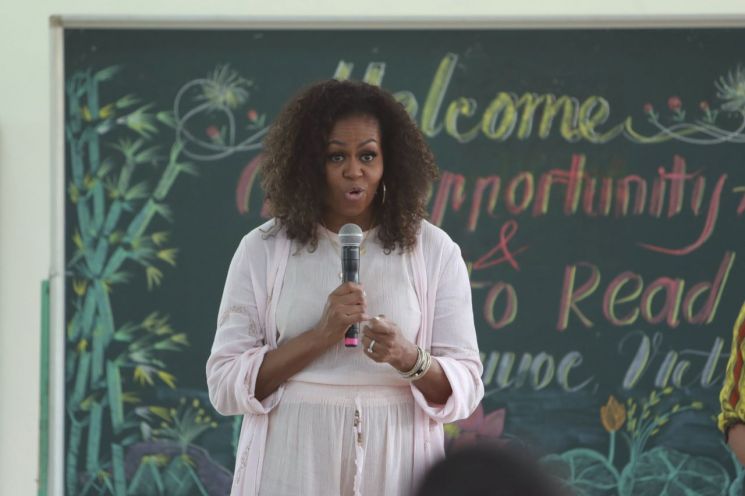
The Healthy, Hunger-Free Kids Act, signed into law by President Obama in 2010, requires school meals to include fruits, vegetables, whole grains, and reduce fats and sodium to improve nutritional standards. Michelle Obama, a supporter of the childhood obesity prevention campaign "Let's Move," actively supported this law.
However, there was controversy as healthy meals were often rejected by students for being "tasteless and insufficient." Subsequently, the Trump administration took steps to effectively dismantle the law by delaying its implementation or granting exceptions starting in December 2018.
Coincidentally, the day the Department of Agriculture announced the revision was Michelle Obama's 56th birthday, but the department explained it was a coincidence. The revised law is scheduled to be published in the Federal Register on the 21st.
© The Asia Business Daily(www.asiae.co.kr). All rights reserved.
![Clutching a Stolen Dior Bag, Saying "I Hate Being Poor but Real"... The Grotesque Con of a "Human Knockoff" [Slate]](https://cwcontent.asiae.co.kr/asiaresize/183/2026021902243444107_1771435474.jpg)
















