Iran-Europe Enter Dispute Resolution Procedure
Post-Soleimani, Iran Declares Non-Compliance with Nuclear Enrichment Obligations
[Asia Economy Reporter Naju-seok] The Iran nuclear deal (JCPOA - Joint Comprehensive Plan of Action), which had barely been maintained despite U.S. President Donald Trump's declaration of withdrawal, is now on the brink of collapse. After the killing of Qasem Soleimani, commander of the Iranian Revolutionary Guard Corps Quds Force, by U.S. forces, both Europe and Iran have fallen into deep contemplation over the Iran nuclear issue.
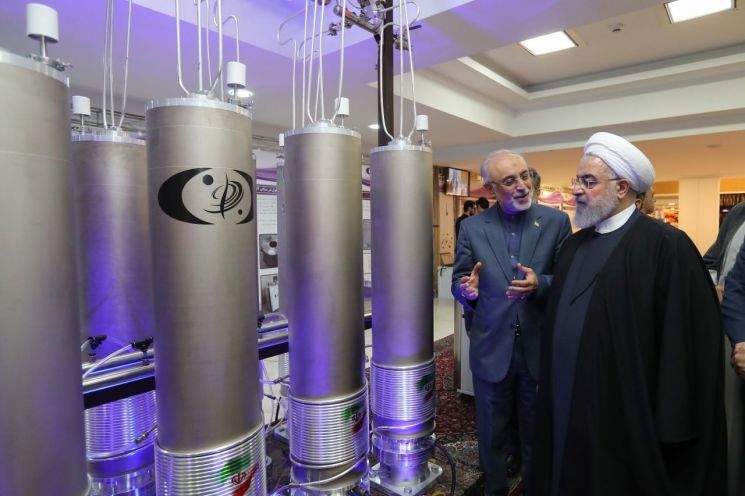
On the 16th (local time), Iranian President Hassan Rouhani stated, "Currently, Iran's daily uranium enrichment amount is higher than before the nuclear deal was concluded." After Soleimani's death, Iran announced, "We have decided to enter the final stage of suspending the implementation of the nuclear deal," adding, "Iran will not comply with any obligations regarding uranium enrichment capacity and level, nuclear material production, research and development, and other commitments."
In 2015, Iran signed a nuclear deal with the United States, Germany, France, the United Kingdom, China, and Russia. The deal recognized Iran's peaceful nuclear development but prohibited weaponization, easing sanctions under these conditions. Iran reduced its centrifuges from about 19,000 to 6,104, roughly one-third, cut its enriched uranium stockpile from 10,000 kg to 300 kg, and lowered uranium enrichment levels to 3.67% to prevent use in nuclear weapons.
Despite the U.S. withdrawal declaration, Iran and Europe had intended to maintain the nuclear deal, but the deteriorating situation following Soleimani's death has shaken the agreement.
With the Iranian government declaring it will no longer abide by the nuclear deal, European countries such as Germany, France, and the United Kingdom have announced they will enter dispute resolution procedures.
President Rouhani also opposed the European countries' move to enter dispute resolution procedures regarding the Iran nuclear deal. He said, "When the countries involved in the nuclear deal stepped back from the existing agreement, Iran was not sitting at the negotiation table," adding, "Iran will also withdraw from the agreement."
In particular, the Iranian government is protesting accusations that Germany, France, and the United Kingdom are preparing to abandon the nuclear deal under pressure from the U.S. threat to raise automobile tariffs. Earlier, the U.S. daily newspaper The Washington Post (WP) reported that the Trump administration threatened to impose a 25% tariff on European cars if the three countries did not enter dispute resolution procedures over the Iran nuclear deal. As a result, the three countries, including Germany, requested dispute resolution procedures, effectively complying with the U.S. government's demands.
Iranian Foreign Minister Javad Zarif criticized, "The three European countries sold out the nuclear deal to avoid Trump's new tariffs."
Meanwhile, Annegret Kramp-Karrenbauer, German Minister of Defense, responded regarding the U.S. threat, saying, "It is a fact that actually happened."
© The Asia Business Daily(www.asiae.co.kr). All rights reserved.

















