5G Deployment on All Routes in Daegu, Daejeon, and Busan by March This Year
Goal to Complete Nationwide Subway 5G Coverage by Year-End
Currently Providing 5G on Seoul Metropolitan Subway Lines 2, 3, 6, 8, and Parts of Gyeongui-Jungang Line
[Asia Economy Reporter Koo Chae-eun] The three major telecom companies have jointly installed 5G facilities across all subway lines in Gwangju Metropolitan City and have completed the launch of 5G services. Their goal is to finish network construction so that 5G coverage is available in subways nationwide within this year.
According to industry sources on the 17th, the three telecom companies are jointly promoting the launch of 5G services in subway railways and stations in the metropolitan area and major cities nationwide. As of the first week of January, they completed the launch of 5G services throughout the entire subway operation section, including 20 stations on one subway line in Gwangju Metropolitan City.
The three telecom companies plan to complete 5G construction on all subway lines in Daegu, Daejeon, and Busan by March this year, starting with Gwangju. Additionally, they aim to complete the nationwide 5G subway service launch, including Seoul and the metropolitan area, by the end of the year. Currently, in Seoul and the metropolitan area, 5G services are provided on some sections such as Subway Lines 2, 3, 6, 8, and the Gyeongui-Jungang Line.
When building subway communication networks, complex preliminary work is required to install 5G infrastructure such as optical cables, power feeding lines, and power facilities inside the dark subway tracks. Since equipment installation can only be done during early morning hours when subway operations are halted for safety reasons, it takes a considerable amount of time. Therefore, the three telecom companies are jointly constructing the network to enable faster and more efficient network deployment.
In the case of joint 5G construction, the lead company is responsible for coordinating construction permits with subway authorities and handling infrastructure construction such as optical cables, power feeding lines, and power facilities. Once the lead company completes the infrastructure work, both the lead and participating companies install and interconnect their respective base station equipment, reducing the time and cost required for network construction.
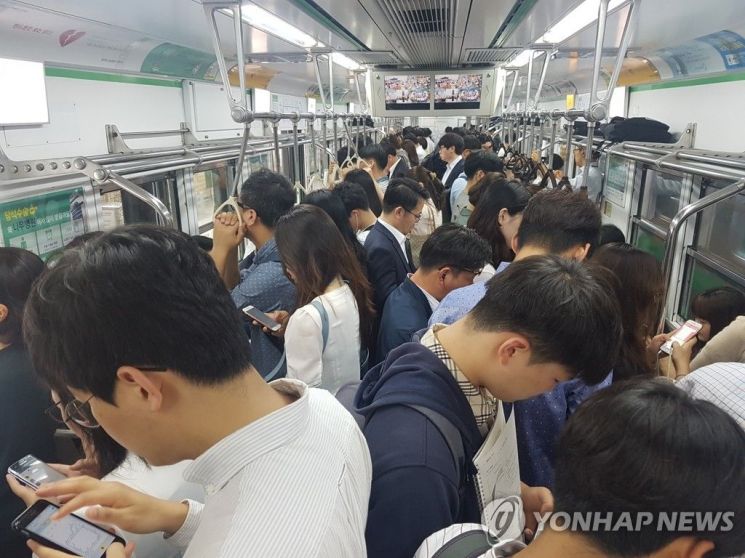
Since more than approximately 6.7 million people use subways nationwide daily on average, the three telecom companies plan to divide subway lines and stations to jointly build 5G infrastructure and rapidly expand 5G coverage nationwide to accelerate the expansion of 5G services.
© The Asia Business Daily(www.asiae.co.kr). All rights reserved.
![Clutching a Stolen Dior Bag, Saying "I Hate Being Poor but Real"... The Grotesque Con of a "Human Knockoff" [Slate]](https://cwcontent.asiae.co.kr/asiaresize/183/2026021902243444107_1771435474.jpg)















