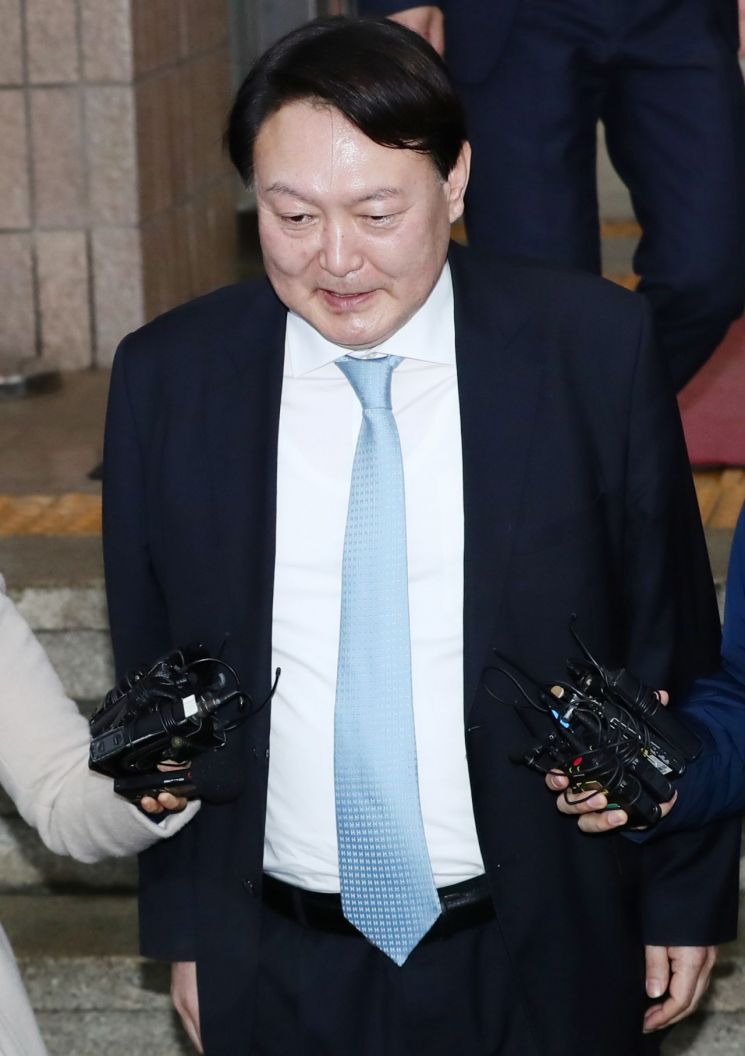
[Asia Economy Reporter Kim Hyung-min] Prosecutor General Yoon Seok-yeol expressed his position on the investigative authority adjustment bill passed by the National Assembly on the 13th, stating that he "respects the decision of the National Assembly."
On the late afternoon of the same day, after the investigative authority adjustment bill passed the National Assembly, Prosecutor General Yoon conveyed through the spokesperson's office, "I have repeatedly stated in personnel hearings, national audits, and New Year's addresses that 'the final decision on the adjustment of investigative authority lies with the people and the National Assembly, and as a public official, I will respect the decision of the National Assembly.'"
With the investigative authority adjustment bill passing the National Assembly, significant changes are expected in the criminal justice procedure. The investigative environment for prosecutors has also drastically changed. The bill centers on abolishing the prosecutor's investigative command authority, granting the police the right to conclude primary investigations, and limiting the scope of direct investigations by prosecutors, thereby dispersing prosecutorial powers.
In particular, the prosecutor's investigative command authority will be abolished after 66 years since the enactment of the Criminal Procedure Act in 1954. Until now, the Criminal Procedure Act defined prosecutors as the main agents of investigative authority, and judicial police officers as assistants under the command of prosecutors. However, with the passage of the amendment, the relationship between prosecutors and police changes from "command" to "cooperation." The police are recognized as separate investigative agents and are granted the right to conclude primary investigations.
The police will only forward cases where charges are recognized to the prosecution and can conclude cases they judge as lacking sufficient charges on their own. The prosecution can review records and related evidence of non-prosecution decisions made by the police for 90 days and request reinvestigation.
The scope of direct investigations by prosecutors, which was virtually unrestricted, will also be limited. The revised law restricts cases for direct prosecution to "important crimes specified by presidential decree, such as corruption crimes, economic crimes, crimes by public officials, election crimes, defense industry crimes, major disasters, and crimes committed by police officers."
Restrictions on the evidentiary power of interrogation records are also a significant change. Until now, interrogation records prepared by prosecutors were recognized as having higher evidentiary value than those from police investigations. However, according to the investigative authority adjustment bill, even if the interrogation record is prepared by a prosecutor, it cannot be used as evidence at trial if the defendant or defense attorney does not acknowledge its contents.
© The Asia Business Daily(www.asiae.co.kr). All rights reserved.

















