[Hidden Business Story] Founded in 2007, Became a 'Unicorn Company' in 10 Years
Flipkart Encouraged 'Cash Payments' in India with 5% Internet Usage
Expanded Through M&A... Acquired by Walmart for $15 Billion, Gaining Capital and Distribution Channels
[Asia Economy Reporter Shinwon Yoon] Indian e-commerce company 'Flipkart' started as an online bookstore in 2007 and has grown into India's largest online retail giant, known as the 'Amazon of India,' holding a 53% market share in the Indian e-commerce market. Within 10 years of its founding, it was valued at $15 billion (approximately 17.4 trillion KRW), joining the ranks of 'unicorn companies.' In 2018, Walmart, the largest offline retailer in the United States, acquired a 77% stake in Flipkart for $16 billion (approximately 18.5 trillion KRW), valuing the company at $20 billion (approximately 23.2 trillion KRW).
Flipkart Emerges in the 'E-commerce Frontier' of India
When Flipkart was founded in 2007, India was a barren land for e-commerce. Internet penetration was below 5%, and credit card adoption was significantly low. It was a major risk for e-commerce companies, which primarily relied on credit card payments, to enter the Indian market.
However, India was a huge market. At that time, the population was about 1.2 billion, and now it has reached 1.38 billion. Experts predicted that in 5 to 10 years, India could rank fifth globally in the e-commerce industry.
Accordingly, Sachin Bansal and Binny Bansal, alumni who majored in computer engineering at the prestigious Indian Institute of Technology Delhi (IITD), pooled $5,900 (approximately 6.84 million KRW) to start Flipkart. Being well-versed in local Indian conditions, they devised a way to enable 'cash payments.' The service began by allowing customers to order products online and pay by cash or card upon delivery, according to their preference.
Meanwhile, the Indian market began to grow rapidly. India is one of the fastest-growing countries in global e-commerce. The size of India's e-commerce market grew from $3.9 billion (approximately 4.5 trillion KRW) in 2009 to $12.6 billion (approximately 14.6 trillion KRW) in 2013, and it is projected to reach $100 billion (approximately 116 trillion KRW) this year.
Recognizing India's growth potential, venture capital firm Accel Partners invested $1 million (approximately 11.6 billion KRW) in Flipkart in 2009. The following year, Tiger Global invested $10 million (approximately 1.16 billion KRW), followed by a $20 million (approximately 2.319 billion KRW) investment in 2011. SoftBank, led by Masayoshi Son, invested $2.5 billion (approximately 2.9 trillion KRW), bringing total investments to $6 billion (approximately 7 trillion KRW) to date.
With the support of these investments, Flipkart began to accelerate its growth. Revenue, which was only $180 million in 2013, increased to $3.1 billion (approximately 3.6 trillion KRW) by 2017, a 17-fold increase in about four years. The number of members exceeded 100 million, and over 100,000 sellers were registered.
 [Image source=Reuters Yonhap News]
Expanding Corporate Scale through M&A
Flipkart's success was supported by mergers and acquisitions (M&A). Flipkart acquired e-commerce-related companies with growth potential. In 2010, it acquired U.S. online book retailer WeRead, followed by the content site Mime360. Subsequently, it acquired Letsbuy.com, an online electronics retailer with 5 million monthly visitors, and Myntra.com, India's largest online clothing mall, expanding its corporate scale. In April 2016, Flipkart acquired PhonePe, an electronic payment system company, marking its leap into a full-fledged global e-commerce company.
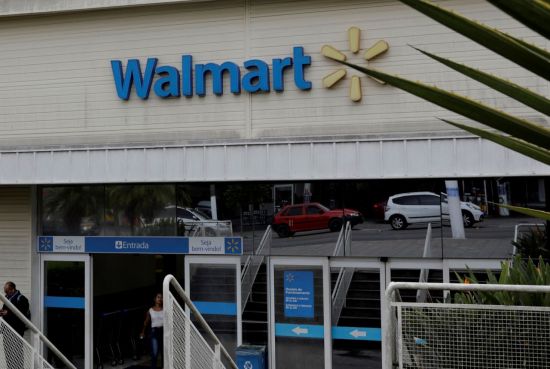
As the company grew, global retail giants began to take interest in Flipkart. Being the number one in India, the second most populous country after China, Flipkart was a coveted company. In 2018, global online retail giant Amazon and offline powerhouse Walmart competed over Flipkart. Ultimately, Walmart offered approximately 18.5 trillion KRW for a 77% stake in Flipkart, and Flipkart joined hands with Walmart. This was the largest M&A deal in Indian history at the time.
Walmart, which lacked an online distribution network in India, was able to establish a foothold in the emerging market of 1.3 billion people, and Flipkart gained powerful capital and distribution channels through Walmart, a massive retail company. Some even mention Flipkart as the only rival to Amazon. This is why investors and related industries are closely watching Flipkart's future.
© The Asia Business Daily(www.asiae.co.kr). All rights reserved.

















