[Hidden Business Story] Kraft Heinz Heading Toward Collapse Due to Excessive Austerity Management
Heinz Ketchup's Market Share Drops from 80% to 70% Amid Competition from New Companies
Experts Predict Negative Outlook for Kraft Heinz Failing to Capture the Millennial Generation
 'Kraft Heinz' Heading Toward Collapse Due to Excessive Austerity Management
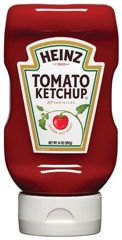
[Asia Economy Reporter Shinwon Yoon] Heinz Ketchup once sold 650 million units annually worldwide. Until 2016, it held the top global retail sales position, boasting an 82% market share in the United States and 60% in the United Kingdom. In 2015, following a merger with Kraft Foods, it rose to become the world's fourth-largest global food giant, with annual sales of $28 billion (approximately 33 trillion KRW) and a market capitalization of $62.6 billion (about 73.3 trillion KRW).
However, in the fourth quarter of 2018, the company recorded a massive loss of $12.6 billion (approximately 14.8 trillion KRW). On the day of the earnings announcement, its stock price plummeted by more than 27%. Warren Buffett, the "investment genius" who led the merger with an investment of $48 billion (about 56.2 trillion KRW), wrote off $3 billion (approximately 3.5 trillion KRW) and admitted, "We spent too much money." Why did Kraft Heinz face such a crisis?
Management Cut Staff and Even Controlled Office Supply Purchases, Resulting in the Worst Outcome
In fact, before the merger of the two companies, the U.S. food industry was already in crisis. Consumers preferred fresh and healthy foods over packaged products sold by Kraft or Heinz, and large food companies had to find ways to overcome this. Kraft Heinz chose 'cost-cutting,' led by the private equity firm '3G,' known for its extreme frugality.
Immediately after the 2015 merger, 3G announced 'Zero Based Budgeting.' Instead of reducing budgets for specific business units, this method assumes business expenses start at zero and budgets are added from there. About 2,500 employees were laid off during this process, and 3G cut costs on employee travel expenses, electricity bills, office supply purchases, and even stopped providing snacks to employees.
Thanks to this austerity management, by 2017, the company saved $1.7 billion (approximately 2 trillion KRW). Although Kraft Heinz, which had experienced poor performance for two years, appeared to improve with a net profit of $11 billion (about 12.9 trillion KRW) in 2017, the reality was different.
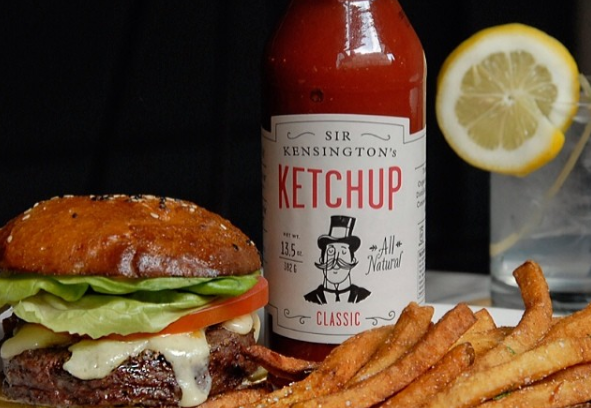
Focused solely on cost-cutting, research and development was neglected. 'Sir Kensington’s,' an organic ketchup brand founded in 2010 by two recent college graduates, emerged as a strong rival to Heinz Ketchup. In 2017, just nine years after its founding, Unilever acquired Sir Kensington’s for $140 million (approximately 16.4 billion KRW), equipping it with formidable capital.
Despite the emergence of new products reflecting consumers' interest in health and fresh foods, including Sir Kensington’s, Kraft Heinz had neither strategies nor new products aligned with consumer consumption patterns.
'An Outdated Brand Behind the Trend'
The management belatedly invested in new product development, launching items such as reduced-sugar ketchup to compete with emerging brands. However, consumers did not respond. According to Bloomberg, U.S. consumers tend to try new products when more options become available, and if they like them, they purchase only those products, no longer buying existing ones. This means Heinz can no longer defend the market with just its original ketchup.
Although Heinz Ketchup still boasts a market share in the 70% range, maintaining its position as industry leader, its market share is declining. Over the past five years, it has lost 5 to 6 percentage points, and ethically conscious consumers have already turned away from Heinz.
Experts predict that regardless of any new products Heinz launches, it will be difficult to regain its former glory. While Heinz dominated the traditional mass-market ketchup sector, it failed to capture the millennial generation, who will drive future economic activity.
© The Asia Business Daily(www.asiae.co.kr). All rights reserved.
![Clutching a Stolen Dior Bag, Saying "I Hate Being Poor but Real"... The Grotesque Con of a "Human Knockoff" [Slate]](https://cwcontent.asiae.co.kr/asiaresize/183/2026021902243444107_1771435474.jpg)
















