Stalker Repeatedly Approaches Girl Group Member on Plane
Agency JYP Announces Strong Legal Action
Obsessive Fan Trades Related Info Easily on SNS
Legal Experts Say "Key Issue Is Whether It Is Personal Information"
Possibility of Punishment for Information Leakage Charges
[Asia Economy Reporter Kim Bong-gi] On the 1st of this month, JYP Entertainment announced strong legal measures against stalking behavior targeting Nayeon, a member of their girl group TWICE. According to the agency, a foreign stalker, known to be a German national, boarded the same flight as Nayeon returning from Japan. The stalker continuously attempted to approach her, causing a major disturbance as agency staff tried to intervene. On TWICE's official Instagram, a photo taken inside the plane was posted with the caption "Please go home," but it was later deleted.
Unlike filming sites or accommodations, the interior of airplanes traveling overseas has generally been considered a relatively safe space. However, recently, fans frequently discover which flights certain celebrities use, causing problems. The so-called 'sasaeng fans'?extreme fans who stalk celebrities' private lives?have intensified their behavior, such as sitting next to them to spy on every move or collecting traces after the celebrity uses the restroom.
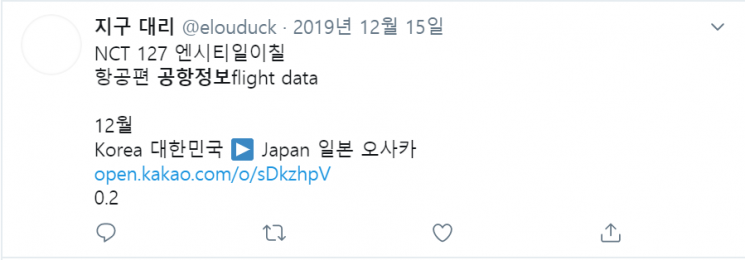
So how do sasaeng fans find out about celebrities' flight boarding information? Searching for "airport information" on social networking services (SNS) like Twitter reveals posts offering to sell such information. Those who post communicate with buyers via KakaoTalk open chats or Twitter direct messages (DMs) to trade information. The source is presumed to be insiders who know the celebrity's reservation details, but the exact route remains unknown. Due to the severity of stalking by sasaeng fans, famous idol groups like BTS sometimes charter private jets at high costs.
With even personal seat location information on planes becoming a commodity, attention is focused on whether this can be punished as a personal information leak. The key issue is whether boarding information qualifies as personal information. The Personal Information Protection Act defines personal information as "information about a living individual." If a person can be identified through their name, resident registration number, images, etc., it is personal information. Information that can identify an individual when combined with other data is also included.
There has been a case where revealing just the last four digits of a cellphone number resulted in a guilty verdict for violating the Personal Information Protection Act. The court focused on the fact that the last four digits often carry meaning, such as matching a home phone number or family members sharing the same ending digits, making it possible to identify the user. The logic was that the last digits, combined with other information, could identify an individual.
However, since boarding information is not something an individual chooses directly, it is unclear whether it qualifies as personal information and requires precise legal judgment. If JYP's future legal actions question whether this constitutes personal information, it could become a precedent. A legal expert commented, "The key is whether boarding information qualifies as personal information. If it can identify an individual when combined with other information, there is a possibility of punishment for information leakage."
© The Asia Business Daily(www.asiae.co.kr). All rights reserved.
![Clutching a Stolen Dior Bag, Saying "I Hate Being Poor but Real"... The Grotesque Con of a "Human Knockoff" [Slate]](https://cwcontent.asiae.co.kr/asiaresize/183/2026021902243444107_1771435474.jpg)
















