Shift from Trump's 15% Tariff on the Entire World
Interpreted as Differentiated Tariffs by Country
Tariffs Above 15% Possible Using Section 301 of the Trade Act
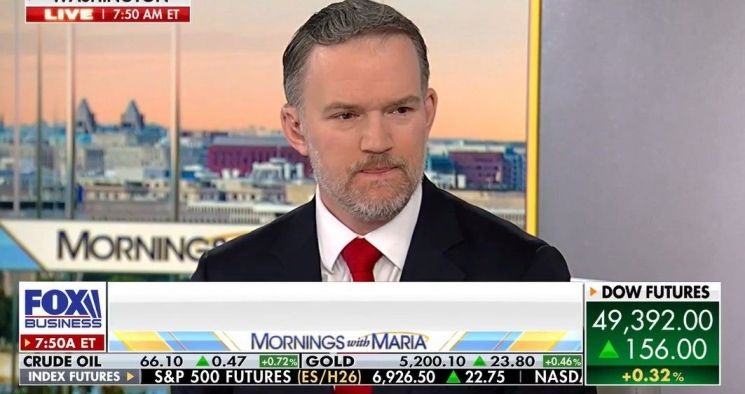 Greer Jamison, United States Trade Representative, is being interviewed by Fox Business on the 25th (local time). Fox Business
Jamison Greer, United States Trade Representative (USTR), said on the 25th (local time) that he would raise the global tariff currently being applied after the Supreme Court ruling that reciprocal tariffs are illegal to 15% for "some" countries. This marks a change from President Donald Trump's earlier stance that the new global tariff would be raised to 15% for all U.S. trading partners. However, he stressed that, following an investigation procedure under Section 301 of the Trade Act, some countries would face even higher tariffs.
Appearing on Fox Business that day, Representative Greer said, "We are currently imposing a 10% tariff. For some (some countries), it is going to go up to 15%, and then for other countries it could go even higher."
Greer's remarks are being interpreted to mean that, taking into account the reciprocal tariff rates agreed with each country, the United States may impose differentiated global tariffs on a country-by-country basis. This is seen as a departure from President Trump's position of applying the new 15% global tariff uniformly.
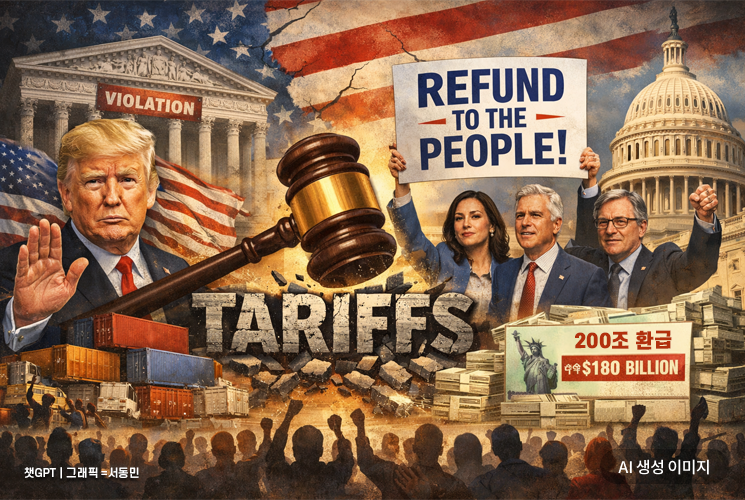
U.S. President Donald Trump on the 20th signed a proclamation on the very day the Supreme Court handed down its ruling that reciprocal tariffs are illegal, stating that a new 10% global tariff would be applied to all countries. The proclamation took effect at 12:01 a.m. on the 24th.
The new global tariff is based on Section 122 of the Trade Act. This provision grants the U.S. president the authority to impose tariffs of up to 15% for a period of up to 150 days, making it more of a short-term response tool. However, President Trump, just one day after signing the proclamation on the 21st, posted on social media (SNS) that the entire world (world wide) would be subject to a 15% tariff.
Appearing the same day on Bloomberg TV's "Surveillance," Greer explained, "The key is to rebuild the policy we have developed over the past year to give it continuity, to respect existing (trade) agreements, and at the same time to ensure enforceability." He added, "In the near future, there will be a proclamation to raise tariffs to 15% where appropriate."
Differentiated tariffs by country after investigation under Section 301 of the Trade Act
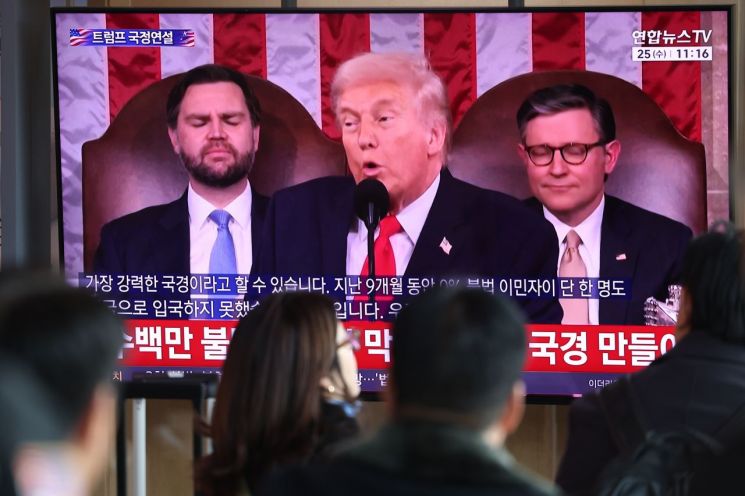
In particular, the countries he referred to as those "where the tariff rate could go even higher" are expected to be determined based on the results of investigations under Section 301 of the Trade Act. In his interview with Fox Business, Representative Greer stressed, "Losing this lawsuit does not prevent us from fundamentally restructuring our policy," and added, "Section 301 of the Trade Act allows the USTR to investigate unfair trade practices on a country-by-country basis."
He went on, "We have identified a large number of such cases. These include cases where forced labor is used in supply chains, and also cases involving countries with excessive industrial production capacity, that is, countries that keep producing even when there is no demand and ultimately flood our market with their products. We view this as an unfair trade practice."
He also mentioned the specific procedures. Once a public investigation is launched, a public comment process will be conducted and hearings will be held. In connection with this, consultations will also take place with trading partners. Companies and individuals affected by unfair trade practices by other countries can submit written comments or make related statements at the hearings. Representative Greer said that, after going through these steps, he would prepare a report and announce the investigation results.
He said, "We will calculate the scale of the damage suffered by the American people due to unfair trade practices, and if partner countries do not resolve these issues, we can impose tariffs," adding, "We can also impose fees on services."
He continued, "The president has considerable discretion," and said, "When the president said that this ruling has actually enabled a stronger program, this is what he meant. Through a very specific and public process, we can introduce highly durable tariffs under existing law."
In other words, the administration intends to open the way to replace the global tariff based on Section 122 of the Trade Act with more permanent tariffs on specific countries or industrial products.
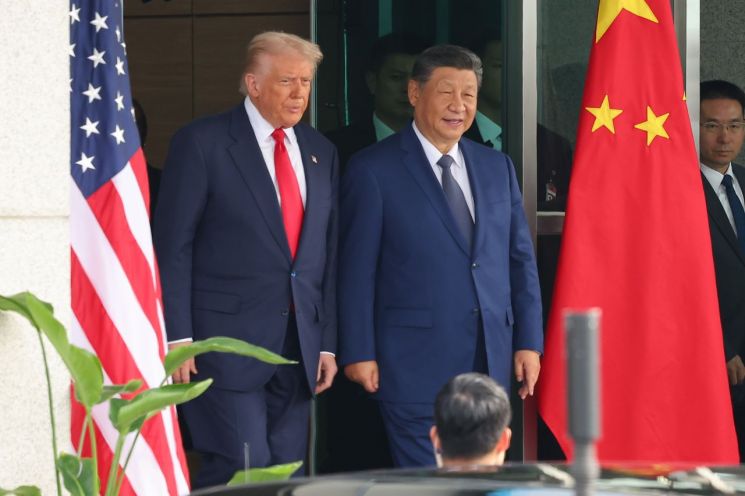
Similarly, Representative Greer mentioned that he intends to maintain tariffs in the range of 35% to 50%, depending on the item, on products from China. President Trump is expected to meet Chinese President Xi Jinping in China around late March or early April to discuss extending the bilateral tariff truce.
Representative Greer said, "We expect that level to be maintained. We do not intend to expand it beyond that, and we want to faithfully adhere to the terms of the previous agreement."
© The Asia Business Daily(www.asiae.co.kr). All rights reserved.



















