Residents 200 Yen, Visitors Up to 400 Yen
Overtourism Response... Accommodation Tax Also Raised Tenfold
Kyoto, one of Japan's leading tourist cities, has decided to push ahead with a plan to charge tourists up to twice the bus fare paid by local residents. With the city also set to sharply raise its accommodation tax, the financial burden on visitors is expected to grow further.
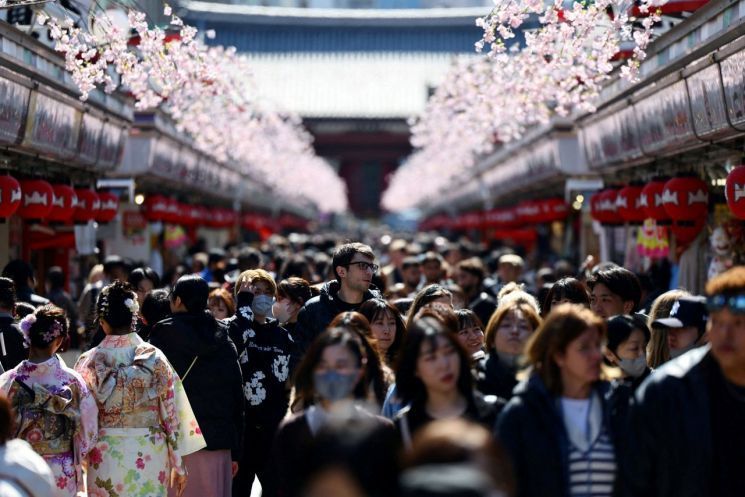
According to Jiji Press, Kyoto Mayor Koji Matsui stated at a plenary session of the city council on the 25th that the city will introduce differential fares on municipal buses in the city center, distinguishing between residents and non-residents. Under the plan, the current flat fare of 230 yen will be adjusted to 200 yen (about 1,830 won) for residents, while non-resident passengers such as tourists will be charged 350 to 400 yen (about 3,200 to 3,600 won). The new fare system is scheduled to take effect as early as April 2027. Once finalized, the fare for tourists will be roughly double that for residents.
Kyoto City will also raise its accommodation tax from March 1, increasing the maximum per-person tax from the current 1,000 yen (about 9,140 won) to up to 10,000 yen (about 91,400 won). Although the tax will still be applied progressively depending on room rates, the top bracket will be 10 times higher than at present.
These measures are aimed at addressing the problem of overtourism, which has emerged in tandem with a surge in travel demand since the COVID-19 pandemic. According to the Japan National Tourism Organization (JNTO), 42,683,600 foreign visitors came to Japan last year, an increase of 15.8% compared with the previous record set in 2024. Due to the surge in tourists, major cities are experiencing mounting inconveniences such as traffic congestion, increased garbage, noise, and unauthorized filming in residential areas.
In Kyoto, city-center bus routes have reportedly become so crowded with tourists that residents are sometimes unable to board during commuting hours. If bus fares are differentiated as a response to overtourism, Kyoto is expected to be the first place in Japan to do so.
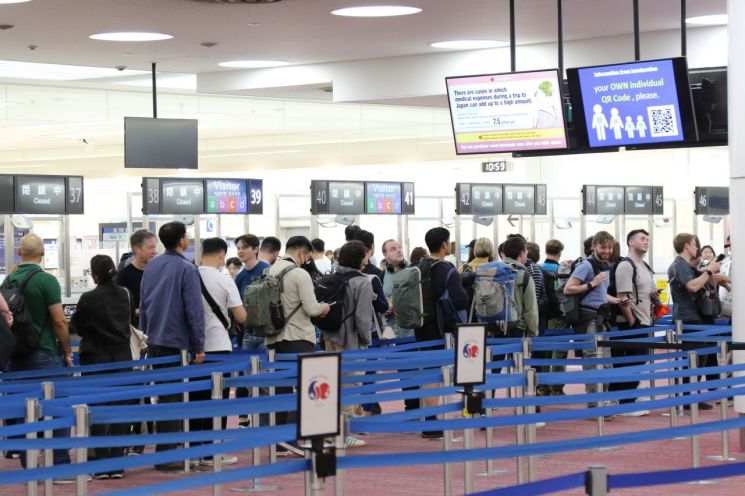
Other regions are also rolling out countermeasures. Across Japan, the number of local governments either newly introducing accommodation taxes or raising existing tax rates is rapidly increasing. According to the Nihon Keizai Shimbun, around 30 municipalities plan to introduce a new accommodation tax this year, nearly double the 17 municipalities that had such a tax in place as of the end of last year.
From April, Hokkaido will introduce an accommodation tax of up to 500 yen, and 13 basic municipalities including Sapporo City will impose additional accommodation taxes. The Tokyo Metropolitan Government also plans, in effect, to raise its accommodation tax by shifting from the current flat rate of 100 to 200 yen to an ad valorem system from next year, under which 3% of the room rate will be charged. Separately, the Japanese government intends to raise the international tourist departure tax, levied when leaving the country, from 1,000 yen to 3,000 yen per person starting in July.
© The Asia Business Daily(www.asiae.co.kr). All rights reserved.


















