Prosecutors have withdrawn their appeal to the Supreme Court against the appellate court ruling in the case of Democratic Party of Korea lawmaker Heo Jong-sik and former lawmakers Yoon Kwan-seok and Lim Jong-sung, who had been suspected of receiving cash envelopes.
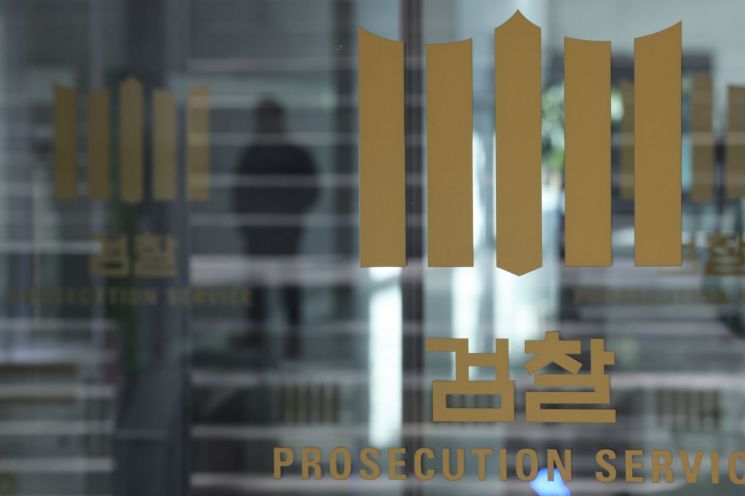
The Supreme Prosecutors' Office announced in a press release on the 25th that it had "withdrawn the appeal in their case involving violations of the Political Parties Act."
Heo and the others were accused of giving and receiving cash envelopes in 2021 ahead of the Democratic Party’s national convention, in order to secure the election of Song Young-gil, then a party leadership candidate and now leader of the Sonamoo Party. The Supreme Prosecutors' Office also withdrew its appeal against the appellate ruling in the case involving violations of the Political Parties Act by Song’s aide, Park Yong-su.
Park is likewise accused of receiving political funds in connection with the distribution of cash envelopes. Prosecutors explained that they took into account the fact that the Supreme Court had previously dismissed their appeal in the case involving former lawmaker Lee Seong-man’s alleged violations of the Political Parties Act, after refusing to recognize the evidentiary admissibility of the seized materials.
The Supreme Prosecutors' Office stated, "We considered the purport of the Supreme Court ruling that finalized the lower court’s decision, which had found that the voluntarily submitted mobile phone, a key piece of evidence, constituted illegally collected evidence, and we decided to withdraw the appeals in cases pending before the Supreme Court that involved the same legal issue."
As the recording files from the mobile phone of former Democratic Party deputy secretary-general Lee Jung-geun, which triggered the investigation into the cash-envelope allegations, were ruled inadmissible as evidence, current and former Democratic Party lawmakers have recently been acquitted one after another.
In September last year, the appellate court acquitted former lawmaker Lee on the grounds that the evidence had been collected illegally, and on the 12th of this month the Supreme Court dismissed the prosecution’s appeal, finalizing the acquittal. In December last year, the appellate panel in the case of Heo and others also overturned the guilty verdicts from the first trial and acquitted all of them, ruling that the recordings could not be admitted as evidence. Prosecutors had appealed, arguing that, because courts were reaching conflicting conclusions on the lawfulness of procedures for securing digital evidence, a unified standard was needed.
However, on the 20th, prosecutors decided not to appeal the appellate court’s acquittal of Song. Since the acquittal in the derivative case involving former lawmaker Lee was finalized by the Supreme Court and established a precedent, prosecutors chose to respect that and not appeal in Song’s case. A source at the Supreme Prosecutors' Office said, "We withdrew the appeals because the same legal reasoning, namely that the evidence was illegally collected, applies."
© The Asia Business Daily(www.asiae.co.kr). All rights reserved.

















