Proposal to Allocate an Additional 5 Trillion Won in Integration Incentives
On February 25, Jung Junho, lawmaker of the Democratic Party of Korea (Gwangju Buk-gu Gap), stated in relation to the launch of the Integrated Metropolitan City of South Jeolla and Gwangju, "If the special integration act passes, national support of 20 trillion won for the first two years and a total of 30 trillion won over four years will be needed." By presenting a concrete estimate of the fiscal support required for the integration initiative, he proposed verification through public debate.
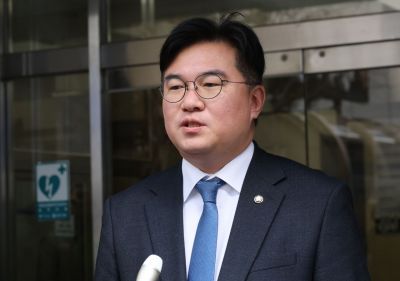
At a press conference held at the National Assembly Communication Building the same day, Assemblyman Jung said, "As ultra-wide-area integration in other regions, such as Daegu-North Gyeongsang and Daejeon-South Chungcheong, is being delayed, we need to consider a plan to additionally allocate 5 trillion won of the 10 trillion won that was to be set aside as integration incentives to Gwangju and South Jeolla," adding, "This would be a reasonable incentive for pushing ahead with rapid integration."
He also stressed the need for public verification of how the 30 trillion won in fiscal resources would be used, saying, "The 30 trillion won is not just a simple budget, but a strategic investment that will determine the next 100 years of Gwangju and South Jeolla." Accordingly, he officially proposed a public debate to all candidates running in the election for the Integrated Metropolitan Mayor of South Jeolla and Gwangju.
Assemblyman Jung proposed that the public debate should verify the feasibility of the policies through live TV and online broadcasts and a citizen Q&A session, under themes such as: plans for utilizing the 30 trillion won in fiscal resources, strategies for future industries and jobs, and ways to design an urban structure capable of competing with the Seoul metropolitan area.
In addition, he requested an official meeting between all members of the National Assembly representing Gwangju and South Jeolla and the President. The intent is that there is a need to discuss directly with the President the direction of the ultra-wide-area integration policy, the scale of fiscal support, and how that support will be used.
Assemblyman Jung said, "We must find the optimal direction in front of the citizens," adding, "The Integrated Metropolitan City of South Jeolla and Gwangju will be the first ultra-wide-area integration model in the Republic of Korea and the starting point for redesigning the national structure." He continued, "As the lawmaker who first introduced the special integration act for Gwangju and South Jeolla in the 22nd National Assembly, I will fulfill my responsibility to the end in the National Assembly to ensure the passage of the special integration act."
© The Asia Business Daily(www.asiae.co.kr). All rights reserved.

















