Infrastructure Upgrades for Structural Changes in the Capital Market
Koscom announced on the 25th that, in line with structural changes in the capital market, it is upgrading its core systems and communications infrastructure, and focusing its company-wide capabilities on the stable provision and operation of IT services.
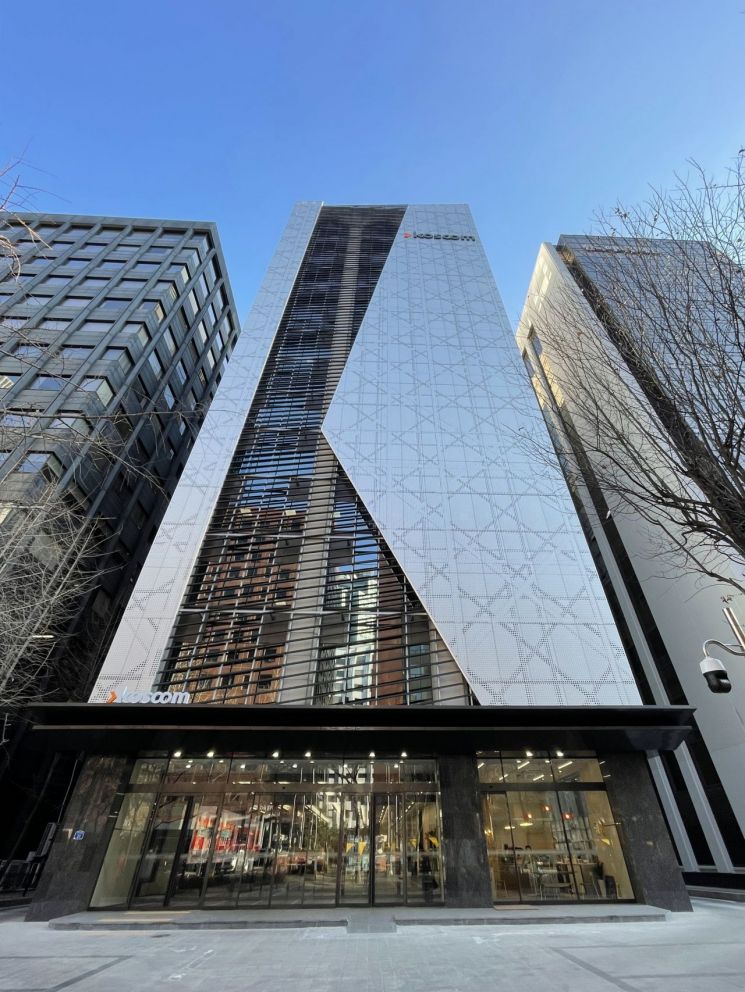
Koscom was established in 1977 for joint use by securities-related institutions and securities companies. It plays a key role in the IT infrastructure of the capital market by building and operating the Korea Exchange’s market systems (Exture3.0), including the matching engine and clearing and settlement systems, the securities ledger system for securities firms (PowerBASE), the securities network (StockNet) through which order and market data flow, backup centers, and financial cloud services. These core infrastructure operation capabilities serve as the foundation for responding to structural changes in the market, such as the introduction of multiple trading venues and the extension of trading hours.
In fact, in March last year, the launch of an alternative trading system introduced a multiple-trading-venue regime, and in June of the same year, the opening of the nighttime derivatives market made the stable operation of order, quotation, and market-surveillance systems across the board an essential task. Through its “88-66 Mission,” Koscom has been supporting the operation of multiple trading venues (from 8:00 a.m. to 8:00 p.m.) and the nighttime derivatives market (from 6:00 p.m. to 6:00 a.m. the following day).
In response to the multiple-trading-venue regime, Koscom has upgraded infrastructure in key areas, including: development of the Korea Exchange’s market systems; advancement of line infrastructure; financial data services; support for small and mid-sized securities firms through PowerBASE; and development of a Smart Order Routing (SOR) solution.
In particular, to respond to the multiple-trading-venue environment, Koscom upgraded the securities network. By advancing the order and quotation networks, communication speed has improved by more than 80% compared with the previous level. For the quotation network, communication access capacity has increased tenfold, and the number of services has more than doubled.
Koscom is also strengthening its prevention-focused management and response framework. To this end, last year it established and began implementing “10 Key Tasks for Failure Prevention and Response Capability Enhancement.” When a failure occurs, a unified procedure is applied from incident reporting and severity grading through to post-incident management, and the framework has been revamped so that related data are managed in an integrated manner. The criteria for classifying incident severity have also been updated to reflect the revised Electronic Financial Supervision Regulations.
Remote infrastructure for responding to emergencies has also been improved. Koscom has secured a dedicated secure-access path by separating the secure connection route from the work-processing segment, and it has institutionalized simulation drills and access tests for operations personnel to reinforce response capabilities during vulnerable hours such as nighttime. To further enhance real-world responsiveness, Koscom has made switchover drills for data center facilities in preparation for emergencies a regular practice, thereby working to secure operational stability. In addition, it has overhauled system quality indicators to systematize the early detection of system defects and activities to prevent their recurrence.
Kim Doyeon, Head of Corporate Strategy at Koscom, said, “Providing stable IT infrastructure in a multiple-trading-venue regime and a 24-hour trading environment is a fundamental responsibility for Koscom, which is in charge of the capital market infrastructure,” adding, “We will continue to focus on maintaining system stability and operational reliability, regardless of future changes in market structure.”
© The Asia Business Daily(www.asiae.co.kr). All rights reserved.

















