City Sets Record 63.3 Billion Won Education Budget
Realizing the Vision of a "Premium Education City" in 2026
Pocheon City in Gyeonggi Province ranked first among the 31 cities and counties in Gyeonggi, recording education expense support of 1.32 million won per student in 2026. This amount is more than double the provincial average of 600,000 won, reflecting the expansion of the 2026 education budget to a record-high level.
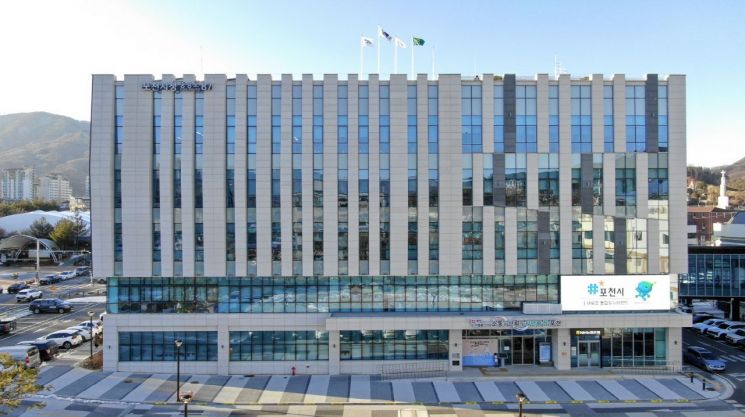
Pocheon City allocated a total education budget of 63.3 billion won in the 2026 main budget, covering early childhood and childcare, primary and secondary education, higher education, and lifelong education. Of this, 15.1 billion won (7.1% of its own-source revenue) will be provided directly to schools as education expenses, up from 9.7 billion won (4.6%) in 2023, 11.4 billion won (5.6%) in 2024, and 12.1 billion won (5.9%) in 2025, continuing a steady increase. This clearly demonstrates the policy stance of making education a core priority of municipal administration.
Over the past several years, the city has gradually expanded educational support, underpinning qualitative growth in public education. In 2026, based on the foundations accumulated so far, the city plans to further refine its education support system and translate its vision of becoming a "premium education city" into concrete policy outcomes.
At the same time, the city will focus on institutionally embedding the achievements of the Education Development Special Zone project. Since being designated in July 2024 as a pilot (leading) area for the Education Development Special Zone, Pocheon City has secured funding including 6.8 billion won in national government funds over three years and has expanded its educational infrastructure. In 2026, as the pilot operation concludes and formal designation is prepared, the city plans to concentrate its administrative capacity on systematically organizing the projects promoted so far and firmly consolidating their outcomes.
The core task of the Special Zone project is to "strengthen students' digital competencies." The city will invest 1 billion won to build additional "digital makerspaces" at key hubs and expand the educational environment that allows students to systematically experience future technologies such as artificial intelligence (AI), drones, and coding within schools.
Over the past two years, the city has completed the installation of makerspaces at 10 schools within its jurisdiction and has been running customized classes utilizing advanced technologies. Building on this, it plans to accelerate efforts to close the regional digital education gap.
The city will also reinforce public education support systems designed to ease the burden of private education costs. In cooperation with the Ministry of Education and the Educational Broadcasting System (EBS), it will expand the operation of the "Pocheon-type EBS Self-Directed Learning Center" to seven zones within the city.
The centers, which are operated entirely free of charge, follow a model that combines EBS content, one-on-one customized mentoring, and AI-based learning diagnostics. Following the operation of five centers in 2025, the city opened the Soheul-area center in January 2026. It plans to add two more centers within the year, completing a learning network for each zone.
The city will also work in parallel to improve commuting conditions. By concentrating municipal funds in the "Pocheon Edu Road" project, it will introduce a new Yeongjung-Soheul route for the student-only school bus "Pochun Bus" and expand the "Pofoury" shuttle service to five zones. In addition, the city plans to operate the "Edu Taxi" service in parallel for students in transportation-disadvantaged areas, thereby establishing a safe commuting system that connects their homes to schools.
An official from Pocheon City stated, "Providing 1.32 million won in education expenses per student is a case where our long-emphasized municipal philosophy that 'education is the future' has led to tangible results," adding, "As we enter the third year of the Education Development Special Zone, we will further enhance the completeness of our policies so that children in Pocheon can grow up in a stable and high-quality educational environment."
© The Asia Business Daily(www.asiae.co.kr). All rights reserved.
![Clutching a Stolen Dior Bag, Saying "I Hate Being Poor but Real"... The Grotesque Con of a "Human Knockoff" [Slate]](https://cwcontent.asiae.co.kr/asiaresize/183/2026021902243444107_1771435474.jpg)
















