Tenfold Surge Compared to the 2024 Election
Clear Shift From Party-Centered to Personality-Centered Politics
YouTube’s Political Influence Expands in South Korea as Well
During the campaign period for Japan's House of Representatives (lower house) election, approximately 90,000 election-related YouTube videos were posted, garnering a total of about 2.8 billion views. This is roughly 10 times higher than during the 2024 House of Representatives election.
On the 23rd, the Asahi Shimbun presented statistics on YouTube views by political party related to this election.
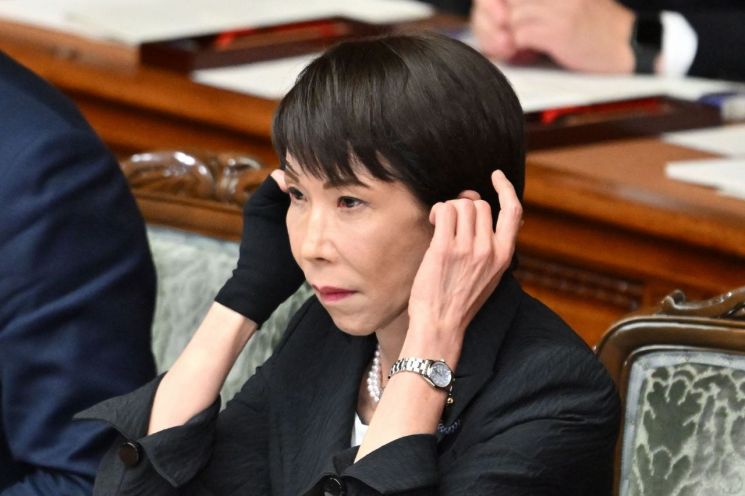
According to the report, videos related to the Liberal Democratic Party (LDP) had the highest number of views at around 230 million, followed by videos related to the Centrist Reform Alliance with about 140 million views. The Sanseito party, which had ranked first in views during last year’s House of Councillors election, was found this time to have fallen short of expectations in terms of growth. At the individual level, videos related to Prime Minister Takaichi Sanae of Japan stood out with approximately 450 million views.
When the Asahi Shimbun analyzed the top 100 most-viewed videos related to Prime Minister Takaichi, it found that about 50% were classified as having a "positive" tone. By contrast, 80% of the top videos related to the Centrist Reform Alliance were "negative." Asahi also reported that when it analyzed videos related to former Prime Minister Ishiba Shigeru posted during the 2024 House of Representatives election in the same way, 80% of them were "negative." The paper explained that in this election, the spread of content depicting Prime Minister Takaichi in a positive light appears to have, to some extent, contributed to the rise in her approval ratings.
The most-viewed video was a Shorts clip titled "The unbelievable thing that happened at Prime Minister Takaichi's handshake event." It shows her shaking hands with supporters at a campaign stop when her hand is suddenly pulled hard, after which she raises her taped hand and smiles, saying, "It's fine because you treated it." As of the time of aggregation, the video had been viewed more than 5.8 million times.
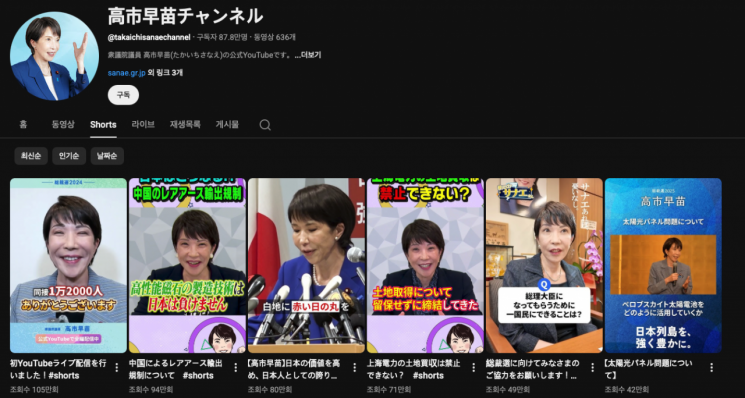 Asahi Shimbun analyzed the top 100 most-viewed videos related to Prime Minister Takaichi and found that about 50% were classified as "positive." In contrast, 80% of the top videos related to the Centrist Reform Union were classified as "negative." Takaichi Sanae's Prime Minister YouTube channel.
The second most-viewed video was content showing a scene in a TV studio where Prime Minister Takaichi says to Japan Innovation Party leader Yoshimura Hirofumi, "Nice. We can share the work." According to the Asahi Shimbun’s analysis of the comments, many expressions appeared that interpreted her personality positively, such as "kind," "nice," and "like an auntie."
Meanwhile, a similar phenomenon can be observed in South Korean politics. Through presidential and general elections, major candidates and parties have actively used their official YouTube channels. Former President Yoon Suk Yeol and President Lee Jae-myung each sought to rally their base during the presidential race with video content that recorded millions of views. In addition, YouTube channels with clear political leanings have been focusing on or criticizing specific candidates, exerting a considerable influence on the formation of public opinion online. Some hard-core supporters also show a tendency to share information via YouTube and social media while expressing distrust toward traditional media coverage.
Experts point out that "as the shift of political content to new platforms accelerates, the trend toward politics centered on individuals and fandoms, rather than on political parties, is strengthening," and warn that "given the rapid speed of dissemination, ensuring the accuracy and balance of information is crucial." They assess that the Japanese case demonstrates how YouTube has established itself not merely as a promotional tool, but as a major variable capable of influencing the course of an election.
© The Asia Business Daily(www.asiae.co.kr). All rights reserved.


















