Intensive Debate on Key Issues: Retrial Petition System, Crime of Distortion of Law, and Plan to Increase Supreme Court Justices to 26
Supreme Court Says "Serious Constitutional Concerns"... Gathering Internal Opinions Within the Judiciary
Conference of Court Presidents Convened Ahead of National Assembly Plenary Session on the Bills
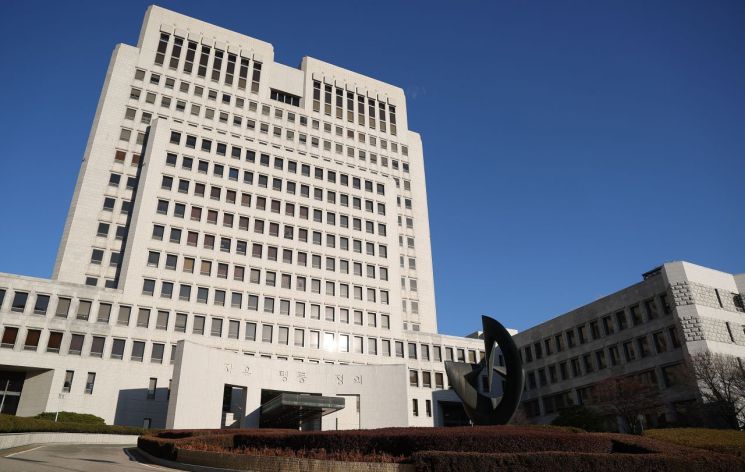
The Supreme Court has convened a national conference of court presidents on the 25th to discuss its response to the so-called "three judicial reform bills" (the retrial petition system, the crime of distortion of law, and the increase in the number of Supreme Court justices).
According to the legal community on the 24th, the Supreme Court plans to hold a national conference of court presidents at 2 p.m. on the 25th at the Supreme Court building in Seocho-gu, Seoul, to coordinate opinions on the three judicial reform bills.
The national conference of court presidents is a high-level judicial council in which the heads of courts at all levels gather under the chairmanship of the Chief Judge of the National Court Administration to discuss current issues in judicial administration. As a rule, it holds a regular meeting every December, but an extraordinary meeting may be convened when necessary.
The Supreme Court has consistently expressed the view that the three judicial reform bills require careful review. In particular, it has taken the position that the introduction of the retrial petition system and the crime of distortion of law raises serious constitutional concerns.
Chief Justice Cho Hee-dae recently expressed his opposition to the three judicial reform bills on his way to work. As the National Assembly is set to open a plenary session and the Democratic Party of Korea and others are pushing to railroad the bills, it appears that he is seeking to gather the court presidents to present a unified stance.
The bill to increase the number of Supreme Court justices (an amendment to the Court Organization Act) is centered on expanding the number of justices from 14 to 26. The retrial petition bill (an amendment to the Constitutional Court Act) primarily aims to allow parties who claim that a finalized court judgment has violated their fundamental rights to file a constitutional complaint and challenge the decision. The bill introducing the crime of distortion of law (an amendment to the Criminal Act) would create a new criminal provision to punish judges, prosecutors, and others who distort legal principles in the course of investigation, prosecution, or trial.
The National Assembly is scheduled to open a plenary session at 2 p.m. today. The Democratic Party of Korea plans to put the "three judicial reform bills," which were previously passed by the Legislation and Judiciary Committee of the National Assembly, on the agenda and push them through. The opposing People Power Party is expected to launch a filibuster.
© The Asia Business Daily(www.asiae.co.kr). All rights reserved.

















