Floor area ratio incentives for tenants who moved in after the public inspection notice date of district designation
when project implementers provide additional compensation for losses
The Seoul Metropolitan Government announced on the 24th that it will immediately implement a system that grants a “floor area ratio incentive of up to 125%” when project implementers voluntarily provide compensation for losses to so?called “non-statutory tenants,” who are not eligible for legal compensation in redevelopment zones, in order to resolve related issues.
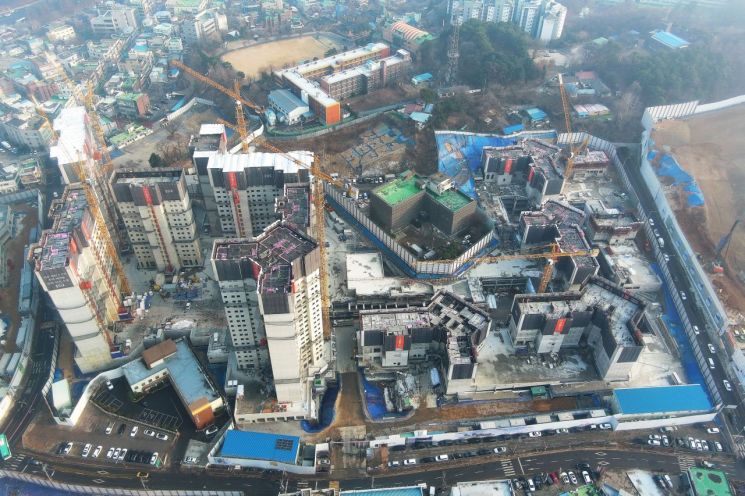
Under current law, compensation for losses suffered by residential and commercial tenants in redevelopment zones is limited to those who have resided or operated their businesses there since before the “public notice date of the district designation for public inspection.” Accordingly, tenants who moved in after the public inspection notice date have not been compensated when relocating, which has been a source of conflict at redevelopment sites.
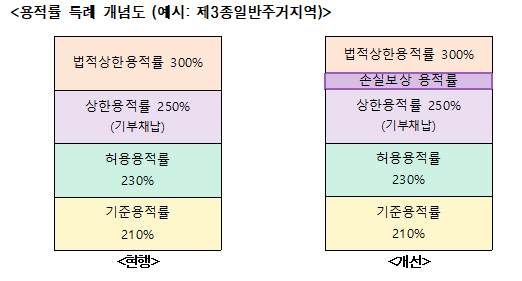
The Seoul Metropolitan Government will introduce an exceptional system under which, if a project implementer, although not legally obligated, voluntarily provides additional compensation for losses to non-statutory tenants, the implementer can receive a floor area ratio incentive by converting the corresponding cost into site area.
The system calculates a converted site area equivalent to the amount of additional compensation and reflects this in easing the upper limit of the floor area ratio. The site value is calculated at twice the officially assessed individual land price publicly notified just before the project implementation approval, thereby substantially offsetting the burden on the project implementer. The incentive is granted within 125% of the maximum floor area ratio permitted for the relevant redevelopment zone.
In order to maintain fairness with tenants who receive legal compensation, the additional compensation amount is applied differentially to non-statutory tenants based on their actual period of residence or business operation, within the maximum amount that statutory tenants can receive. The compensation is calculated in proportion to the period of actual residence during the entire period from the day after the public inspection notice of the district designation until the public notice of the project implementation approval. Depending on the circumstances of the project implementer, a separate minimum standard may be set as a certain percentage (30%, 50%, 70%, etc.) of the legal compensation amount.
To prevent project delays caused by the introduction of the incentive, the Seoul Metropolitan Government will have district offices handle changes to the redevelopment plan as “minor changes.” Even when statutory procedures are required, the city plans to process them swiftly through integrated deliberation. Once the improvement plan is applied, cases in which the previously planned floor area ratio is expanded by more than 10% are expected to be rare, so most cases can be handled as minor changes.
Choi Jinseok, Director General of Housing Policy at the Seoul Metropolitan Government, said, “This incentive is a win-win model that provides practical support for relocation of non-statutory tenants, while enhancing project feasibility for associations and other project entities through floor area ratio benefits,” adding, “We will continue to develop measures that can reduce conflicts at redevelopment sites and accelerate urban renewal projects.”
© The Asia Business Daily(www.asiae.co.kr). All rights reserved.


















