Bloomberg Interview
"AI Stock Rally Overly Dependent on a Few Firms"
"Tail Risk Underpriced...Hedges Are Essential"
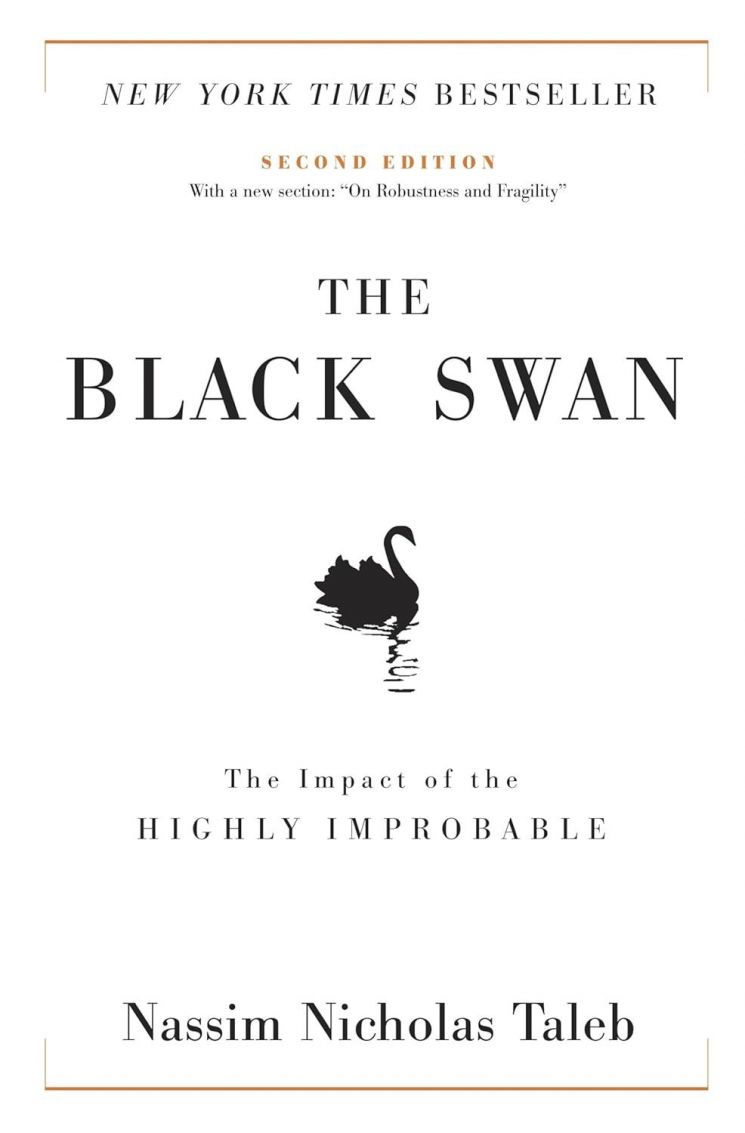
Nassim Taleb, author of the bestseller "The Black Swan," has warned that the stock market rally led by artificial intelligence (AI)-related stocks has entered a fragile phase. He advised investors to prepare for heightened volatility in the software industry and the potential for bankruptcies.
In an interview with Bloomberg on the 23rd (local time), Taleb said, "The market is overestimating the sustainability of AI leaders," explaining his view.
He pointed out that over the past few years, most of the AI-driven stock gains have depended excessively on a small number of companies. Because of this, he predicted that if market leadership rotates, related indices could see much larger swings. Taleb said, "Tail risk (events that are unlikely but have a large impact when they occur) is underpriced across the industry," adding, "Risk does not come as a small correction; it comes as a big drop." He cautioned that while the bull market could continue temporarily, the eventual decline could be far steeper than expected, and therefore investors should always maintain hedges.
He also highlighted changes in the industry environment as a major risk factor. As technological uncertainty, intensifying competition, and a shifting geopolitical landscape reshape the industry, he warned that there is a high likelihood of bankruptcies, especially among certain software companies. Referring to the 1% drop in the S&P 500 index the previous day, Bloomberg added, "Investors are increasingly worried that as coding becomes easier, software companies could be threatened by AI tools." Taleb also cited as a source of concern the fact that large technology companies entering the AI infrastructure race are ramping up aggressive investment, even though they may be unable to generate profits for years.
He interpreted the recent rise in gold prices as another sign of structural change. Amid the widening U.S. fiscal deficit and the weakening of the dollar-centered financial order due to sanctions policies, he said investors' risk aversion is strengthening.
He further pointed to the risk of potential disruptions to oil supplies stemming from tensions between the United States and Iran. Warning that the global economy cannot withstand a repeat of the shocks of the 1970s oil crisis, he said, "Commodity-driven stagflation cannot be easily solved with monetary policy. Even if you brought Einstein into the U.S. Federal Reserve (Fed), it would not be resolved."
On trade policy, he argued that erratic tariffs actually discourage investment. "When policy fluctuates in unpredictable ways, the incentive to commit capital disappears," Taleb said, warning that tariffs function like a regressive tax, hitting low-income consumers and worsening inequality.
Taleb, who introduced the concept of the "black swan," meaning an "unanticipated, sudden risk," currently serves as Chief Scientific Advisor at the investment firm Universa Investments. Universa specializes in "tail-risk hedging" strategies designed to generate large gains during market crises. The firm posted an annual return of more than 100% last year.
© The Asia Business Daily(www.asiae.co.kr). All rights reserved.

















