Seven New Open-Source Models Added Through the Dokpamo Project
South Korea ranked first in the world in terms of the share of open-source models among all AI models. Experts advise that the country must survive in the global AI race by fostering open-source technologies, which form the foundation of AI innovation, and by cultivating related talent.
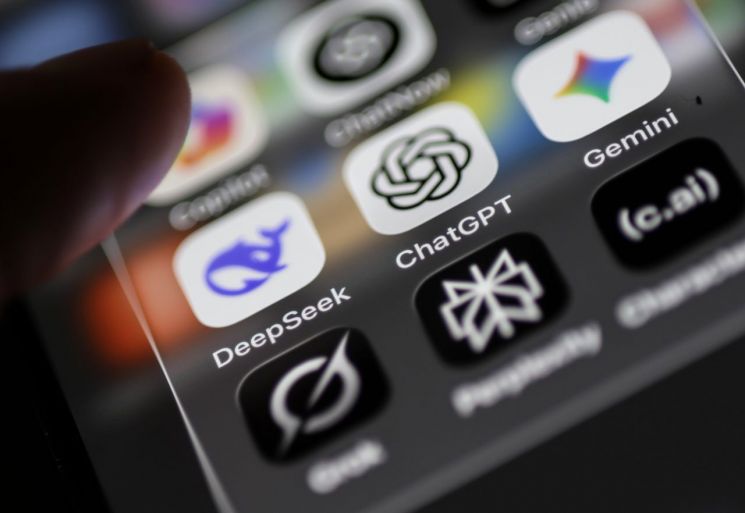
On the 22nd, the Software Policy & Research Institute released a report titled "Concept of Open-Source AI and Global Open-Source Model Trends," which covers global open-source AI developments. According to an analysis of well-known AI models by Epoch AI, a U.S. AI research organization, as of November last year, the United States accounted for 634 out of a total of 948 AI models, while China accounted for 133. South Korea had 17 models, ranking 10th in the world.
The United States also ranked first in the number of open-source models, with 186. It was followed by China with 57, the United Kingdom, Canada, and France with 21 each, Germany with 15, and South Korea with 10. In terms of open-source models, South Korea ranked 7th, higher than its ranking for total AI models. If the seven new open-source models added in the second half of last year through the government's independent AI foundation model project are included, the total number of models rises to 24, and the number of open-source models increases to 17.
In addition, South Korea had the highest share of open-source models at 58.82%. This suggests that research on open-source models is the most active in the world. The country with the lowest share was the United Kingdom at 16.67%.
As the open-source ecosystem provides the technological foundation for AI innovation and AI transformation, the importance of open-source AI is emerging. This is because it can drive technological innovation while also improving productivity and reducing costs. According to the report, 25 out of 28 major deep learning frameworks are based on open-source technologies, which have improved the convenience of AI development and triggered the scaling up of models. A Linux Foundation report also explained that 89% of companies use open-source technologies in AI development processes, and 63% use open-source models.
The release of open-source models is also linked to the competition for AI leadership between the United States and China. The report stated, "If U.S. companies led the early open-source AI ecosystem, since last year Chinese companies such as DeepSeek and Alibaba have been rapidly expanding their influence by actively releasing open-source models that offer excellent performance at low cost," adding, "They are strategically pushing for the launch of new services linked to open-source models to generate additional revenue."
The report stressed that a renewed recognition of the strategic value of the open-source AI ecosystem is needed for South Korea to rise to become one of the world's top three AI powers. It argued that, to secure sovereignty over AI technology, South Korea must internalize core AI technological capabilities and secure industry-specific AI technologies by promoting advanced open-source-AI-based research and development (R&D). It also pointed out that related talent must be actively nurtured.
Kwon Younghwan, a researcher at the Software Policy & Research Institute, said, "We must cultivate professionals specializing in open-source AI to enhance the efficiency of the great AI transformation and ensure its sustainability."
© The Asia Business Daily(www.asiae.co.kr). All rights reserved.
![Clutching a Stolen Dior Bag, Saying "I Hate Being Poor but Real"... The Grotesque Con of a "Human Knockoff" [Slate]](https://cwcontent.asiae.co.kr/asiaresize/183/2026021902243444107_1771435474.jpg)
















