"Rising Rates and Fiercer Competition Depress Asset Values"
Not a Single Full Exit by the World’s Top 10 Private Equity Funds in China
The world’s largest private equity fund (PEF) managers are finding themselves unable to retrieve their capital from China. Analysts say the exit environment has deteriorated because high interest rates and China’s economic slowdown have pushed down asset values.
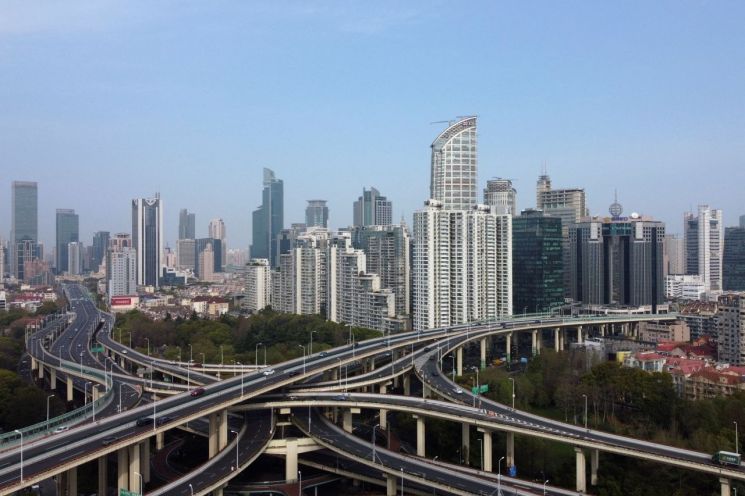
The Financial Times (FT) reported on the 22nd (local time), citing data from PitchBook and Dealogic, that none of the top 10 PEFs investing in China, including KKR, Blackstone, and CVC Capital Partners (CVC), fully exited their equity stakes in mainland Chinese portfolio companies last year. FT noted that this lack of full exits has continued for a second consecutive year. Blackstone’s real estate transactions were excluded from the tally.
Some PEFs have sold parts of their Chinese assets, but the industry as a whole is struggling to exit investments. Higher interest rates have driven down corporate valuations, and as industries enter a mature phase and competition intensifies, it has become difficult to generate large-scale returns as in the past. As a result, managers have been unable to return capital to investors such as pension funds, family offices, and sovereign wealth funds. Matthew Phillips, Financial Services Leader for PwC China and Hong Kong, said, “There is significant exit pressure globally,” adding, “Chinese teams are under pressure to contribute to capital recovery, which has led to a backlog of disposals.”
The value of Chinese assets has fallen in recent years due to weak demand, economic slowdown, and a decline in Western investors. Because of this, managers are exploring a broader range of ways to realise investment returns, including selling companies to their own funds. Investors are also looking to sell their PEF interests through so-called “secondary sales.” Secondary sales refer to existing investors selling their PEF stakes to a third party.
According to a Jefferies report, the average secondary discount on European assets was 14%, and 12% in North America, while Asia as a whole saw discounts reach 44%. Paul Robine, CEO of TR Capital, said, “China’s PEF ecosystem is still experiencing a severe liquidity gap,” explaining, “In particular, over the past two years, discounts of 40-50% have been common for Chinese funds.”
FT added, however, that there are also expectations for a rebound this year, driven by China’s rapidly growing artificial intelligence (AI) market. Bain Capital last month completed the sale of Chindata, its Chinese data center business, to a consortium led by a Chinese industrial company and several local government funds at a valuation of 4 billion dollars (5.78 trillion won). According to FT, this was the first portfolio sale carried out by a major global PEF in at least two years.
At the same time, the Hong Kong market is being touted as a potential new exit channel. In 2025 alone, Hong Kong raised about 35 billion dollars (50.575 trillion won) in new capital and rose to become the world’s largest initial public offering (IPO) market. However, some market participants remain skeptical about whether PEF managers will be able to ride the IPO boom in Hong Kong to sell large companies.
Stephanie Hui, Head of Private Investing in Asia at Goldman Sachs, said, “For buyout deals, I don’t think this is the best exit route in China,” adding, “To sell in the capital markets, you actually need a lot of people to agree on that price.”
© The Asia Business Daily(www.asiae.co.kr). All rights reserved.

![Clutching a Stolen Dior Bag, Saying "I Hate Being Poor but Real"... The Grotesque Con of a "Human Knockoff" [Slate]](https://cwcontent.asiae.co.kr/asiaresize/183/2026021902243444107_1771435474.jpg)
















