Deliberate Tax Evasion Through Distribution of Unverified Information
16 Operators Including Malicious Cyber Wreckers and Real Estate and Tax YouTubers
The National Tax Service has decided to launch tax investigations into real estate YouTubers and others who have fueled speculation with false information. The National Tax Service believes they have deliberately engaged in tax evasion while distributing unverified information.
On the 22nd, the National Tax Service announced that it will conduct tax investigations into certain YouTubers who have intentionally committed tax evasion while distributing unverified information in pursuit of profit.
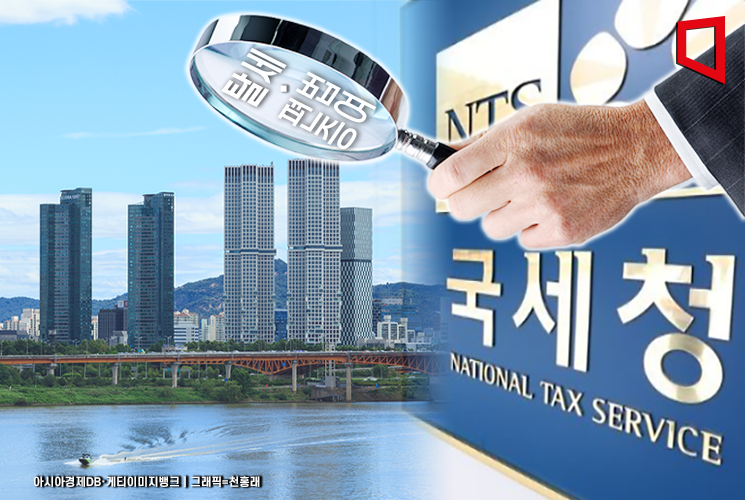
The investigation will target a total of 16 operators, including: malicious cyber wreckers; real estate and tax YouTubers who incite speculative and tax-evasive sentiment and disrupt the market; and other YouTubers who distribute false or inappropriate content. The National Tax Service believes that they have evaded their tax obligations by using a variety of methods, including splitting revenue, issuing fake tax invoices, and claiming unjust tax reductions.
An official at the National Tax Service said, "Some tax YouTubers present tax-saving schemes and portray tax payment as a loss and taxation as something that must be avoided," adding, "In particular, some YouTubers have disguised unverified and extreme 'legal tricks' as legitimate, or have taken the lead in urging clients to evade taxes in the course of tax agency work, and as a result, there have been taxpayers who, far from saving taxes, ended up being hit with a so-called 'additional tax bomb'."
Real estate YouTubers commonly used a typical tax evasion method of lowering their income tax rates by splitting their income among businesses registered under the names of spouses or acquaintances, or under shell corporations they control. To exploit the 100% tax exemption for startups located outside the overpopulation control areas of the Seoul metropolitan region, they registered a shared office of just about one pyeong in the relevant area as their place of business, while actually conducting their business elsewhere and evading taxes.
In the case of tax YouTubers, they brazenly committed criminal acts by persuading clients to issue fake tax invoices and then receiving those invoices themselves. They also recruited many ordinary people, including full-time homemakers, received services from them, and paid them fees.
Malicious cyber wreckers, who make a full-time job out of slandering and mocking others, are also subject to tax investigations. A National Tax Service official said, "Even though there were no actual service transactions, they received fake tax invoices from third parties under the pretext of consulting services, or directly issued fake tax invoices themselves, thereby disrupting transaction order," and added, "While single-handedly producing so-called immoral content that includes personal attacks or mocks fatal accidents, and hiding their identity, they reported that they had received services from relatives, and even booked all costs related to responding to complaints and accusations over their own violations of social order, as well as fines and penalties, as business expenses in order to reduce taxes, revealing an extremely meticulous approach to tax reduction."
The National Tax Service will also conduct tax investigations into YouTubers who distribute false or inappropriate content that causes public controversy. According to the National Tax Service, these individuals are media creators equipped with content production facilities and staff, and therefore must pay value-added tax on their income, but they failed to file such taxes. They also neglected basic legal tax obligations by indiscriminately using corporate cards for private purposes, such as paying their children's tuition at private academies and purchasing miscellaneous goods at department stores.
Some received sponsorships, advertising revenue, and viewer donations into borrowed-name accounts, failed to report the full amount, siphoned off the funds, and then purchased large quantities of luxury goods and expensive imported cars to flaunt online. Another investigation target concealed assets by paying money labeled as advertising expenses to a non-existent corporation, recording it as a business expense, and then receiving the money back.
The National Tax Service plans to actively conduct financial tracing so that proper taxation can be imposed on non-transparent income such as personal donations received by YouTubers, and to thoroughly verify the flow of funds and the process by which their assets were formed. A National Tax Service official said, "As part of a firm response to deliberate tax evasion by YouTubers who cause social costs and earn income in return, we will conduct exhaustive checks on the investigation targets and their related parties," adding, "When tax crimes are detected, we will, without exception, notify investigative agencies, and in the case of YouTubers who are licensed tax accountants, we will rigorously review whether they have violated the Certified Tax Accountant Act so that appropriate sanctions can be imposed."
© The Asia Business Daily(www.asiae.co.kr). All rights reserved.
![From Bar Hostess to Organ Seller to High Society... The Grotesque Con of a "Human Counterfeit" [Slate]](https://cwcontent.asiae.co.kr/asiaresize/183/2026021902243444107_1771435474.jpg)
















