Wind and Currents Drive 95% of Debris from China
Disposal Costs Also an Issue... "Strengthening Cooperation"
As trash flowing in from other countries has been continuously found along various parts of Korea's coastal waters, concerns are being raised about marine pollution and related issues.
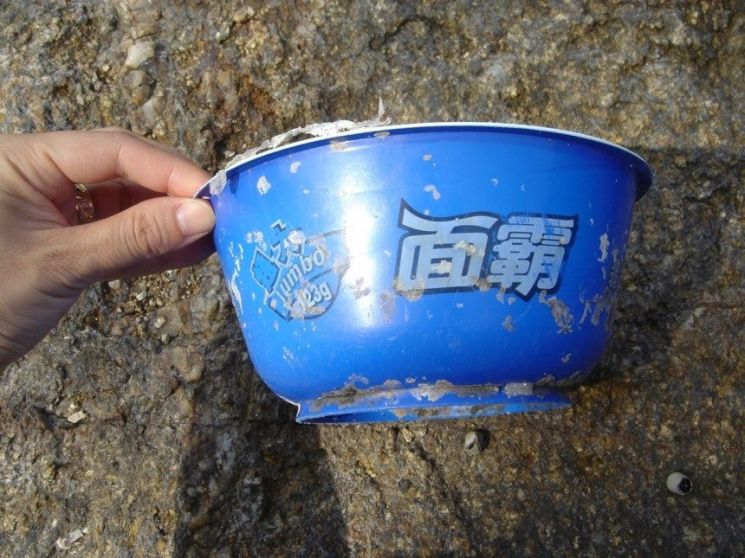
According to Yonhap News on the 21st, the Ministry of Oceans and Fisheries carried out monitoring from 2008 to 2023 to identify the scale and characteristics of marine debris entering Korea from overseas. The ministry surveyed 60 major coastal areas nationwide every other month, including 26 locations in the Yellow Sea, 22 in the South Sea, and 12 in the East Sea.
The survey found that marine debris originating from foreign countries accounted for 3.1%. In terms of item count, this translates to between 11,000 and 13,000 pieces every year. An official from the Marine Conservation Division of the Ministry of Oceans and Fisheries explained, "There are many islands in the Yellow Sea, so there are relatively more coastal points subject to investigation," adding, "In reality, it is estimated that the amount of marine debris from overseas washing up along the coast is higher than the compiled figures." The official went on to point out, "There are quite a few cases where this leads to damage to fish farms, which is significantly increasing the inconvenience for fishers."
Due to the nature of marine debris, it is collected on site by picking it up by hand or scooping it up with nets, and in this process, household waste bearing foreign-language labels or plastic buoys not used domestically serve as clues. However, because of the increase in direct overseas purchases and cases where foreigners use products from their home countries in Korea and then discard them here, it is not easy to definitively classify all such trash as having been introduced from overseas.
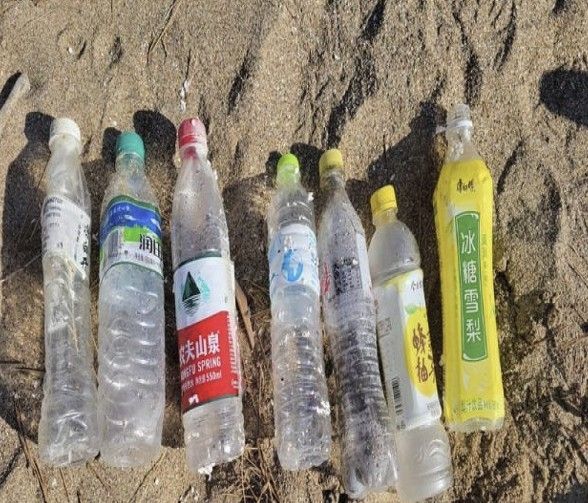
When this debris is broken down by country, more than 95% was found to originate from China. Japan (about 1%), Vietnam, Indonesia, and North Korea were also included to some extent. The particularly high volume of trash from China is presumed to be due to wind direction and ocean currents between Korea and China. For example, floating debris generated along the Chinese coast is often carried by winds and flows into Korea's west coast.
The cost of disposing of this debris is also a problem. Although each country complies with the London Protocol, which regulates the dumping of waste at sea, there is no treaty provision that allows a country to bill another country for the cost of marine debris that has drifted in from abroad.
Based on the monitoring results, the Ministry of Oceans and Fisheries is using them to request strengthened marine waste management from the relevant countries and to raise the issue in bilateral and multilateral consultative bodies such as the Korea-China Marine Cooperation Dialogue and the Tripartite Environment Ministers Meeting among Korea, China, and Japan. A ministry official said, "Conceptually, there is discussion that the affected country could apply the 'polluter pays principle' to claim costs, but in reality it is difficult to enforce," adding, "Korea has continuously proposed strengthening cooperation between the two countries, including joint Korea-China monitoring research on marine debris." The official continued, "We will use the survey results as basic data for international consultations and joint research so that they lead to tangible reductions in marine pollution." The ministry added that although monitoring had been temporarily suspended due to budget shortages, it plans to resume it this year and will scientifically survey the distribution of debris along all coasts nationwide by utilizing artificial intelligence (AI), drones, and other technologies.
© The Asia Business Daily(www.asiae.co.kr). All rights reserved.


















