McDonald's and Burger King Raise Prices by 2?4%
Rising Raw Material and Labor Costs, Impact of Weak Won
The impact of high inflation is spreading across the dining-out industry. As even burger franchises, long regarded as a "value-for-money meal," are raising prices one after another, some observers warn that this could heighten overall upward pressure on restaurant prices.
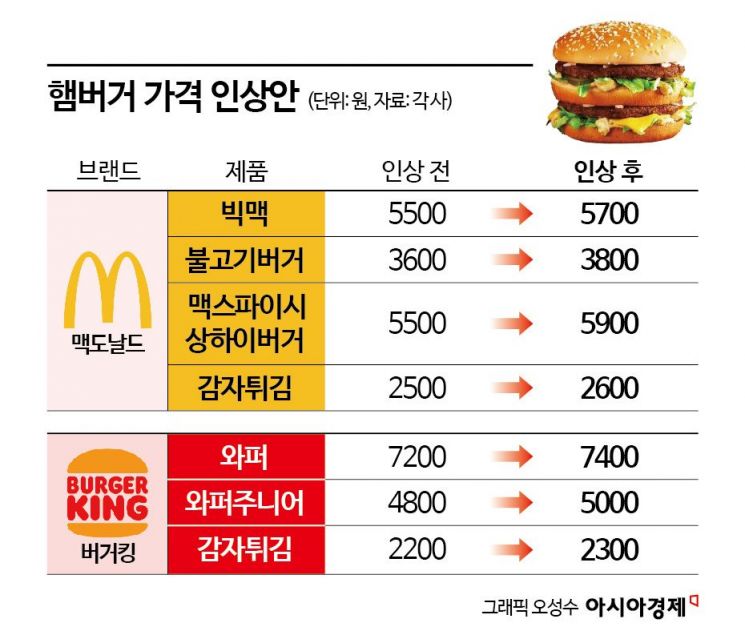
According to the industry on the 20th, McDonald's Korea raised the prices of 35 items on its a-la-carte menu starting that day. The average increase rate is 2.4%, with price hikes ranging from 100 won to 400 won. The Big Mac rose by 200 won from 5,500 won to 5,700 won, and the Bulgogi Burger increased by 200 won from 3,600 won to 3,800 won. The McSpicy Shanghai Burger jumped by 400 won from 5,500 won to 5,900 won. Among side menus, French fries went up from 2,500 won to 2,600 won, and soft drinks increased from 1,900 won to 2,000 won.
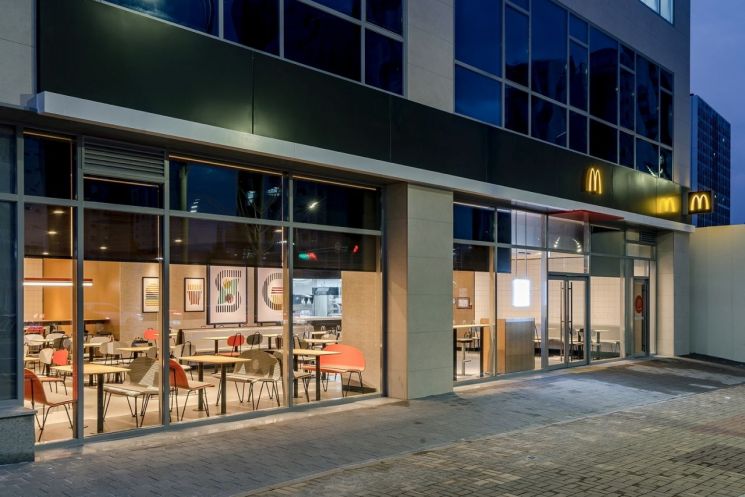 Exterior view of the Paju Unjeong Gyoha branch, newly opened on the 19th by McDonald's Korea. Provided by McDonald's Korea.
Earlier, Burger King also adjusted the prices of some products starting on the 12th. Its flagship Whopper went up from 7,200 won to 7,400 won, and the Whopper Junior rose from 4,800 won to 5,000 won. French fries were increased from 2,200 won to 2,300 won. The set prices of some popular menu items have climbed into the 9,000-won range, nearing 10,000 won. Major franchises such as KFC, Mom's Touch, No Brand Burger, and Lotteria have stated that "there are no plans for price hikes at the moment," but they face a similar burden of rising costs.
The industry cites higher raw material costs, rising labor costs, and a strong dollar-won exchange rate as the reasons behind the price increases. According to the import and export price index released by the Bank of Korea, last month's livestock products index was 154.24, up 12.8% from a year earlier. Beef and pork prices rose by 13.7% and 8.3%, respectively. Data from the Korea Agro-Fisheries & Food Trade Corporation (aT) show that the price of imported beef ribs (100g) stood at 14,909 won in February, about 8% higher than a year ago. When the price of imported beef used for patties rises, it has a direct impact on the production cost of burgers.
The exchange rate is also a burden. The average monthly won-dollar exchange rate was 1,467.40 won in December 2025 and 1,456.51 won in January 2026. Although it edged down slightly from the previous month, it remains high compared with the 1,300-won range in the first half of last year. Given that a large share of payments for beef, cheese, sauces, and other ingredients is settled in dollars, a higher exchange rate pushes up import costs. On top of this, the minimum wage for 2026 rose by 2.9% year-on-year to 10,320 won per hour, further adding to labor cost pressures.
Fast food has traditionally been categorized as "value-for-money dining out," with demand holding up relatively well even during economic slowdowns. However, some analysts warn that consumer resistance to prices could materialize as a-la-carte items climb into the 6,000-7,000 won range and set menus exceed 10,000 won. There is also talk that demand may shift toward convenience store lunch boxes or ready-to-eat meals (HMR) from large discount stores.
The overall uptrend in dining-out prices is continuing. According to the National Statistics Portal, the dining-out price index in January rose 2.9% year-on-year. Hamburger prices were up 2.5%. Other major dining-out items also showed an upward trend, including Gimbap (4.2%), Tteokbokki (4.0%), fried chicken (1.8%), and pizza (0.8%). Coffee prices are rising as well. Paikdabang raised the prices of some beverages by 4-5% starting on the 13th, explaining that the increases reflect higher raw material costs for coffee beans, milk, and sugar, as well as higher labor costs.
An official from the restaurant industry said, "With the prices of major raw materials and the exchange rate rising at the same time, cost pressures are intensifying," adding, "We are trying to keep the scale of price hikes to a minimum, but if cost burdens persist, we will have no choice but to consider additional adjustments."
© The Asia Business Daily(www.asiae.co.kr). All rights reserved.



















