Ministry of Health, Labour and Welfare Grants World's First Approval
for Regenerative Medicine Using iPS Cells
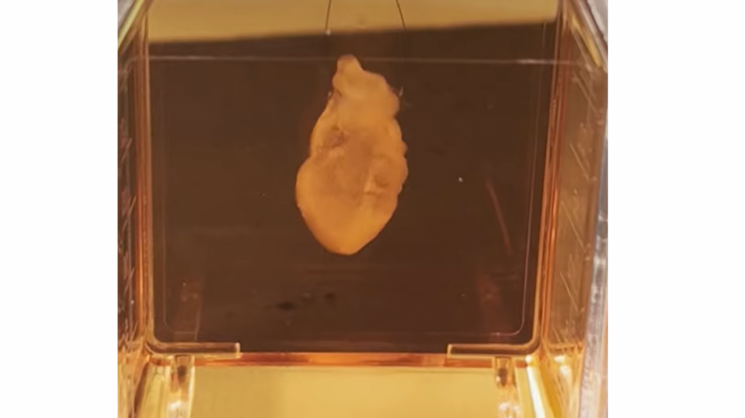 Japan's Kuoripseu created a mini heart from iPS cells. They made it to demonstrate the principle of "Rihateu," a cardiac muscle sheet, and exhibited it at last year's Osaka and Kansai Expo. Kuoripseu.
Japan is expected to become the first country in the world to commercialize therapeutic products using induced pluripotent stem cells (iPS cells). The Ministry of Health, Labour and Welfare has granted temporary approval for their sale, and they are to be used for the treatment of severe heart failure and Parkinson's disease.
According to the Nihon Keizai Shimbun (Nikkei) on the 20th, the previous day a specialist subcommittee of the Ministry of Health, Labour and Welfare granted conditional, time-limited approval for the manufacture and sale of two regenerative medicine products using iPS cells. Nikkei reported that this is the world's first regulatory approval for regenerative medicine using iPS cells.
iPS cells can differentiate into any cell in the human body. They were discovered in 2006 by Kyoto University professor Shinya Yamanaka, who received the Nobel Prize in Physiology or Medicine in 2012. The two therapies approved this time by the Ministry of Health, Labour and Welfare are Sumitomo Pharma's “Emcefre” (developed by growing iPS cells into nerve cells) and Cuorips's “Reheart” (developed by growing iPS cells into cardiac muscle cells).
Emcefre aims to alleviate symptoms by transplanting nerve cells into the brains of Parkinson's disease patients, whose condition is caused by a decrease in dopamine. Reheart works by attaching a sheet made from iPS cells to the surface of the heart to promote the recovery of damaged myocardium. In the companies' own clinical trials, symptoms improved in 4 out of 6 Parkinson's disease patients and in all 8 heart failure patients. However, the lack of a control group made it difficult to prove efficacy.
In response, the Ministry of Health, Labour and Welfare used the conditional and time-limited approval system to bring forward the launch timing. This is a system unique to Japan, introduced in light of the long development periods for cell and gene therapies. Triggered by Professor Yamanaka's Nobel Prize, the government established this framework and has been fostering iPS cell-related technologies as a core area of its national growth strategy.
Once conditional approval is granted, even new drugs whose safety has been confirmed in clinical trials but whose efficacy has not been fully demonstrated can be sold on a temporary basis. National health insurance coverage is also possible during the approval period. However, efficacy and safety must be re-verified within seven years.
Through conditional approval, the developing companies have also become able to secure revenue at an early stage. Sumitomo Pharma is developing other iPS cell-derived products and is targeting sales of up to 350 billion yen (about 326.95 billion won) by 2040. Nikkei reported, "Starting with the domestic launch of the iPS cell therapy for Parkinson's disease, the company plans to expand into the United States, which is the largest potential market." Cuorips also plans to collect treatment data from 75 patients after receiving conditional approval. It then aims to move into the black through sales of its myocardial sheet.
© The Asia Business Daily(www.asiae.co.kr). All rights reserved.

















