Preventing a Repeat of Chun Doohwan’s Special Pardon
Push to Strengthen Procedural and Substantive Requirements
Debate over Restricting the President’s Pardon Power
Following the first-instance ruling against former President Yoon Sukyeol, there has been an outpouring of calls to restrict the presidential power to grant special pardons for specific crimes such as insurrection. The argument is that legislative measures are needed to prevent a repeat of cases like that of former President Chun Doohwan, who was granted a "special pardon" for political reasons such as promoting national reconciliation. However, some point out that such legislation could restrict the presidential pardon power guaranteed by the Constitution.
On the 20th, the Legislation and Judiciary Committee’s First Subcommittee on Bill Review at the National Assembly handled a bill on pardons that, in principle, would prohibit pardons for crimes of insurrection and treason. Regarding the bill’s passage, Democratic Party lawmaker Kim Yongmin, who serves as the Democratic Party’s secretary on the committee, said, "For serious crimes such as insurrection, we must see to it that appropriate responsibility is fully enforced before history and the people," adding, "We must pass the pardon ban bill to condemn insurrection. The crime of trampling on democracy and the Constitution is never light, and no extenuating circumstance should ever grant a free pass." However, an exception clause was included in the bill allowing pardons if three-fifths of all sitting members of the National Assembly consent, in order to avoid a constitutional challenge. The People Power Party protested the handling of the pardon bill and boycotted the vote. People Power Party lawmaker Na Kyungwon objected, saying, "The power of pardon is an exclusive constitutional authority of the president." The Democratic Party plans to pass the bill on pardons at the Legislation and Judiciary Committee’s full session as early as the 23rd, and then at the plenary session on the 24th.
Previously, the National Assembly Research Service analyzed the current direction of amendments to the Pardon Act being discussed in the National Assembly in a report titled "Analysis of Legislative Debates on the President’s Power to Grant Special Pardons." Former President Chun had his life sentence finalized in April 1997 on charges of being the "ringleader of an insurrection," but received a special pardon from then-President Kim Youngsam in December of the same year. Former President Yoon was sentenced to life imprisonment at first instance on charges of being the "ringleader of an insurrection" in connection with the December 3 martial law. Political circles are now arguing that institutional reforms are needed to prevent former President Yoon from being granted a special pardon for political or other reasons.
Amendments to the Pardon Act that have been introduced so far have been discussed in two main directions. The first is to strengthen the procedural requirements for special pardons by enhancing the review process of the Pardon Review Committee. The second is to restrict the possibility of special pardons based on specific criteria or to strengthen the substantive requirements by stipulating the principles of pardons in statute.
Regarding measures to strengthen procedural requirements, Democratic Party lawmakers Park Jumin and Lee Kangil each introduced bills that would require the administration to report to the National Assembly, at least 14 days before a special pardon, the list of those to be pardoned and the types of offenses involved, and that would have the president, the National Assembly, and the judiciary each appoint one-third of the members of the Pardon Review Committee. Yong Hyein of the Basic Income Party proposed a bill requiring that the opinions of the judiciary and victims be heard in connection with pardons.
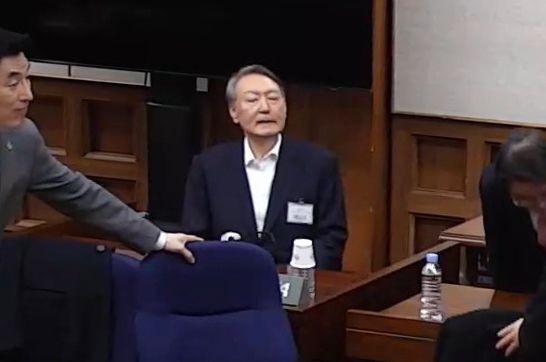 Former President Yoon Sukyeol is attending the first-instance sentencing hearing on charges of being the ringleader of the 12-3 emergency martial law-related insurrection at the Seoul Central District Court in Seocho District on the 19th. Yonhap News
Separately, a considerable number of lawmakers have submitted bills stipulating that special pardons cannot be granted to those convicted of crimes such as insurrection, treason, rebellion, aiding the enemy, crimes against humanity, or offenses under the Act on the Aggravated Punishment of Specific Economic Crimes. Such provisions include completely prohibiting special pardons for insurrection and similar crimes, or requiring the consent of the National Assembly.
As with the measure that passed the Legislation and Judiciary Committee’s subcommittee this time, most of the proposed amendments to the Pardon Act seek to strengthen the procedural and substantive requirements for the exercise of the president’s power to grant special pardons. This has sparked controversy over whether they restrict the president’s pardon power. While the Constitution grants the president authority over pardons, commutations, and restoration of rights, it also provides that these are to be exercised "as prescribed by law," giving rise to the "restrictable view" that the National Assembly may, through legislation, limit the president’s pardon power. In contrast, there is the "non-restrictable view," which holds that because the Constitution requires parliamentary consent only for general pardons, other forms of pardon, commutation, and restoration of rights fall exclusively within the president’s authority and cannot be limited.
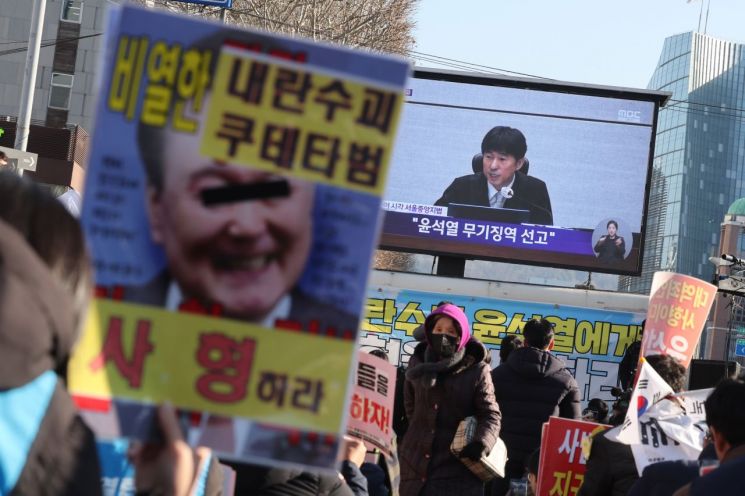
Accordingly, whether the Pardon Act bills being discussed in the National Assembly are consistent with the Constitution could become a contentious issue. From the perspective of the restrictable view, such legislation can be regarded as a legitimate exercise of the National Assembly’s legislative authority. From the perspective of the non-restrictable view, however, the direction of the Pardon Act amendments under discussion in the National Assembly can be seen as contrary to the principle of separation of powers, because it would amount to the National Assembly restricting the president’s pardon power.
In this regard, the National Assembly Research Service stated, "There are concerns that if the criteria for pardons are set in advance by law, it may become difficult to grant pardons even in exceptional cases where they are later deemed necessary, thereby running counter to the purpose of the pardon system," adding, "Amendments that strengthen the procedural requirements for pardons are relatively free from criticism that they restrict the president’s substantive authority, and as more substantive pardon procedures are followed, it is more likely that pardons will be granted in a manner consistent with the purpose of the system."
© The Asia Business Daily(www.asiae.co.kr). All rights reserved.


















