Plaintiff Wins in First Instance... No Explicit Obligation to Remain in Korea
Appellate Court Reverses, Stating "Domestic Research Is the Principle"
Supreme Court Ultimately Confirms Ruling Against Plaintiff
If a researcher who received research funding under the "Postdoctoral Domestic Training" support program spent most of the research period overseas, it is legitimate to claw back the grant and restrict future participation in the program, the Supreme Court has ruled.
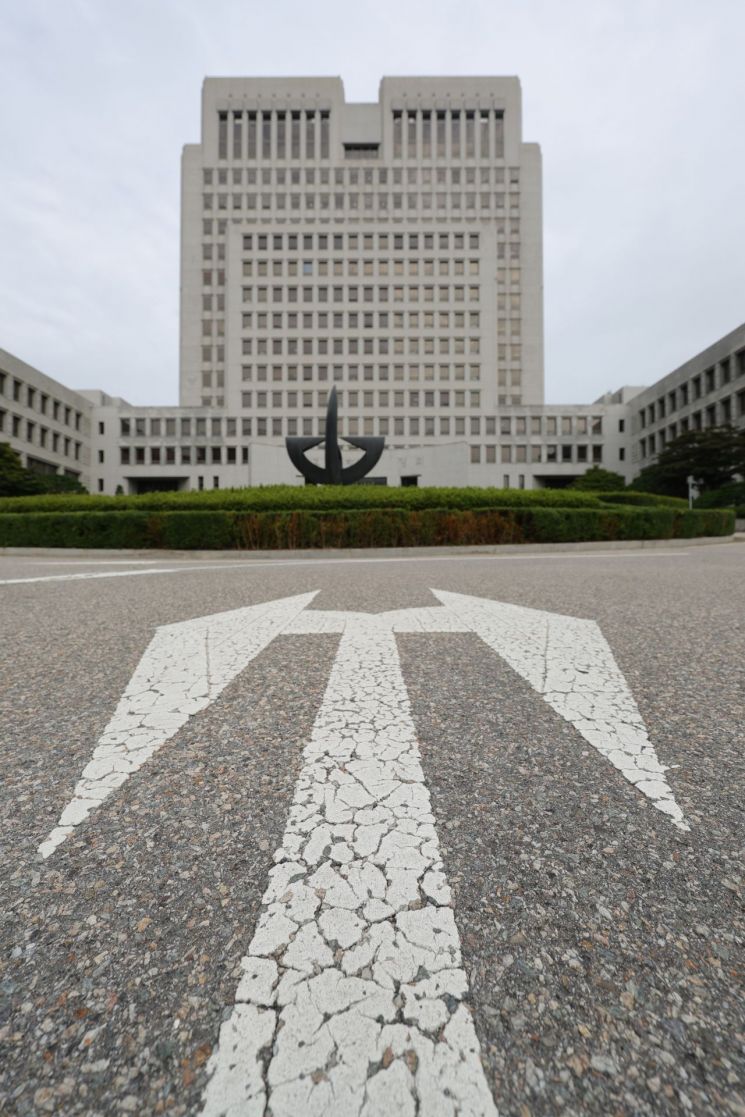
According to the legal community on February 22, the Supreme Court's Second Division (Presiding Justice Noh Taeak) upheld the lower court ruling that found against Researcher A in a final appeal seeking to overturn the participation restriction and other dispositions imposed by the Minister of Education and others.
In February 2019, A applied for and was selected for the "Next-Generation Scholars Support Program (Postdoctoral Domestic Training)," for which the Sookmyung Women's University Industry-Academic Cooperation Foundation served as the lead institution. Under the task titled "Geomungo Performance Culture of the Joseon-Era Scholar-Officials in the Early Joseon Dynasty and the Development of Musical Styles," A entered into an agreement to conduct research from July 2019 to June 2021 and to receive approximately 68 million won in research funding from the government.
However, A left for the United States on July 24, 2019, shortly after the research began, and stayed overseas for about 1 year and 10 months until May 10, 2021, just before the research ended. In October 2022, the National Research Foundation of Korea and others determined that "A violated the agreement by staying overseas for an extended period during the research period," imposed a disposition excluding A from selection as a recipient of academic support for one year, and ordered the recovery of 66 million won in personnel expenses that had been paid.
A filed a lawsuit in response. The key issue was whether an overseas stay could be viewed as a breach of the agreement in a support program conditioned on "domestic training."
The court of first instance sided with A. It ruled that "it cannot be recognized that there was even an implied agreement between the National Research Foundation of Korea and the plaintiff to remain in Korea while carrying out the project, nor that such an obligation can be derived," and ordered that the sanction be revoked.
However, the appellate court reversed this and ruled against the plaintiff. The appellate court stated, "This program, as 'Postdoctoral Domestic Training,' aims to ensure the continuity and qualitative improvement of research activities at domestic research institutions," and pointed out that "as a principle, the core research must be conducted at domestic institutions." It therefore held that an extended stay overseas constituted a breach of the agreement and that the sanction could not be viewed as a departure from or abuse of discretionary authority.
The Supreme Court also found the appellate court's judgment to be sound. The bench stated that "although some parts of the reasoning in the lower court's decision are not entirely appropriate, the conclusion that the plaintiff's staying overseas for most of the research period constituted a breach of the agreement is justified," and dismissed the appeal.
© The Asia Business Daily(www.asiae.co.kr). All rights reserved.
![From Bar Hostess to Organ Seller to High Society... The Grotesque Con of a "Human Counterfeit" [Slate]](https://cwcontent.asiae.co.kr/asiaresize/183/2026021902243444107_1771435474.jpg)
















