The government has reaffirmed its policy to end the temporary suspension of the heavier capital gains tax on owners of multiple homes on May 9, 2026, heightening tension in the real estate market. Analysts say that if the burden of higher tax rates upon sale becomes a reality, housing investment strategies aimed at short-term gains will inevitably be brought to a halt.
In particular, as various regulations on loans, holding taxes, and housing subscriptions are interacting in a complex way, especially in the Seoul metropolitan area, a perception is spreading among investors that "apartments are no longer assets that you simply buy and sell, but structural assets for which you must also factor in taxes."
As the housing investment environment centered on apartments is once again shifting toward stronger regulations and heavier tax burdens, investors are moving to change their asset strategies. In particular, land assets, which are not counted toward the number of housing units and therefore fall outside the scope of the heavier capital gains tax, are being reevaluated as a means of preserving long-term value.
For example, in the case of planned land, its use and development potential are clearly defined, and it is equipped with basic infrastructure conditions, leading to assessments that development risk is low. Statistics on the national land price index show that land has a distinct tendency to trend upward over the long term, and observers point out that it continues to be attractive as a real asset amid volatility in financial markets.
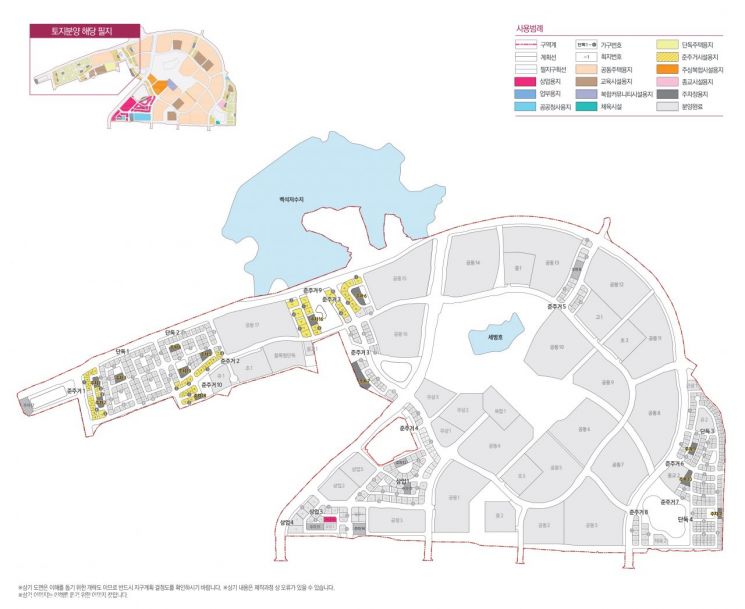
Against this backdrop, the Jeonju Ecocity reserved land currently on sale is drawing attention as an alternative investment destination. The reserved land, supplied as national and public land within Ecocity in Jeonju, is being evaluated as having improved usability and business feasibility following the recent final notification of changes to the district unit plan. Under the revised plan, quasi-residential land, block-type detached housing land, and religious facility land have been granted additional uses and eased approval standards, and in some blocks residential functions are permitted, expanding the potential uses of the land.
The reserved land currently being supplied consists of a total of 62 lots, made up of 51 quasi-residential lots and 9 parking lots. On quasi-residential land, it is possible to construct a variety of uses such as officetels, commercial facilities, medical facilities, and educational facilities, and for some lots, the merger of up to three lots is permitted, offering a high degree of flexibility in land utilization.
Jeonju Ecocity is an area where infrastructure within the urban development district has already been established, and the land is supplied as planned land with roads, permitting systems, and district unit plan guidelines all in place. These conditions help lower the initial entry barriers for land investment and are drawing attention from both end-users and investors in terms of long-term asset value preservation and utilization potential.
In fact, residential products previously sold within Ecocity recorded high competition rates and sold out completely, and some observers note that this round of reserved land sales is the last batch of public reserved land in Ecocity, giving it both scarcity value and stability.
A real estate expert predicted, "The resumption of heavier capital gains taxation on owners of multiple homes is expected to serve as an important turning point in decisions regarding housing transactions," adding, "Land such as the Ecocity reserved lots carries relatively low tax risks and offers the potential for value from a long-term holding perspective, so it is likely to play an important role in future investment portfolios."
© The Asia Business Daily(www.asiae.co.kr). All rights reserved.

















