More Expensive but Higher Performance: Samsung HBM4
SK hynix, the Primary Supplier, Nears Shipment
Will the Focus Shift from Volume to Performance?
As shipments of sixth-generation High Bandwidth Memory (HBM4) begin, competition over the supply chain for key customer Nvidia is intensifying. In particular, there are projections that for HBM4, a "two-track" strategy will be adopted: placing more expensive, higher-performance HBM4 products at the center to maximize the performance of the next-generation artificial intelligence (AI) accelerator "Vera Rubin," while supplementing them with lower-priced, second-tier performance products.
According to the semiconductor industry on the 19th, Nvidia is said to be building its supply chain with top priority placed on securing high-performance HBM4. Industry watchers expect Nvidia to design a "Dual Bin" supply strategy and focus on maintaining ultra-high-speed performance above a certain threshold. The Dual Bin strategy refers to supplying products within the same product family in two or more performance or specification grades (Bins). In the case of HBM4, it is possible to operate both the top speed segment of 11.7Gbps (gigabits per second) or higher and the next-tier speed segment in the 10Gbps range at the same time. This is interpreted as a response to the fact that, as AI models scale up, memory bandwidth has emerged as a key factor that determines overall system performance.
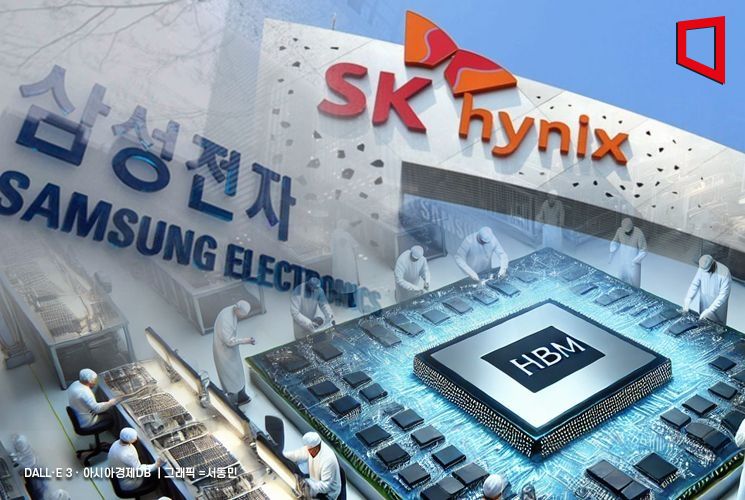
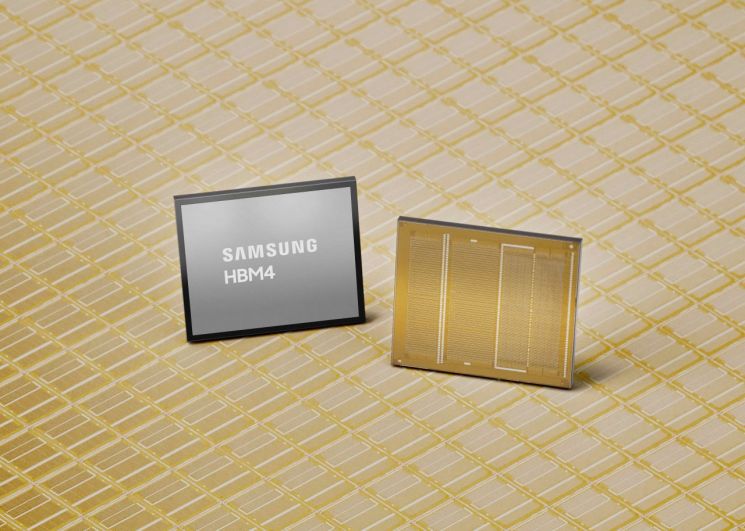
Samsung Electronics, which earlier officially announced the world's first mass production and shipment of HBM4, is putting high performance at the forefront. The company stated that for this HBM4, it applied 1c DRAM and a 4nm (1nm = one-billionth of a meter) base die, thereby securing stable yield and performance from the early stages of mass production without redesign. In particular, it achieved a pin speed performance of 11.7Gbps. This is about 46% higher than the 8Gbps standard set by the JEDEC Solid State Technology Association (JEDEC) and, according to Samsung, can be expanded up to a maximum of 13Gbps.
However, the higher the performance of the product, the greater the cost burden becomes, making it difficult to allocate the highest performance to all volumes. In fact, Samsung Electronics' HBM4 is also expected to trade at a higher price than competitors' products. According to the industry, the price of the HBM4 product that Samsung Electronics recently began mass-producing and shipping is around 700 dollars (1 million won), which is 20% to 30% higher than its predecessor, HBM3E. As a result, a strategy could be employed in which the highest-tier product is applied to core products, while second-tier products are applied in parallel to some other products.
There is also talk that parallel sourcing may be adopted from the perspective of supply-demand stability. If Nvidia insists only on the 11.7Gbps-class performance it has requested from memory suppliers, it will not be able to secure sufficient HBM4 volume needed for mass production of the Rubin chips. SK Hynix is reported to have been allocated the largest share of volume, but during the initial evaluation it received requests for revisions to some specifications. Samsung Electronics' 1c DRAM process is technically challenging, and as a result, its initial yield is low, making it difficult to ramp up shipment volume rapidly.
In the HBM4 market, there is also the possibility that the existing volume-centered supply chain structure will be reorganized around performance. Up to now, SK Hynix has effectively monopolized the market by maintaining the No. 1 share in HBM. For HBM4 as well, SK Hynix is expected to retain its position as the primary supplier by securing a share in the mid-50% range in terms of volume. However, Nvidia has repeatedly highlighted the importance of HBM4 speed and memory bandwidth, while mentioning the goal of achieving peak performance with its next-generation AI accelerators equipped with HBM4.
Some analysts say that Samsung Electronics’ move on the 13th, just before the Lunar New Year holidays, to officially announce the mass production and shipment of HBM4 is also a response to Nvidia’s focus on high-performance implementation. Nvidia is also said to have stressed the need for "top performance supply" to SK Hynix, which is expected to begin HBM4 shipments soon. An industry insider said, "As the overheated narrative around mass-production competition in the market has eased recently, there is a possibility that technological prowess will become the decisive factor shaping market influence."
© The Asia Business Daily(www.asiae.co.kr). All rights reserved.
![Clutching a Stolen Dior Bag, Saying "I Hate Being Poor but Real"... The Grotesque Con of a "Human Knockoff" [Slate]](https://cwcontent.asiae.co.kr/asiaresize/183/2026021902243444107_1771435474.jpg)












