"If No Transfer Is Explicitly Stated, Rights Are Not Deemed Assigned"
Supreme Court Overturns Lower Courts and Remands the Case
Even if a so-called "buyout" contract is signed under which a lump-sum payment is made for producing music tracks, the economic rights to the work must be deemed to remain with the creator if the transfer of copyright is not expressly stipulated in the contract, according to a Supreme Court ruling. The court held that ambiguous contracts should be interpreted in favor of the author.

According to the legal community on February 19, the First Division of the Supreme Court (Presiding Justice Ma Yongju) overturned the lower court ruling that had dismissed a damages claim filed by composer A against a game developer and others, and remanded the case to the appellate court.
In July 2011, A entered into a contract with game developer Company B to supply music tracks for use in a rhythm game for one year. The production fee was set at 1.5 million won per track, payable on the last day of each month. A provided a total of 39 tracks under the contract, but after Company B went bankrupt, a new company established by B's then-CEO purchased and used the tracks. A then filed suit, claiming the tracks had been used without consent.
The trial court and the appellate court both ruled against the plaintiff. The courts found that "the contract in question defines the defendant as having lawfully secured rights from the original copyright holder and as holding all relevant authority," and, citing the fact that each track had been "purchased," concluded that the economic rights to the works had been transferred to the company.
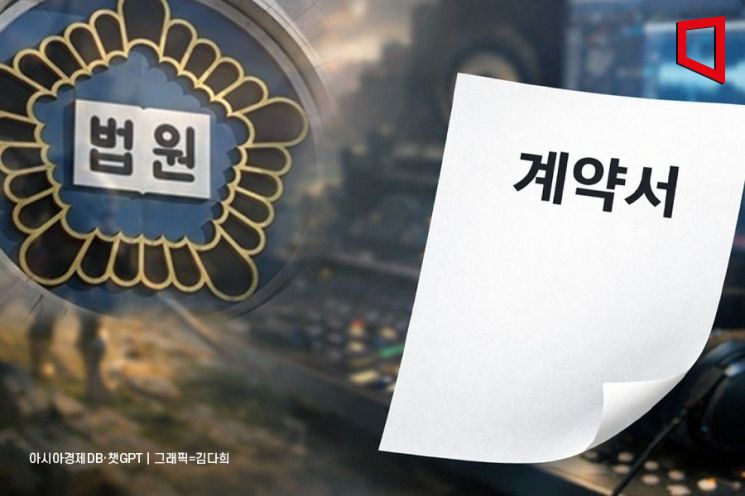
The Supreme Court, however, found that, considering the wording of the contract and the circumstances of its conclusion as a whole, the economic rights remained with A. The bench reaffirmed the established legal principle that "if it is not clear that there is a contract for the transfer of copyright, and the fact of transfer is not externally expressed, the rights must be favorably presumed to have been reserved to the author."
The court went on to explain the meaning of "buyout," stating that "in general, a buyout merely refers to a method of paying compensation in a lump sum instead of royalties, and there are no special circumstances that would allow it to be interpreted as meaning the transfer of economic rights to the work itself." It added that "it is not necessary for the company to obtain a transfer of the economic rights themselves in order to achieve the contractual purpose of using the tracks in its game business," and therefore remanded the case.
© The Asia Business Daily(www.asiae.co.kr). All rights reserved.
![Clutching a Stolen Dior Bag, Saying "I Hate Being Poor but Real"... The Grotesque Con of a "Human Knockoff" [Slate]](https://cwcontent.asiae.co.kr/asiaresize/183/2026021902243444107_1771435474.jpg)

















