Trump Warns: "800 Airstrikes a Day if Talks Fail"
On the 17th (local time), ahead of the Geneva nuclear talks, the United States has raised its military and diplomatic pressure on Iran to the highest level.
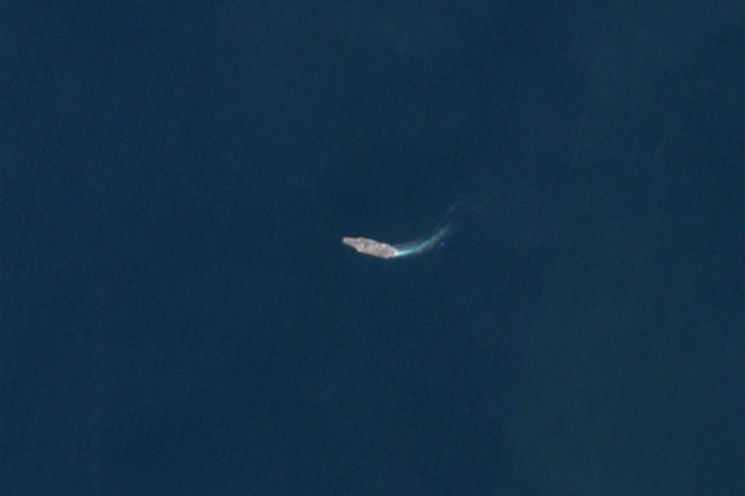
According to the open-source reporting team "BBC Verify" of the British BBC, satellite imagery taken by the European Space Agency (ESA) Sentinel-2 satellite confirmed that the U.S. nuclear-powered aircraft carrier Abraham Lincoln has been deployed in the Arabian Sea, 700 km from Iran and 240 km off the coast of Oman. The Lincoln is leading a carrier strike group (CSG) that includes three destroyers, and the carrier strike group built around the Gerald Ford, currently the largest warship in the world, is also moving toward the Middle East.
The U.S. military buildup is not limited to the sea. A total of 12 U.S. warships are currently deployed around Bahrain, the Mediterranean, and the Red Sea, while large numbers of F-15 and EA-18 fighter jets have been forward-deployed to key bases such as Jordan's Muwaffaq Salti Air Base. In particular, in recent weeks alone, more than 250 military cargo flights have traveled from the United States to the Middle East, and Washington has secured the ability to conduct long-term operations by additionally deploying air defense systems and extending unit duty orders.
U.S. President Donald Trump stressed that this deployment is designed to neutralize any Iranian counterattack, warning that if a diplomatic solution falls through, the United States could sustain more than 800 high-intensity airstrikes per day.
In response, Iran's Islamic Revolutionary Guard Corps (IRGC) has begun large-scale naval exercises in the Strait of Hormuz, a key chokepoint for global energy transport, in a show of force. Iranian media highlighted Tehran's determination to fight by releasing footage of the IRGC commander inspecting the skies over Kharg Island, one of the country's main crude oil export terminals.
In the upcoming talks, the United States is pressing for a comprehensive agreement that covers not only Iran's nuclear program but also its missile systems and human rights issues. Iran, however, is sticking to its position that no agenda other than the nuclear program is open for discussion. Military expert Justin Crump assessed that the current level of U.S. preparedness is far more robust and sustainable than in past limited strike operations.
This round of negotiations, resuming eight months after the airstrikes in June last year, is expected to become a critical turning point that will determine the course of the situation in the Middle East.
© The Asia Business Daily(www.asiae.co.kr). All rights reserved.

















