A domestic cosmetics brand has come under fire for racial discrimination over the marketing phrase "Mongolian Baby Blusher," which critics say stereotypically portrays a particular nationality and race.
According to Yonhap News Agency on the 15th, the controversy began in earnest after Mongolian influencer Khaliun posted an Instagram Reels video about the issue on the 19th of last month.
The expression appeared last month in the course of promoting a product. The brand is reported to have intended to use the phenomenon of children's cheeks turning red due to the severe cold and dry climate in Mongolia as a color image.
However, after Khaliun raised the issue by asking, "Is this Korean brand stereotyping Mongolian children?", the debate over whether the expression was appropriate spread rapidly. In the video, which has garnered 270,000 views, she pointed out, "Honestly, it's disappointing that marketing is still done this way even in 2026."
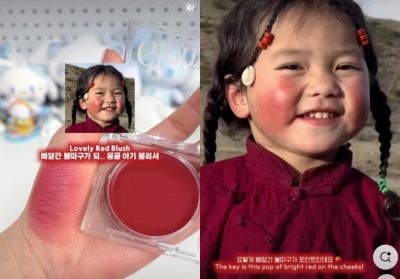
Mongolian netizens also reacted critically, saying things like "That description of the blusher shade is strange and unnecessary," and "As a Mongolian, I feel a mix of complicated emotions." On Korean online communities, users similarly commented, "Would it be okay if it were called Korean baby cheeks?" and "Who would feel good if something were marketed as K-double-eyelid surgery or K-filler?"
The phrase in question has now been revised on the product page to wording such as "a shade that looks slightly sun-kissed." However, criticism has not easily subsided, as similar controversies have repeatedly surfaced in the K-beauty industry for years.
Last year, one brand described a cushion shade as "dirt tone," drawing criticism for evoking negative associations with darker skin. In 2016, the advertising phrase "Only Hyeri is forgiven for being dark" sparked controversy and ultimately led to an apology. Similar cases, such as "black guy lotion" and "foreign baby lip color," have also been consistently flagged as problematic.
Experts warn that when expressions that commercially exploit the image of a specific race or country are repeated, they can entrench discriminatory perceptions. In particular, observers point out that K-beauty companies targeting the global market risk damaging brand trust if they do not strengthen pre-screening of marketing phrases and internal guidelines.
© The Asia Business Daily(www.asiae.co.kr). All rights reserved.
![User Who Sold Erroneously Deposited Bitcoins to Repay Debt and Fund Entertainment... What Did the Supreme Court Decide in 2021? [Legal Issue Check]](https://cwcontent.asiae.co.kr/asiaresize/183/2026020910431234020_1770601391.png)















