As Bank Lending Standards Tighten, "Balloon Effect" Emerges
Saemaul Geumgo, Nonghyup, Suhyup, and Credit Unions Poised to Tighten Loan Controls
To manage the recent surge in household loans in the secondary financial sector, the financial authorities summoned mutual finance institutions and warned them to refrain from aggressively marketing loans. As lending standards at banks have tightened and demand for funds has shifted to the secondary sector, a so?called "balloon effect" has emerged, prompting follow?up measures.
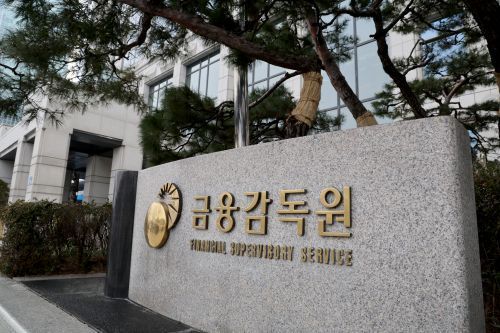
According to the financial authorities on February 16, the Small Finance Supervision Department of the Financial Supervisory Service convened household loan officers from mutual finance institutions such as Saemaul Geumgo, credit unions, Nonghyup, and Suhyup earlier this month and asked them to refrain from expanding household lending.
An official at the Financial Supervisory Service said, "As bank lending has been blocked, household loans have increased sharply in December last year and January this year, centering on mutual finance institutions," adding, "We are actively consulting with mutual finance institutions and have strongly requested that they manage the growth of household loans in a stable manner."
Following the government's "June 27 measures" and "October 15 measures," which strengthened lending regulations in the banking sector, household loans at mutual finance institutions have been increasing rapidly. This is due to the fact that the secondary financial sector, where the supervisory intensity of the financial authorities is relatively low, has aggressively expanded its loan business. According to the Financial Services Commission, household loans across all financial sectors in January this year increased by 1.4 trillion won from the previous month. While household loans at banks decreased by 1 trillion won, household loans in the secondary financial sector rose by 2.4 trillion won, three times the increase recorded in December last year (800 billion won).
Among household loans, home mortgage loans increased by 3 trillion won last month. Of this, banks saw a decrease of 600 billion won, whereas the secondary financial sector grew by as much as 3.6 trillion won.
Among mutual finance institutions, Nonghyup recorded the largest increase in household loans, with a rise of 1.4 trillion won last month. It was followed by Saemaul Geumgo with an 800 billion won increase and credit unions with a 200 billion won increase. Among these, Saemaul Geumgo has reportedly begun to take measures, including a decision to suspend household lending through loan brokers starting on the 19th.
The government believes there is a possibility that household loans in February will expand further, as the resumption of financial companies' business activities at the beginning of the year coincides with moving demand ahead of the new school term. Accordingly, as the government is strengthening loan regulations with the aim of stabilizing the real estate market, it is also expected to further tighten loan control focused on mutual finance institutions. If the upward trend in household loans in the secondary financial sector continues, the authorities are expected to review additional measures.
The financial authorities plan to announce detailed measures for managing household debt at the end of this month. Lee Eogwon, Vice Chairman of the Financial Services Commission, previously stated, "Last year, the growth rate of household loans in the banking sector was 1.8%, and we will manage it to be even lower than that," signaling a policy stance to impose stricter controls on household lending.
© The Asia Business Daily(www.asiae.co.kr). All rights reserved.
![Clutching a Stolen Dior Bag, Saying "I Hate Being Poor but Real"... The Grotesque Con of a "Human Knockoff" [Slate]](https://cwcontent.asiae.co.kr/asiaresize/183/2026021902243444107_1771435474.jpg)











