416 Emergency Medical Institutions Nationwide Operating 24 Hours a Day
For Mild Symptoms, Visit Nearby Hospitals or Clinics First
With the five-day Lunar New Year holiday starting and running through the 18th, it is necessary to check in advance which hospitals, clinics, and pharmacies will be operating during the break in order to prepare for potential gaps in medical services.
According to the Ministry of Health and Welfare on the 14th, information on medical institutions providing treatment during the holiday can be found through the Emergency Medical Portal (e-gen), the "Eunggeup Ttokttok" application, the Ministry of Health and Welfare Call Center (129), and local government call centers (120). Related guidance is also provided via local government websites, emergency text messages, and TV broadcast captions.
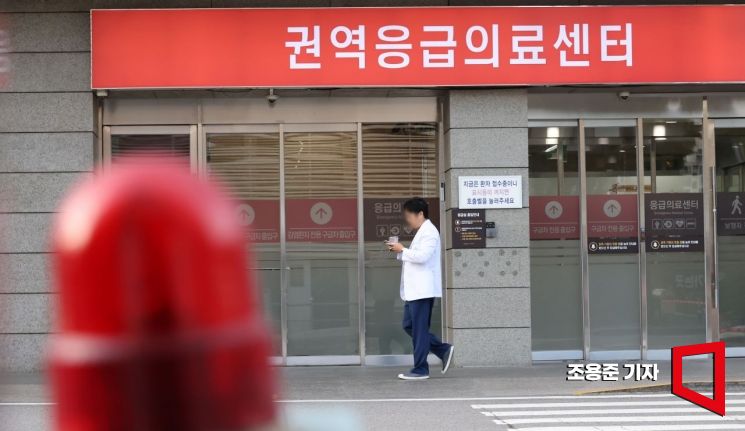 Medical staff are moving in front of the Regional Emergency Medical Center at Ewha Womans University Mokdong Hospital in Yangcheon-gu, Seoul.
The 416 emergency medical institutions nationwide will operate 24 hours a day during the holiday period, just as they do on regular days. Including these institutions, an average of about 9,600 hospitals and clinics and about 6,900 pharmacies will be open each day during the holiday. However, the scale of operations differs by date. On the first day of the holiday, more than 30,000 medical institutions will be providing treatment, but on Lunar New Year’s Day itself, the number of operating institutions drops sharply.
Health authorities have urged people with mild symptoms to visit nearby local hospitals or clinics first, rather than going to emergency rooms at large hospitals. The aim is to prevent overcrowding in emergency rooms so that the treatment of severe cases is not disrupted.
The "Eunggeup Ttokttok" app guides users to nearby medical institutions based on entered symptoms and location information, and helps determine whether an emergency room visit is necessary. However, if serious abnormal symptoms suddenly appear, such as difficulty breathing, paralysis of the arms or legs, or speech impairment, people should immediately call 119 without delay. Emergency medical technicians will triage the patient’s condition and then transport them to an appropriate medical institution.
The government plans to strengthen the emergency medical response system during the holiday. It will maintain the emergency treatment system at regional trauma centers and closely inspect the operating status of Dalbit Children’s Hospitals and pediatric emergency medical centers for child patients. To prevent any gaps in the transfer of severe patients, it will also expand information sharing between 119 emergency medical services and regional emergency medical control centers.
A Ministry of Health and Welfare official said, "We will operate the emergency medical system in a stable manner so that the public can spend the holiday with peace of mind," and reiterated the request that "patients with mild conditions should first use nearby medical institutions."
© The Asia Business Daily(www.asiae.co.kr). All rights reserved.

















