Full-Scale Drive to "Shake Up Multiple-Home Owners"
President Lee Targets Loan Extension Practices
Stricter Standards Signaled for Mortgage Renewals
Series of Messages: "You Can't Succeed by Just Holding On"
Full-Scale Move Toward Higher Holding Taxes Imminent
President Lee Jaemyung (photo) has criticized the practice of extending the maturity of mortgage loans for multiple-home owners as being unfair, drawing attention to whether the authorities will revise the relevant regulations.
Following recent issues raised over tax matters such as transaction taxes and holding taxes on multiple-home owners, he has now taken aim at long-standing but little-known lending practices. In this context, President Lee has introduced the topic by approaching highly granular aspects that would be hard to know unless one is a party to the transaction or a direct stakeholder. Given the precedent where, immediately after President Lee pointed out the deferral of heavier capital gains taxation for multiple-home owners, the government promptly announced the reinstatement of the measure, there is growing expectation that a similar sequence of steps may unfold this time as well.
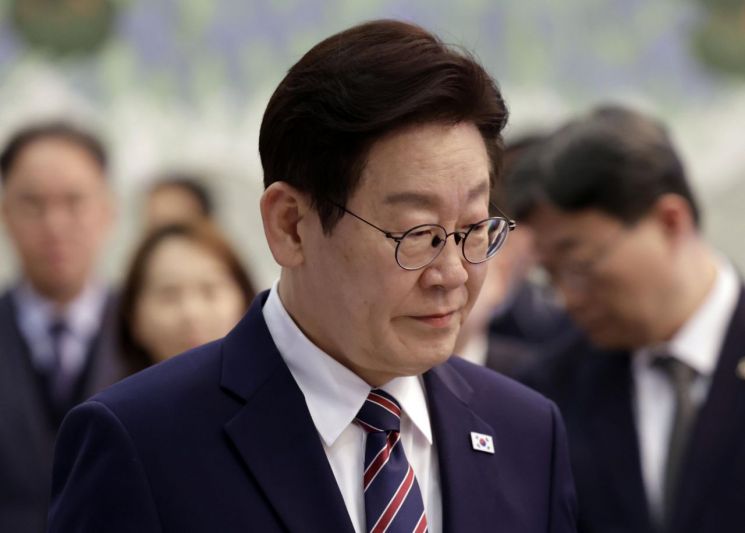 President Lee Jaemyung is entering a meeting of senior presidential secretaries held at the Blue House on Feb. 12, 2026. Photo by Blue House press photographers, Yonhap News
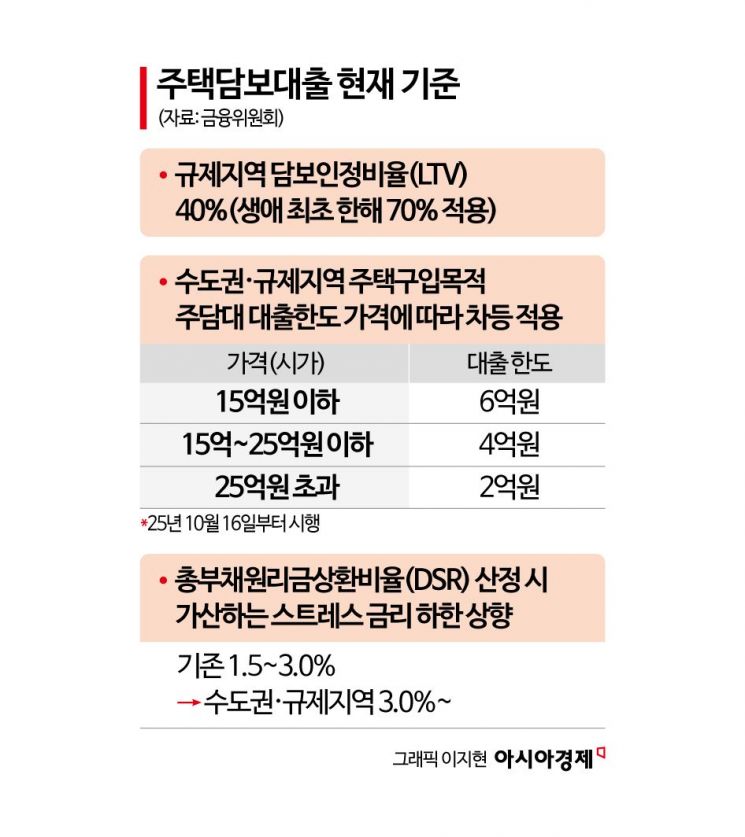
The "benefits of loan extensions for multiple-home owners" that President Lee mentioned on X (formerly Twitter) on the 13th appears to refer to a structure in which existing loans are maintained when they are re-contracted, such as through maturity extensions or changes in interest rate terms. In general, mortgage loans are set with a fixed term, such as 10 years, and his remarks are being interpreted as an intention to apply stricter standards when conducting reviews at maturity. Under the June 27 and October 15 measures last year, when purchasing a new home now, the maximum mortgage loan limit in regulated areas such as the Seoul metropolitan area is 600 million won depending on the house price, and multiple-home owners are not allowed to obtain such loans at all.
In contrast, multiple-home owners have been able to secure funding on a continuous basis by taking out loans backed by their existing properties. This has led to persistent questions about fairness vis-a-vis new home buyers. A commercial bank official said, "We understand this as indicating that regulations will be tightened by expanding the scope of oversight to include corporate loans extended to rental business operators."
President Lee's challenges directed at multiple-home owners have been unfolding on multiple fronts. In the case of heavier capital gains taxation, the government has decided not to extend the sunset clause as originally stipulated, and instead to impose the tax again after four years. Starting in May, three-home owners will face taxes of up to 82.5% of their capital gains, including local income tax.
In addition, he has criticized as unfair the rule that excludes from heavier capital gains taxation those units among registered rental business operators' apartment holdings whose mandatory rental period has expired. He has also hinted that he would withdraw benefits for properties held for investment purposes, even if the owner has only one home, when that home is not used as a primary residence.
Both inside and outside government circles, higher holding taxes such as property tax and comprehensive real estate tax are widely seen as the next predetermined step. President Lee has recently issued a series of strong messages on real estate, stating, "Would people really do that if the tax for holding on and enduring is higher than the tax paid when selling?" (January 25), "Selling is better than holding on, and selling early is more advantageous than selling late" (February 3), and "If multiple-home owners give up the chance for capital gains tax relief and still succeed by simply holding on, that would mean the failure of this administration's real estate policy, which seeks to curb ruinous real estate speculation" (February 13, all on X).
The key expression here is "holding on." It appears to be aimed at multiple-home owners who have no intention of selling. The implication is that, since people have learned over successive administrations that tax and lending regulations can change at any time, they have come to believe that even tough measures now will be eased again when the government changes in the future. President Lee's remarks reflect an intent to overturn that perception.
Separate from amendments to tax law, the burden of holding taxes can be increased at any time at the government level. The fair market value ratio used to calculate the comprehensive real estate tax can be set at the discretion of the executive branch. During the Moon Jae-in administration in 2021, it was raised to as high as 95%, but it was lowered to 60% the following year after the change in government. As for officially assessed prices, the realization rate this year is at around 69% (for multi-unit housing).
This is far below the target level of 79% to 90% stipulated in the original law. Officially assessed prices have long been criticized for diverging from market prices, and the law already specifies that they should be raised to reflect real-world conditions. The Ministry of Land, Infrastructure and Transport is currently carrying out an overhaul of the entire official price assessment system. Those who argue for higher holding taxes claim that, once these formulas are applied and various tax deductions are taken into account, the effective tax rate in Korea is far too low compared with advanced economies.
Opponents, however, are negative toward raising holding taxes, arguing that it harms owner-occupiers and has little effect on stabilizing housing prices. Lee Hyunseok, a professor at Konkuk University, said, "Looking at the trend, including the end of the deferral of heavier capital gains taxation, the remaining step is holding taxes," adding, "With most regulatory tools already used, strengthening holding taxes is close to a last resort to send a signal of psychological stability to the market." Seo Jinhyung, a professor at Kwangwoon University, pointed out, "Because the increase in real estate prices is greater than the tax burden, many are likely to choose to hold on," and added, "To enhance policy effectiveness, rather than relying solely on regulatory approaches, policymakers should first set a clear example for the market by disposing of their own multiple-home holdings."
© The Asia Business Daily(www.asiae.co.kr). All rights reserved.


















